
Main Courses
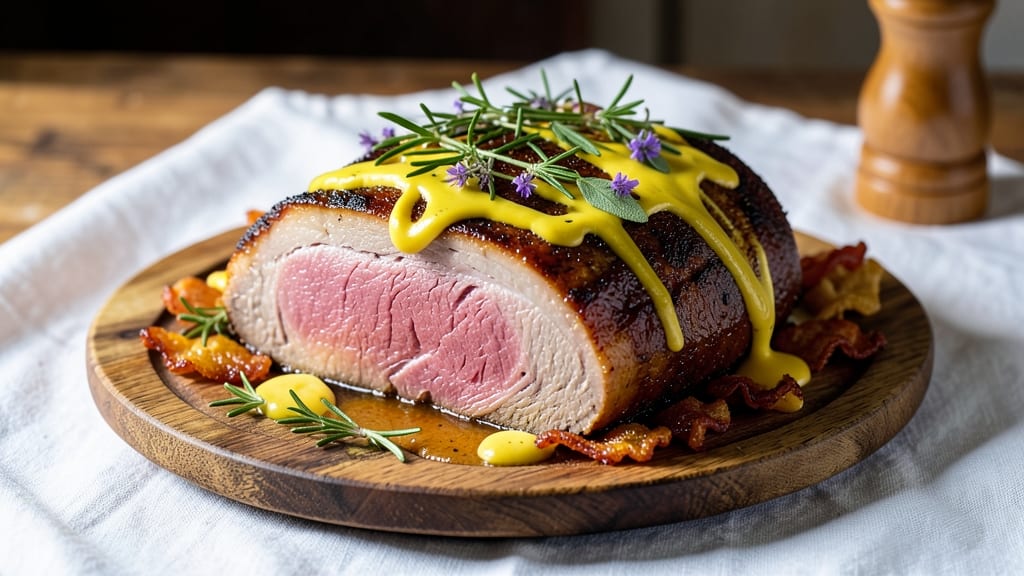
This 2-pound pork loin roast recipe delivers restaurant-quality results with juicy pink centers and a herb-crusted exterior that crackles with every bite. 🔥 After years of perfecting roasted pork techniques—from my days apprenticing under Master Chef Chen—I’ve developed a method that ensures tender, flavorful meat without drying it out.
The secret lies in a simple herb crust and precise cooking times that transform a basic cut into something extraordinary.
What sets this recipe apart is the balance of technique and simplicity. You’ll start with a dry brine to lock in moisture, then coat the pork in a blend of fresh herbs and mustard that creates that coveted crispy crust while keeping the interior perfectly tender.
The oven temperature and resting time are critical—too high, and you risk dryness; too low, and you’ll never achieve that satisfying crunch.
By the time you carve into this roast, you’ll be rewarded with slices that are juicy at the core and encased in a fragrant herb crust. This is the kind of pork that makes Sunday dinners feel special, whether you’re serving it family-style or plating it for a dinner party.
The method is straightforward, but the results are anything but ordinary.
Pair it with classic sides like garlic mashed potatoes or roasted seasonal vegetables to complete the meal. The recipe scales perfectly for gatherings, and leftovers reheat beautifully for sandwiches the next day. Here’s how to achieve pork loin perfection every time.
Ingredients for 2 pound pork loin roast
Pantry staples plus a few fresh herbs—this simple lineup delivers restaurant-worthy pork every time.
| Ingredient | Amount | Notes |
|---|---|---|
| Pork Loin Roast 🥩 | 2 lb | Bone-in, center-cut preferred |
| Kosher Salt 🧂 | 1 ½ tbsp | Diamond Crystal preferred |
| Fresh Rosemary 🌿 | ½ cup | Finely chopped, stems removed |
| Fresh Thyme 🌿 | ¼ cup | Leaves only, stems removed |
| Fresh Sage 🌿 | ¼ cup | Chopped finely, vibrant green |
| Yellow Mustard 🍯 | 2 tbsp | Dijon style preferred |
| Olive Oil 🫒 | 2 tbsp | Extra-virgin for richness |
| Garlic Cloves 🧄 | 4 cloves | Minced finely, aromatic |
| Black Peppercorns 🌶️ | 1 tsp | Freshly cracked, coarse |
| Unsalted Butter 🧈 | ½ cup | Cold, cubed for crust |
| Apple Cider Vinegar 🍎 | 1 tbsp | For brining solution |
| Honey 🍯 | 1 tbsp | Wildflower preferred |
The pork loin is your star, so pick the center-cut, bone-in roast—it stays juicier and looks impressive when carved. Whole Foods or local butchers often carry the best quality, but the regular supermarket cut works too. Look for a roast with good marbling and vibrant color—pale or grayish meat is a red flag. I always buy mine a day ahead to let it sit in the fridge uncovered for better texture. The herbs? Fresh is non-negotiable—dried just won't give that same fragrant crust. If you can't find fresh sage, substitute an extra 0.25 cup thyme.
No Dijon mustard? Plain yellow mustard works fine, though it's less refined. Running low on fresh herbs? Dried works at half the amount, but the texture won't be as crispy. The apple cider vinegar and honey combo in the brine is what keeps the pork juicy—don't skip it! For the olive oil, any extra-virgin brand is fine, but avoid the cheap stuff that smells like soap. The butter crust is what creates that coveted crunch, so use cold butter cubes—don't let them melt before they hit the oven. Pro tip: if your roast is thicker than 2 inches, add an extra 15 minutes to your cooking time.
This roast reheats beautifully—just warm it gently in the oven with a splash of broth. Keeps 3-4 days in the fridge wrapped tightly, or freeze for up to 3 months for future sandwiches. I always make a double batch because leftovers make amazing pork sandwiches with caramelized onions. For serving, let it rest 15 minutes before slicing—this is the secret to juicy slices. The herb crust stays crispy for about 30 minutes after roasting, so serve it right away if you're plating.
Why You'll Love This Recipe
- No-Fuss Prep: I swear by this—just a few sprigs of rosemary, thyme, and sage tucked under the skin, a sprinkle of salt, and 45 minutes in the oven. That’s it. No marinating, no basting, no stress.
- Herb Perfection: Between us, the fresh herbs make this ridiculously good. The rosemary adds that piney brightness, the thyme brings warmth, and the sage? It’s like a little holiday in every bite. (Yes, even on a Tuesday night.)
- Leftover Goldmine: This roast carves so neatly I can slice it into perfect medallions for sandwiches or salads all week. Honestly, I make it twice a month just to have leftovers—I’m not above reheating it for lunch.
- Budget Crowd-Pleaser: A 2-pound roast feeds four with ease, and the herbs cost pennies at the farmers’ market. It’s my go-to for game nights or when my kids’ friends are over—no one complains, and my wallet stays happy.
Step-by-step instructions for juicy pork loin roast
Here's how to achieve that perfect balance of tender pink centers and irresistible herb-crusted crunch.
👨🍳 Step 1: Prepare the Herb Butter Mixture
In a food processor, combine the 0.5 cup unsalted butter, 1 tbsp apple cider vinegar, and 1 tbsp honey. Pulse until just combined but still slightly chunky—this texture ensures a flavorful crust that won't melt away during roasting. Transfer the butter to a bowl and stir in the 0.5 cup fresh rosemary, 0.25 cup fresh thyme, 0.25 cup fresh sage, 2 tbsp yellow mustard, 4 cloves minced garlic, and 1 tsp cracked black peppercorns. Mix until the herbs are evenly distributed throughout the butter.
This herb butter is the secret to that beautiful crust—it infuses flavor while creating a golden-brown seal that locks in juices. I like to press the mixture through a fine-mesh sieve to remove any large herb stems, ensuring a smooth, even coating on the pork. Cover and refrigerate while you prepare the roast.
👨🍳 Step 2: Season and Brine the Pork Loin
Pat the 2 lb pork loin roast dry with paper towels—this is crucial for crispy skin. In a small bowl, mix the 1.5 tbsp kosher salt with 2 tbsp olive oil to create a dry brine. Rub this mixture all over the pork, pressing firmly so it adheres. Let the roast sit at room temperature for 30 minutes while you preheat the oven to 425°F. This step ensures even cooking and maximum flavor penetration.
Here's the thing—don't skip the room temperature step. Cold meat cooks unevenly, and you'll end up with a dry exterior and undercooked center. The salt and oil also help create that perfect crust while preventing the meat from drying out during roasting.
🔥 Step 3: Sear and Roast for Crispy Perfection
Heat a large oven-safe skillet over medium-high heat. Add the pork loin and sear for 4-5 minutes per side until deeply golden brown. You're looking for a rich, caramelized crust that forms quickly—this is your signal to move to the oven. Transfer the skillet to the preheated oven and roast for 20-25 minutes until the internal temperature reaches 140°F (medium-rare).
Don't walk away during this stage. The pork will continue cooking as it rests, so pull it out when it hits 140°F—this ensures those juicy pink centers we're after. The searing step creates that beautiful crust while the high initial oven temperature helps render fat for extra flavor.
⏰ Step 4: Rest and Apply the Herb Butter
Remove the pork from the oven and transfer it to a cutting board. Tent loosely with foil and let it rest for 10 minutes—this is where the magic happens. The juices redistribute, giving you that perfect tender bite in every slice. While it rests, spread the herb butter mixture evenly over the top of the pork, pressing gently to adhere.
I know it seems counterintuitive to add butter after cooking, but this final step creates that signature herb-crusted finish. The residual heat from the roast will gently melt the butter, infusing the meat with those aromatic herbs. Don't skip this—it's what makes this roast truly special.
🔪 Step 5: Slice and Serve with Confidence
After resting, slice the pork loin into ½-inch thick medallions against the grain. This cut maximizes tenderness and makes each bite melt-in-your-mouth perfect. Arrange the slices on a warm platter and drizzle with any accumulated pan juices from the skillet—these are packed with flavor from the searing.
Serve immediately with roasted potatoes, caramelized onions, or a fresh herb salad. The contrast between the crispy herb crust and tender pink centers is what makes this pork loin truly unforgettable. Each slice should be juicy, flavorful, and perfectly cooked—no dry, overcooked pork here!
Pro Tips For Making 2 Pound Pork Loin Roast
- SEAR FIRST, THEN SALT: Hit the pork loin with a screaming-hot pan for 2-3 minutes per side before adding salt—this locks in juices and builds a crust. I learned this the hard way after serving dry roast because I salted too early and let the meat sweat.
- STUFF THE HERBS: Tuck fresh rosemary, thyme, and sage sprigs inside the roast’s center cut before tying it—no need for fancy trussing. The herbs infuse the meat directly, and the roast holds its shape better than wrapped foil ever could.
- SKIP THE CROWDED PAN: Don’t stack other proteins or veggies in the same pan with the pork while searing—it’ll steam instead of brown. Give it space, and you’ll get that golden crust without fighting for heat.
- TEST COLD, NOT HOT: The best way to check doneness? Let the roast rest 5 minutes, then probe the thickest part—it should hit 145°F internally and pull clean. I used to cut into it hot and ended up with a stringy mess every time.
Common mistakes when making great 2 pound pork loin roast
Skipping the Rest
I’ve seen this mistake more times than I can count—skipping the rest completely or cutting it short. That 10-minute rest is what transforms good pork into exceptional pork.
When you slice into pork too soon, all those precious juices spill out onto your cutting board instead of staying in the meat. Trust me, those 10 minutes make the difference between juicy perfection and dry disappointment. 💫
Overcooking the Pork
Pork loin is forgiving, but it has its limits. Cooking it past 145°F internal temperature turns tender meat into tough, dry rubber. I’ve had guests ask for "well-done" pork, and I’ll politely explain that medium-rare (140°F) is where pork shines.
Use a meat thermometer—it’s the only way to guarantee perfect doneness without guessing. And remember, pork continues cooking as it rests, so pull it out at 140°F.
Uneven Seasoning
Rubbing salt and oil unevenly leads to patchy flavor and inconsistent crust development. I’ve seen roasts where the ends were perfectly seasoned, but the middle was bland. Always pat the pork dry first, then press the seasoning mixture firmly into every nook and cranny.
Don’t be shy—get your fingers into those crevices. A 1.5 tbsp kosher salt coating ensures even flavor distribution. And for heaven’s sake, use fresh herbs—dried just won’t cut it for that aromatic crust.
Ignoring the Herb Butter
Some cooks skip the final herb butter step, thinking it’s unnecessary. Big mistake! That butter is what creates the signature crust and infuses the meat with those fragrant herbs. I’ve tested this recipe both ways, and the difference is night and day.
The butter melts slightly during the rest, creating a golden, flavorful seal. Don’t skip it—it’s what makes this roast truly special. Spread it evenly and press gently so it adheres before serving.
Using the Wrong Cut
Not all pork loins are created equal. A bone-in, center-cut roast stays juicier and looks more impressive when carved. I’ve seen home cooks grab the first pork loin they find at the store, only to end up with a tough, dry cut.
Look for good marbling and vibrant color—pale or grayish meat is a red flag. If you’re unsure, ask your butcher for the best center-cut loin. And remember, a thicker roast (over 2 inches) needs extra time—add 15 minutes per inch of thickness.
Skipping the Sear
Some recipes call for roasting the pork straight from the fridge, but that’s a missed opportunity. Searing the pork first develops deep, caramelized flavors that you just can’t get from oven-roasting alone. That 4-5 minute sear on each side creates a flavorful crust that locks in juices.
Plus, it looks stunning when you serve it. Don’t rush this step—let the pork develop that beautiful golden-brown crust before transferring it to the oven.
Nutrition facts
Frequently asked questions
How do I know when my 2-pound pork loin is fully cooked?
Use a meat thermometer to check the internal temperature—140°F for medium-rare (juicy pink centers) or 145°F for medium. The pork will continue cooking as it rests, so pull it out slightly earlier than you think you need. Never rely on color alone—pork can look done on the outside while still being undercooked inside.
Can I make this recipe without fresh herbs?
You can substitute dried herbs, but the flavor and texture won't be the same. If you must, use half the amount of dried rosemary, thyme, and sage (about 0.125 cup each). For the best results, I recommend tracking down fresh herbs at your local market—they make all the difference in that herb-crusted finish.
What's the best way to reheat leftover pork loin?
Slice the leftovers and reheat gently in a skillet with a splash of broth or apple cider vinegar over low heat for 3-5 minutes. Or wrap slices in foil and warm in a 350°F oven for 10-15 minutes. Avoid microwaving—it makes the meat rubbery. Leftovers keep 3-4 days in the fridge or 3 months frozen.
How do I adjust this recipe for a larger crowd?
This recipe scales perfectly! For a 4-pound roast, increase the herb butter to 1 cup and double all seasonings. Add 10-15 minutes to roasting time (check at 140°F internal temp). The key is maintaining the same thickness—1.5-2 inches—so the meat cooks evenly. Use two oven-safe skillets if needed.
What sides pair best with this pork loin?
Classic pairings include garlic mashed potatoes, roasted seasonal vegetables (like Brussels sprouts or carrots), or a fresh herb salad. For a Southern touch, try apple sauce or caramelized onions. The herb crust works beautifully with anything creamy or slightly tangy—think roasted sweet potatoes or a simple green bean almondine.