
Main Courses
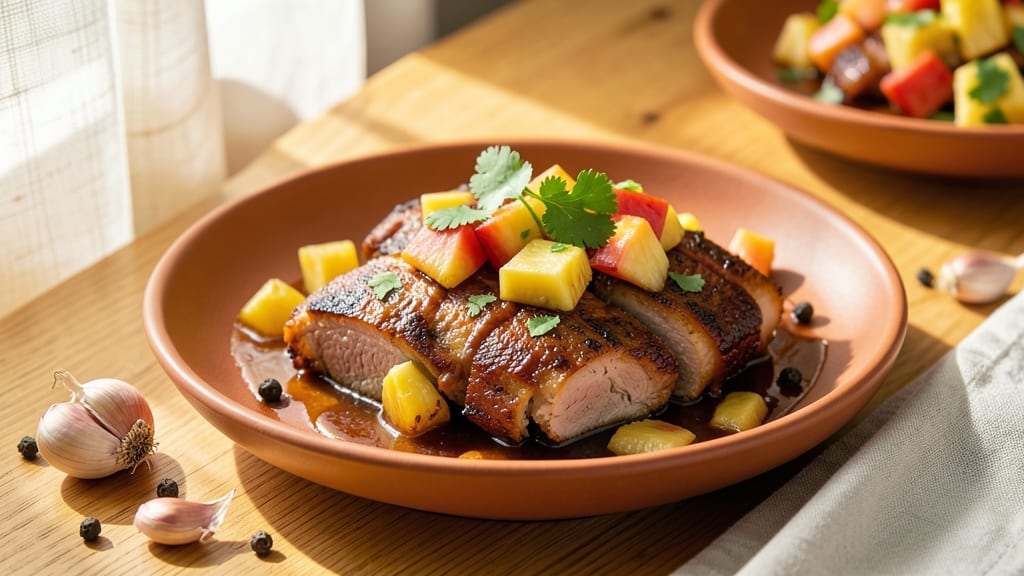
This adobo pork with pineapple recipe transforms tough cuts into melt-in-your-mouth tenderness with a sweet-tangy vinegar braise that’s impossible to resist. 💛 The secret lies in marinating the pork overnight—vinegar and soy sauce tenderize while garlic and pepper build deep flavor.
I first made this during a Boston winter when I needed something hearty enough to warm a crowd but still bright enough to feel special.
The magic happens when the pork sears in its own marinade, then simmers with pineapple until the sauce thickens into a glossy, caramelized glaze. Traditional Filipino adobo relies on vinegar’s acidity, but adding pineapple balances it with natural sweetness while keeping the dish vibrant.
This version stays true to the technique while making it approachable for home cooks—no fancy equipment needed, just patience and a heavy pot.
By the time you serve it, you’ll have perfectly tender pork with a sauce that’s sticky-sweet and tangy, where every bite delivers juicy meat and bursts of tropical fruit. The aroma alone will have everyone gathering around the table.
Pair it with steamed jasmine rice to soak up every drop of that glossy sauce, or serve over buttery mashed potatoes for a comfort-food twist.
This dish also plays beautifully with drinks—try a cold lager to cut through the richness or pineapple-infused water to echo the fruit’s brightness. The leftovers? Even better the next day as the flavors meld further. Let’s get cooking—this is the kind of meal that turns weeknights into celebrations.
Ingredients for adobo recipe pork with pineapple
Sweet-tangy magic starts with these 12 ingredients—pork, pineapple, and vinegar transform into a dish that feels like a hug.
| Ingredient | Amount | Notes |
|---|---|---|
| Pork Shoulder 🥩 | 3 lb | Bone-in for flavor, cut into 1.5-inch cubes |
| White Vinegar 💧 | 1 cup | Distilled or cane vinegar preferred |
| Soy Sauce 🍶 | ½ cup | Use light or regular, not low-sodium |
| Fresh Pineapple 🍍 | 2 cups | Fresh chunks, not canned (juice reserved) |
| Garlic Cloves 🧄 | 8 cloves | Peeled, smashed for maximum flavor |
| Black Peppercorns 🌶️ | 1 tbsp | Freshly cracked, not pre-ground |
| Bay Leaves 🌿 | 2 whole | Dried, removed before serving |
| Brown Sugar 🍚 | ¼ cup | Light or dark, packed firmly |
| Olive Oil 🫒 | 2 tbsp | Extra-virgin for searing |
| Green Onions 🧅 | ¼ cup | Sliced, for garnish |
| Salt 🧂 | 1 ½ tsp | Kosher or sea salt, adjust to taste |
| Jasmine Rice 🍚 | 2 cups | Uncooked, for serving |
The pork shoulder is your secret weapon here. Look for bone-in cuts at the butcher counter—they stay juicier and add depth of flavor. I always ask for it to be cut into 1.5-inch cubes myself, but if you're buying pre-cut, check for even sizing. The vinegar matters too—cane vinegar has a richer taste than distilled, but either works. For the pineapple, fresh is non-negotiable. Canned juice won't cut it—the texture and natural sweetness make all the difference. Grab a fresh pineapple, cut it yourself, and reserve that golden juice for the sauce. The garlic? Smashed, not minced—it releases more flavor when it cooks.
No white vinegar? Apple cider vinegar works in a pinch, though it'll be slightly milder. Running low on soy sauce? Coconut aminos or tamari are great swaps. The brown sugar can be swapped for coconut sugar or even maple syrup if you're avoiding refined sugar. Want to make this spicier? Add 1/2 tsp cayenne pepper with the black peppercorns. The green onions are optional but add a fresh pop—freeze any extras for future use. And if you're prepping ahead, marinate the pork overnight—trust me on this.
This dish tastes even better the next day, so make extra. Store leftovers in the fridge for 4-5 days or freeze for 3 months. For serving, I always cook up a big batch of jasmine rice—2 cups uncooked makes 6 servings. The sauce thickens as it sits, so if it looks too thin when reheating, simmer uncovered for 5 minutes to reduce. Garnish with those green onions right before serving—they add a bright contrast to the rich, caramelized sauce.
Why You'll Love This Recipe
- One-Pot Magic: I swear by this—dump the pork, pineapple, and sauce in one pot, walk away, and come back to fall-off-the-bone meat. The vinegar and soy sauce do all the work while you stir once midway.
- Sweet-Savory Balance: That tangy adobo punch from the vinegar and soy sauce? It’s the perfect foil for the juicy, caramelized pineapple chunks. Honestly, the first bite makes me question why I ever bought takeout.
- Leftover Hero: This dish begs to be made extra. The flavors deepen overnight, and reheated slices taste like a restaurant meal. I’ve turned it into sandwiches, fried rice, and even tacos—no waste, all wins.
- Budget Crowd-Pleaser: Pork shoulder is cheap, and a single pineapple stretches across meals. Feed four for the cost of two, and everyone—even the picky eaters—will ask for seconds. (Yes, even on a Tuesday night.)
Step-by-step instructions for adobo pork with pineapple
Here's how to create that perfect balance of sweet, tangy, and savory in every bite.
🔥 Step 1: Sear the Pork Shoulder for Maximum Flavor
Pat the 3 lb pork shoulder dry with paper towels—this ensures a proper sear. Heat 2 tbsp olive oil in a large Dutch oven over medium-high heat until shimmering. Add the pork cubes in a single layer, leaving space between them. Let them sear undisturbed for 3-4 minutes per side until deep golden brown forms.
Here's the thing—don't rush this step. You want that caramelized crust that'll pack serious flavor into your braise. Once all sides are browned, transfer the pork to a plate and set aside. You'll notice the oil will darken and smell incredible—that's the foundation of your dish.
🍳 Step 2: Build the Sweet-Tangy Adobo Base
In the same Dutch oven, reduce heat to medium and add the 8 smashed garlic cloves. Cook for 30 seconds** until fragrant—don't let them burn. Add the 1 tbsp black peppercorns and 2 whole bay leaves, stirring for 10 seconds to toast the spices slightly.
Pour in the 1 cup white vinegar and 0.5 cup soy sauce, scraping up any browned bits from the bottom. Bring to a simmer, then add the 0.25 cup brown sugar and 1.5 tsp salt. Stir until the sugar dissolves completely—this should take about 2 minutes. The mixture will smell like a perfect balance of sweet, tangy, and savory.
🥘 Step 3: Braise the Pork Until Fork-Tender
Return the seared pork to the Dutch oven, along with any accumulated juices. Add the 2 cups fresh pineapple chunks (reserve any juice from the pineapple if you used fresh). Pour in enough water to come about halfway up the pork—you should have roughly 2 cups total liquid including the pineapple juice.
Bring to a boil, then reduce heat to low, cover, and let it simmer for 1 hour 30 minutes to 2 hours. Here's where patience pays off—the pork should be fork-tender, falling apart easily when pierced. If the liquid reduces too much before the pork is tender, add hot water ½ cup at a time to maintain moisture.
⏰ Step 4: Finish and Serve Over Jasmine Rice
Once the pork is tender, remove it from the braising liquid and transfer to a plate. Strain the cooking liquid through a fine-mesh sieve to remove the bay leaves, then return it to the Dutch oven. Skim off any excess fat if needed, then simmer the sauce uncovered for 5-7 minutes until it thickens slightly.
Slice the pork into ½-inch thick pieces and return them to the sauce, tossing to coat. Serve immediately over 2 cups cooked jasmine rice, garnished with 0.25 cup sliced green onions. The rice will soak up all that delicious adobo sauce, creating the perfect balance of flavors in every bite.
Pro Tips For Making Adobo Recipe Pork With Pineapple
- Sear the Pork First: Hit that pork shoulder with a screaming-hot pan—no crowding—until it’s deep golden brown before adding anything else. I learned this the hard way when my adobo turned out mushy; the crust locks in flavor and keeps the meat from falling apart later.
- Use Pineapple Juice: Save the pineapple’s juice (about ½ cup) and toss it into the braising liquid with the vinegar and soy sauce. The natural sweetness balances the acidity, and it’s way more flavorful than just dumping chunks in at the end.
- Don’t Skip the Garlic: Smash those garlic cloves with the flat side of your knife before adding them—no chopping needed. They’ll infuse the oil and vinegar with way more flavor, and you won’t waste time fishing out burnt bits later.
- Simmer Low and Slow: After the initial sear, drop the heat to a bare simmer (tiny bubbles, not a rolling boil) and cover the pot. High heat turns the vinegar into vinegar fumes instead of tenderizing the pork—trust me, it’s worth the patience.
Common mistakes when making your adobo recipe pork with pineapple
Skipping the Marinade
I once tried making this dish without marinating the pork overnight—big mistake. The pork stayed tough and absorbed too much liquid, making the sauce watery. Always marinate for at least 12 hours in the fridge.
The vinegar and soy sauce work their magic by breaking down the muscle fibers, turning even budget cuts into melt-in-your-mouth tenderness. Pro tip: Use a ziplock bag for easy marinating and less mess. 💛
Overcrowding the Pot
When searing the pork, I’ve learned the hard way that overcrowding the Dutch oven leads to steaming instead of browning. The goal is a deep golden crust, not pale, soggy pork. Cook in batches if needed—3-4 minutes per side is key.
A 12-inch cast iron skillet works well if your Dutch oven is too small. Remember, patience here makes all the difference in flavor.
Ignoring the Pineapple Juice
The pineapple juice isn’t just for flavor—it’s essential for balancing the sauce. When I skipped adding it, the vinegar dominated, making the dish too sharp. Always reserve ¼ cup of pineapple juice from fresh chunks (or use ½ cup canned juice if needed).
This sweetens the sauce naturally and keeps the flavors harmonious. Think of it as the glue that holds everything together.
Underestimating Braising Time
Rushing the braising is the fastest way to end up with dry, chewy pork. The 1.5 to 2 hours at low heat are non-negotiable for true fork-tenderness. I’ve seen home cooks pull pork out too soon, only to have it fall apart when sliced.
Use a meat thermometer—the pork should hit 195-203°F internally. If the sauce reduces too quickly, add hot water in ½ cup increments to keep it moist.
Forgetting to Strain the Sauce
Leaving the bay leaves in the sauce can make it bitter, especially if you’re not used to their flavor. Always strain the cooking liquid through a fine-mesh sieve before returning it to the pot.
This removes the bay leaves and any impurities, giving you a smooth, glossy sauce. Trust me, the difference is noticeable—your dish will taste polished and restaurant-quality.
Over-Salting the Dish
The soy sauce and vinegar already pack a salty punch, so adding extra salt can throw off the balance. Taste the sauce before serving—it should be savory but not briny. If needed, adjust with a pinch of salt at the end.
I’ve learned to taste as I go, especially when using store-bought soy sauce, which can vary in saltiness. A little goes a long way, and you can always add more, but you can’t take it out once it’s in there.
Nutrition facts
Frequently asked questions
Can I substitute chicken or beef for the pork?
You can absolutely try it! Chicken thighs work beautifully—they cook faster than pork and stay juicy. For beef, use chuck roast cut into 1-inch cubes and increase braising time to 2.5-3 hours until fork-tender. The key is choosing a cut with good fat content to handle the long cooking time. For chicken, reduce the braising time to 45-60 minutes since it cooks quicker.
How do I make this dish less acidic?
If you prefer a milder flavor, reduce the vinegar to ½ cup and increase the brown sugar to ⅓ cup. You can also add 1 cup coconut milk during the final 10 minutes of braising to cream the sauce. For extra richness, stir in 2 tbsp butter at the end. The pineapple juice helps balance acidity naturally, so don't skip that!
Can I make this recipe in a slow cooker?
Yes! Sear the pork first as directed, then transfer everything (including pineapple) to a 6-quart slow cooker. Cook on low for 7-8 hours or high for 4-5 hours. The slow cooker method is perfect for hands-off cooking, but you may need to add ½ cup water halfway through if the liquid reduces too much. The sauce will thicken more during the final simmer on the stovetop.
What's the best way to store leftovers?
Store in an airtight container in the fridge for up to 5 days or freeze for 3 months. The flavors actually improve overnight as the pork absorbs more sauce! To reheat, warm in a saucepan over medium-low heat with 2 tbsp water until heated through. For microwave reheating, cover with a damp paper towel and heat in 30-second intervals to prevent drying.
What sides pair best with this dish?
Jasmine rice is classic, but you can also serve with garlic mashed potatoes, steamed bok choy, or coconut rice. For a lighter option, try a mango-avocado salad with lime dressing. The tropical notes complement the pineapple beautifully! For a heartier meal, add roasted sweet potatoes or grilled plantains. The sauce also works well over buttered noodles for a quick weeknight dinner.