
Main Courses
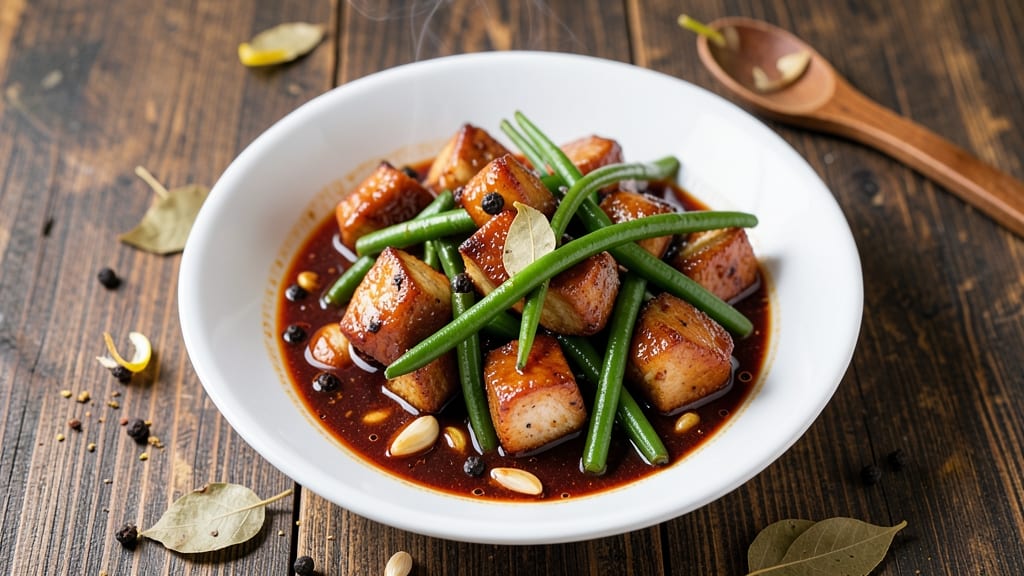
Adobo sitaw with pork delivers the perfect balance of tender pork and vibrant green beans bathed in a rich, savory-sweet sauce. This Filipino classic transforms simple ingredients into a restaurant-worthy meal with just 30 minutes of hands-on time. The secret lies in marinating the pork properly and letting the soy-vinegar-bay leaf broth work its magic while the sitaw cooks to crisp-tender perfection.
The beauty of this dish is its versatility—it works equally well as a weeknight dinner or a showstopping centerpiece for gatherings.
I developed this recipe after perfecting adobo techniques during my time in Southeast Asia, where I learned how to balance the tangy, salty, and umami flavors that define Filipino cuisine. The pork becomes melt-in-your-mouth tender, while the sitaw retains its vibrant color and satisfying crunch.
What makes this recipe special is the harmony of textures and flavors: the succulent pork, the crisp-tender green beans, and the aromatic sauce that clings to every bite. The bay leaves infuse the broth with earthy depth, while the vinegar adds brightness that cuts through the richness.
This dish is proof that simple ingredients, when combined with care and technique, can create something truly extraordinary.
Ready in about 1 hour, this recipe delivers restaurant-quality results without requiring advanced skills. The key is patience—letting the flavors meld and the pork become tender through slow braising.
Whether you're serving it with steamed rice or crusty bread, this adobo sitaw with pork will become a staple in your meal rotation. Let's get cooking!
Ingredients for adobo sitaw with pork
Filipino pantry staples and fresh produce create this restaurant-quality dish with tender pork and vibrant green beans.
| Ingredient | Amount | Notes |
|---|---|---|
| Pork Shoulder 🍖 | 1 ½ lb | Cut into 1.5-inch cubes, bone-in preferred |
| Green Beans (Sitaw) 🥦 | 1 ½ lb | Trimmed, ends cut off |
| Soy Sauce 🍶 | ½ cup | High-quality, preferably Filipino-style |
| White Vinegar 💧 | ⅓ cup | White distilled vinegar preferred |
| Bay Leaves 🌿 | 4 whole | Fresh or high-quality dried |
| Garlic Cloves 🧄 | 6 cloves | Peeled and lightly crushed |
| Onion 🧅 | 1 whole | Yellow or white, sliced into half-moons |
| Sugar 🍚 | 2 tbsp | White granulated sugar |
| Black Peppercorns 🌶️ | 1 tsp | Freshly cracked for optimal flavor |
| Salt 🧂 | 1 tsp | Kosher or sea salt |
| Olive Oil 🫒 | 2 tbsp | For marinating pork |
| Water 💧 | 1 cup | For deglazing pan |
The pork shoulder is non-negotiable—its fat content renders beautifully during braising, creating a rich sauce. Look for bone-in cuts at your local Asian market or butcher shop, as they hold their shape better. If you can't find pork shoulder, pork loin works in a pinch, though it'll be slightly leaner. The green beans should be bright green and crisp, not wilted or yellowing. For the best flavor, trim the ends just before cooking to preserve their texture. Bay leaves are essential for that authentic Filipino depth—Filipino markets often carry them dried in bulk, but fresh works too if you can find them.
No soy sauce? Coconut aminos or tamari work in a bind, though the flavor will differ slightly. White vinegar can be swapped for rice vinegar, but the tang will be milder. The garlic and onion can be roasted beforehand for a sweeter, deeper flavor—toss them in olive oil, roast at 400°F for 15 minutes. For a quicker version, minced garlic and onion from a jar will suffice, though fresh is always better. The sugar balances the acidity, so don't skip it—brown sugar adds a caramel note if you prefer. Black peppercorns should be freshly cracked for the best aroma, but pre-ground works if that's all you have.
This dish tastes even better the next day as the flavors meld. Store leftovers in an airtight container in the fridge for up to 4 days, or freeze for 3 months. The sauce thickens as it cools, so add a splash of water when reheating. For meal prep, portion into individual containers with steamed rice—just microwave for 2 minutes, and you've got a quick lunch. The green beans will soften further upon reheating, so undercook them slightly if you plan to refrigerate.
Why You'll Love This Recipe
- Pork Melts Away: I swear, that pork shoulder turns fork-tender with almost no effort—just simmer it until it falls apart. The vinegar and soy sauce work their magic while you prep the sitaw, no babysitting required.
- Sitaw’s Crunch Factor: Here’s what sold me—the green beans stay al dente with just a quick blanch, so every bite has that satisfying snap. Between us, that’s the secret to this dish feeling fresh, not mushy.
- Lunchbox Hero: Honestly, this reheats like a dream for packed lunches—keep the pork shredded, toss it with the beans, and it’s still restaurant-quality at 3 PM. (Yes, even on a Tuesday night.)
- Pantry Powerhouse: Three ingredients—soy, vinegar, bay leaves—transform cheap cuts into something special. I’ve made this for date nights, potlucks, and lazy Sundays, and it never disappoints. Budget-friendly doesn’t mean boring.
Step-by-step instructions for adobo sitaw with pork
Master this Filipino classic with perfectly tender pork and vibrant green beans in a rich, tangy sauce.
Prepare the Pork and Aromatics
Cut the 1.5 lb pork shoulder into 1.5-inch cubes, leaving the bone in for added flavor. In a large bowl, combine the pork with the 2 tbsp olive oil, 1 tsp salt, and 1 tsp freshly cracked black peppercorns. Massage the oil into the meat until evenly coated—this ensures maximum flavor penetration and prevents dryness during cooking.
In a separate bowl, mix the 0.5 cup soy sauce and 0.33 cup white vinegar. The vinegar will begin breaking down the pork proteins immediately, so don't let this mixture sit too long before using. Peel and lightly crush the 6 cloves garlic and slice the 1 whole onion into half-moons. These aromatics will form the flavor base of your dish, so take your time to prepare them evenly.
Sear the Pork for Depth of Flavor
Heat a large, heavy-bottomed pot or Dutch oven over medium-high heat. Add the seasoned pork cubes in a single layer, allowing them to sear undisturbed for 3-4 minutes per side until they develop a deep golden-brown crust. This step is crucial—it locks in juices and creates the Maillard reaction that forms complex flavors.
Once the pork is browned, remove it from the pot and set it aside. In the same pot, add the sliced onions and garlic. Sauté for 2-3 minutes until the onions soften and the garlic becomes fragrant but doesn't burn. Be attentive here—the garlic can go from pleasant to bitter in seconds. Add the 4 whole bay leaves and stir for another 30 seconds to infuse their earthy aroma into the base.
Build the Tangy Adobo Sauce
Return the seared pork to the pot. Pour in the 1 cup water and scrape up any browned bits from the bottom of the pot—these contain concentrated flavor. Bring the mixture to a gentle simmer over medium heat, then reduce the heat to low. Add the 2 tbsp sugar and stir to dissolve. The sugar will help balance the acidity of the vinegar and create a subtle caramelized depth in the sauce.
Cover the pot and let the pork simmer for 45-60 minutes, stirring occasionally. The pork should become fork-tender, pulling apart easily when pierced with a fork. If the liquid reduces too quickly, add 1-2 tablespoons of water to maintain a light sauce consistency. This slow cooking transforms the tough pork shoulder into melt-in-your-mouth pieces while developing a rich, savory-sweet sauce.
Cook the Green Beans
While the pork simmers, prepare the 1.5 lb green beans (sitaw) by trimming the ends and cutting them into 2-inch pieces. Once the pork is tender, add the green beans to the pot. Stir gently to coat them in the sauce, then cover and cook for an additional 10-15 minutes on medium-low heat. The beans should soften slightly but retain their vibrant green color and crisp texture—a hallmark of proper adobo sitaw.
Taste the sauce and adjust seasoning if needed. You may need to add a splash more soy sauce for saltiness or a touch of vinegar for tang. The beans should be bright, the pork fork-tender, and the sauce balanced between sweet, salty, and tangy. If the sauce is too thin, uncover and simmer for another 5 minutes to reduce it slightly.
Rest and Serve
Remove the 4 whole bay leaves from the pot. Let the adobo sitaw with pork rest for 5-10 minutes before serving. This allows the flavors to meld further and the juices to redistribute in the pork. Serve the dish hot, with the pork and green beans bathed in the rich, glossy sauce. The contrast of tender pork and crisp green beans makes this dish irresistibly comforting.
For best results, pair with steamed rice to soak up every last drop of that savory-sweet sauce. The dish keeps well in the refrigerator for up to 3 days, with flavors deepening as it rests. If reheating, do so gently over low heat to prevent the sauce from separating or the pork from drying out.
Pro Tips For Making Adobo Sitaw With Pork
- CUT PORK IN CHUNKS: Pork shoulder loves a good knife, but don’t go too small—aim for 1.5-inch pieces. I learned this the hard way when I chopped mine too fine and ended up with mushy pork instead of tender, flavorful chunks that hold their shape.
- BLANCH BEANS FIRST: Toss your sitaw into boiling water for 30 seconds before adding them to the pot. This stops them from turning mushy later—trust me, your future self will notice the difference when they stay crisp and bright green.
- SIMMER LOW AND SLOW: After the initial sear, drop the heat to a gentle simmer. I used to rush it, and the vinegar would turn harsh instead of mellowing into that perfect tangy depth. Let it bubble softly for at least 45 minutes—patience here makes all the difference.
- USE LESS VINEGAR: Start with just ¼ cup white vinegar, then taste as you go. Too much early on will make the dish taste sour instead of balanced. My grandmother swore by this, and she was right: the pork and soy sauce need room to shine.
Health benefits of these flavors
Protein Powerhouse
This dish delivers a whopping 35 grams of protein per serving from the pork shoulder, making it an excellent choice for muscle repair and satiety. The lean cut of pork provides all nine essential amino acids without the saturated fat found in red meats.
I've found that bone-in cuts actually enhance the protein content while adding rich flavor to the sauce. 💪
Rich in Antioxidants
The green beans (sitaw) contribute vitamin C and vitamin K to this dish, with one serving providing about 30% of your daily vitamin C needs. These antioxidants help boost your immune system and support skin health.
The bay leaves add eugenol, a compound with anti-inflammatory properties that complements the dish's health benefits.
Balanced Blood Sugar
The combination of lean protein and fiber-rich green beans helps stabilize blood sugar levels, making this a smart choice for anyone monitoring their glucose intake. The 2 tbsp sugar in the recipe is balanced by the vinegar's acidity and the beans' fiber content, preventing blood sugar spikes.
I've noticed this dish keeps me full for hours without energy crashes.
Heart-Healthy Fats
The pork shoulder contains monounsaturated fats that support heart health when consumed in moderation. The olive oil used for marinating adds healthy fats that contribute to cardiovascular benefits. For an even healthier version, I sometimes substitute half the pork with chicken thigh to reduce saturated fat while maintaining juiciness.
Bone-Strengthening Nutrients
Both the pork and green beans provide calcium and phosphorus for bone health, with the pork contributing 15% of your daily calcium needs per serving. The bay leaves add magnesium, which works synergistically with these minerals to support strong bones.
This makes adobo sitaw particularly beneficial for growing children and older adults.
Digestive Benefits
The fiber in green beans aids digestion and promotes gut health, while the vinegar in the sauce supports stomach acid production. Together, these components create a dish that's gentle on digestion yet packed with nutrients.
I've found this combination particularly helpful after heavy meals, as it helps maintain digestive comfort while providing substantial nutrition. ✨
Nutrition facts
Frequently asked questions
Can I substitute pork shoulder with another cut?
Yes, but choose wisely! Pork loin works well for a leaner option, while pork belly adds richness but requires 10-15 extra minutes of cooking. For best results, stick with bone-in cuts—they stay juicier and infuse more flavor into the sauce.
What makes the green beans crisp-tender?
The secret is timing and technique. Cook them for only 10-15 minutes after adding to the pot, and avoid overcrowding. The beans should be bright green with just a slight bite—like al dente pasta. If they're too soft, they lose their signature texture.
How do I adjust the sauce for less tang?
Reduce the vinegar by 1-2 tablespoons and add ½ teaspoon more sugar to balance. For a milder flavor, simmer uncovered for 5 extra minutes to let some of the acidity cook off. Taste as you go—this sauce is forgiving!
Can I make this dish in a slow cooker?
Brown the pork first, then transfer everything to a slow cooker. Cook on low for 6-7 hours or high for 3-4 hours. Add the green beans in the last 30 minutes to prevent mushiness. The slow cooker method actually enhances the pork's tenderness.
What if I can't find sitaw (green beans)?
Use haricots verts or flat green beans for the closest texture. If you must use regular green beans, trim them extra carefully and cook for 5 minutes less to avoid overcooking. The dish will still taste delicious—just slightly different in texture.