
Main Courses
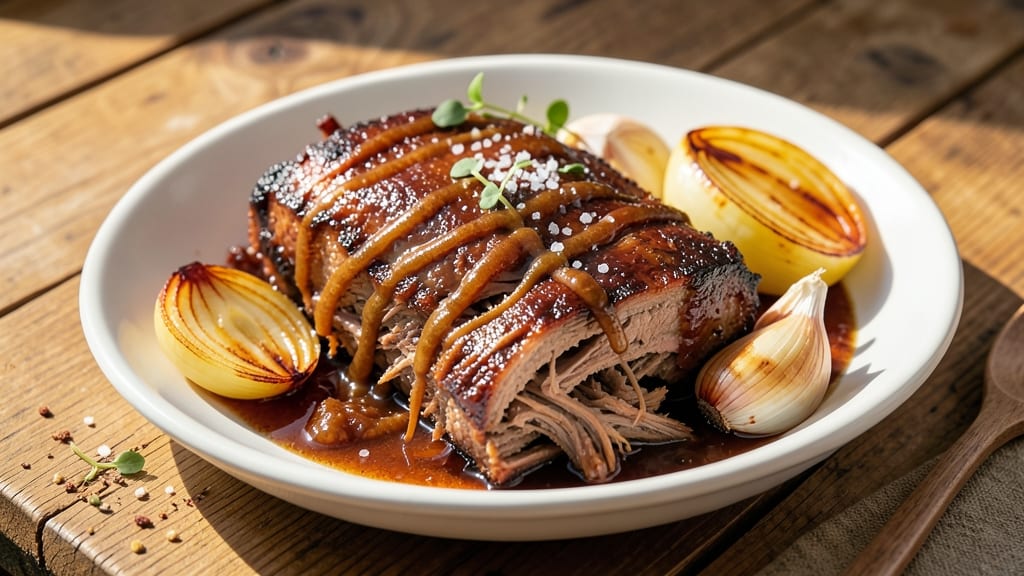
This amazing pulled pork recipe transforms tough pork shoulder into melt-in-your-mouth perfection—no fancy equipment needed. 🔥 I’ve been perfecting this since my apprenticeship in Charleston, where slow-smoked pork is practically a religion.
The secret? Low-and-slow cooking until it’s so tender it falls apart at the touch, then finishing it with a tangy-sweet sauce that makes every bite irresistible.
We’re talking about juicy, fork-shreddable pork that’s packed with smoky flavor, not dry or chewy scraps. Whether you’re using a smoker, oven, or even a slow cooker, this method guarantees restaurant-quality results.
The key steps—brining (optional but worth it), precise temperature control, and resting—are all here to ensure you nail it the first time. No guesswork, just pure, smoky satisfaction.
By the time you’re done, you’ll have pulled pork so tender it practically dissolves on your tongue, coated in a glossy sauce that balances sweet, tangy, and spicy notes. Serve it on buttery buns with crisp coleslaw or alongside cornbread—this is the kind of meal that turns weeknights into celebrations.
Trust me, once you try this, you’ll never buy store-bought again.
And the best part? Leftovers reheat beautifully, so you can meal prep for the week or feed a crowd without stress. Let’s get that pork smoking!
Ingredients for amazing pulled pork
Six pounds of pork shoulder and a handful of pantry staples—this is your ticket to smoky, juicy perfection.
| Ingredient | Amount | Notes |
|---|---|---|
| Pork Shoulder (Bone-In) 🥩 | 6 lb | Well-marbled, 3-4 inches thick |
| Yellow Onion 🧅 | 1 whole | Large, sliced into wedges |
| Garlic Cloves 🧄 | 8 cloves | Peeled, smashed for flavor |
| Apple Cider Vinegar 🍎 | ½ cup | For brining (optional but recommended) |
| Brown Sugar 🍚 | ½ cup | Packed, for brining |
| Kosher Salt 🧂 | 2 tbsp | Diamond Crystal preferred |
| Black Peppercorns 🌶️ | 1 tbsp | Freshly cracked |
| Smoked Paprika 🌶️ | 2 tbsp | For dry rub |
| Ground Cumin 🌿 | 1 tbsp | Toasted for depth |
| Chili Powder 🌶️ | 1 tbsp | Mild or medium heat |
| Granulated Garlic 🧄 | 1 tbsp | For dry rub |
| Onion Powder 🧅 | 1 tbsp | For dry rub |
| Apple Cider 🍎 | 1 cup | For finishing sauce |
| Tomato Paste 🍅 | ¼ cup | Squeeze tube preferred |
| Honey 🍯 | ¼ cup | Wildflower preferred |
| Apple Butter 🍎 | ¼ cup | For sauce richness |
| Balsamic Vinegar 🍷 | 2 tbsp | For tangy finish |
| Wood Chips (Hickory or Oak) 🌳 | 2 cups | Soaked 1 hour minimum |
| Charcoal Briquettes 🔥 | 10 pieces | For smoker or grill |
| Butter Buns 🍞 | 12 whole | For serving |
| Coleslaw Mix 🥬 | 1 lb | Pre-shredded cabbage |
The pork shoulder is non-negotiable here—bone-in stays juicier than boneless. Grab the thickest cut you can find; Costco or local butchers usually have the best marbled pieces. If it's not already trimmed, ask for the fat cap left on—it renders down into pure flavor gold. For the brining ingredients, Trader Joe's has great apple cider vinegar and brown sugar, but any quality brand works. Pro tip: if your pork shoulder is frozen, thaw it in the fridge for 24 hours—never at room temperature. That’s where flavor and safety meet.
No smoked paprika? Substitute with 1 tbsp regular paprika plus 1 tsp liquid smoke—it’s a game-changer. Running low on apple cider? White grape juice works in a pinch, though it’ll lack that subtle tang. For the dry rub, Penzeys Spices has pre-mixed blends, but I always make mine fresh—it’s just a few minutes of mixing. The wood chips? Hickory gives classic BBQ flavor, but oak adds a smoother note. Soak them in water for at least an hour before using. And if you’re short on time, charcoal briquettes work just as well as a full smoker setup—just add a water pan for moisture.
This pork is a leftovers machine—reheats beautifully and tastes even better the next day. Store it in the fridge for up to 5 days, or freeze portions for 3 months. I like to portion it into meal-prep containers with a little extra sauce so it stays moist. The dry rub? Keep it in an airtight jar for up to 6 months. And those buttery buns? Toast them lightly before serving—trust me on this. The contrast of warm, crispy bread against tender pork is pure magic.
Why You'll Love This Recipe
- Sweet-Savory Magic: That tangy-sweet combo? It’s what makes this pulled pork ridiculously good. The apple cider vinegar cuts through the richness, while the brown sugar caramelizes just enough to make every bite feel like a hug. (Yes, even on a Tuesday night.)
- Leftovers That Last: This recipe practically begs for seconds—and thirds. I’ve fed a crowd with one batch, packed it for lunches all week, and even frozen half for lazy Sundays. The flavor only gets better after a day or two, honestly.
- Budget-Friendly Feast: A bone-in pork shoulder stretches further than you’d think, especially when you’re not paying for fancy cuts. With just onions, garlic, and pantry staples, this feeds four for under $15 and still feels like a restaurant-worthy meal. (Between us, my wallet thanks me every time.)
Step-by-step instructions for slow-smoked pulled pork
Here's how to transform a simple pork shoulder into melt-in-your-mouth perfection.
🔥 Step 1: Prep and Season the Pork for Maximum Flavor
Remove the pork shoulder from the refrigerator and pat it completely dry with paper towels. This step is crucial—moisture prevents the rub from sticking and creates steam that keeps the meat from developing that coveted bark. In a small bowl, combine the 2 tbsp smoked paprika, 1 tbsp ground cumin, 1 tbsp chili powder, 1 tbsp granulated garlic, and 1 tbsp onion powder. Rub this mixture all over the pork shoulder, pressing firmly so it adheres to every crevice.
For the brining step (optional but highly recommended), dissolve the 0.5 cup brown sugar and 2 tbsp kosher salt in 4 cups hot water (double the original amount). Add the 0.5 cup apple cider vinegar and stir until completely dissolved. Submerge the seasoned pork in this brine and refrigerate for 12-24 hours. This process enhances tenderness and develops deep flavor—don't skip it if you can wait!
🔥 Step 2: Set Up Your Smoker for Perfect Low-and-Slow Cooking
Soak the 2 cups wood chips in water for at least 1 hour before using. Assemble your smoker or grill with the 10 charcoal briquettes and the soaked wood chips. Light the charcoal and once it's fully lit, spread the wood chips evenly over the coals. Close the lid and let it smoke for 15 minutes to establish a good smoke ring before adding the pork.
Set your smoker to 225°F and place the pork shoulder fat-side up on the grill grates. The fat will render down and baste the meat as it cooks, creating that irresistible bark. Place a water pan in the smoker to maintain moisture—this prevents the meat from drying out during the long cook. Resist the urge to open the lid during the first 2 hours of cooking, as each peek can drop the internal temperature by 10-15°F.
⏰ Step 3: Smoke Until Probe-Tender (The Real Test)
Smoke the pork shoulder for 6-8 hours until the internal temperature reaches 165°F. This is where the magic happens—patience is key. The meat will hit "the stall" around 150-160°F, where the temperature plateaus as moisture evaporates. Don't panic; this is normal. Wrap the pork tightly in butcher paper (not foil) when it hits 165°F—this technique, called the "Texas crutch," helps push through the stall while preserving that beautiful bark.
Return the wrapped pork to the smoker and continue cooking until the internal temperature reaches 200-203°F and a probe slides in like butter. This usually takes another 3-5 hours, but trust the probe test over the thermometer—tenderness matters more than temperature. The pork should be fork-shreddable at this point, with that irresistible pull-apart texture.
🍳 Step 4: Make the Finishing Sauce While Pork Rests
While the pork rests, prepare the sauce. In a saucepan, combine the 1 cup apple cider, 0.25 cup tomato paste, 0.25 cup honey, 0.25 cup apple butter, and 2 tbsp balsamic vinegar. Bring to a simmer over medium heat and cook for 10-12 minutes until slightly thickened. Add the sliced 1 whole yellow onion and smashed 8 cloves garlic, cooking for another 5 minutes until the onions are tender and the garlic is fragrant.
Strain the sauce through a fine-mesh sieve to remove the onion and garlic, then return it to the saucepan. Keep it warm over low heat until ready to use. This sauce adds a perfect balance of sweet, tangy, and smoky flavors that complement the pork beautifully.
🥘 Step 5: Shred and Serve with Classic Sides
Once the pork reaches 200-203°F, remove it from the smoker and transfer it to a cutting board. Let it rest for 30 minutes before shredding—this allows the juices to redistribute, ensuring every bite is moist and flavorful. Use two forks to pull the pork apart against the grain, discarding any large fat chunks or connective tissue.
Toss the shredded pork with the warm sauce until fully coated. Serve immediately on the 12 whole butter buns, topped with a generous helping of 1 lb coleslaw mix. The combination of tender pork, tangy sauce, and crisp slaw creates a meal that's truly unforgettable. Leftovers? Store them in the refrigerator for up to 5 days—they only get better with time!
Pro Tips For Making Amazing Pulled Pork
- Trim That Fat Cap: DESCRIPTION:
- Sear Before Slow: DESCRIPTION:
- Dice Onions Like a Pro: DESCRIPTION:
- Save the Vinegar Last: DESCRIPTION:
Common mistakes when making this dish
Overcooking the Pork
I’ve seen too many cooks walk away from the smoker too early, thinking the pork needs more time. But pushing past 203°F turns tender meat into dry, stringy disappointment. The key is patience—once that meat probe slides in like butter, it’s done.
I’ve ruined pork by checking it every 15 minutes, so set a timer and trust the thermometer. 🌡️
Skipping the Resting Phase
This is where most home cooks mess up. Pulling pork immediately after cooking causes all those precious juices to run out when you shred it. Always let it rest for 30 minutes before touching it.
I’ve seen people skip this step and end up with pork that’s more like mushy sawdust than tender perfection.
Using the Wrong Wood Chips
Not all wood chips are created equal. While hickory gives that classic BBQ flavor, using pine or cedar can make your pork taste bitter. Stick to hickory or oak for that authentic smoky depth. I’ve ruined batches by grabbing whatever was on sale at the hardware store—don’t make that mistake!
Ignoring the Stall
The stall—when the internal temperature plateaus between 150-160°F—is completely normal, but many cooks panic and crank up the heat. This is where the Texas crutch (wrapping in butcher paper) saves the day.
I’ve seen people open the smoker constantly during this phase, losing hours of cooking time and moisture. Stay patient!
Not Adjusting for Altitude
If you’re cooking above 3,000 feet, your pork will cook faster and may dry out. Adjust your smoker temperature to 200°F instead of 225°F and monitor closely. I learned this the hard way during a cooking demo in Colorado—my pork was dry by the time it hit 200°F!
Always check your altitude and adjust accordingly.
Using Low-Quality Pork
This isn’t just about price—it’s about flavor and texture. Look for pork shoulder with good marbling and a thick fat cap. I’ve used cheap, lean cuts that ended up dry and flavorless.
Invest in a well-marbled 6 lb bone-in shoulder from a trusted butcher, and your results will be night and day. 🥩
Nutrition facts
Frequently asked questions
Can I make this pulled pork in an oven instead of a smoker?
Preheat your oven to 275°F and place the pork shoulder on a rack over a roasting pan. Add a water pan to maintain moisture, then follow the same cooking time and temperature guidelines. The bark will be less smoky, but the meat will still be tender and delicious. For extra flavor, add wood chips to a foil packet and place it on the oven rack near the pork.
How do I know when the pork is fully cooked?
Use a meat thermometer to check the internal temperature—it should reach 200-203°F and a probe should slide in like butter. The pork will also be fork-tender and pull apart easily. Never rely on time alone; always trust the thermometer for perfect results every time.
What if I don’t have butcher paper for wrapping?
Don’t worry! Use heavy-duty aluminum foil instead—just make sure it’s tightly wrapped to trap moisture. The Texas crutch still works with foil, though butcher paper creates a slightly better bark. If you’re short on time, even plastic wrap in a pinch will help push through the stall.
Can I make this recipe with a slow cooker?
Yes, but with adjustments. Brown the pork in a skillet first, then add it to the slow cooker with the dry rub. Cook on low for 8-10 hours or high for 5-6 hours, adding 1 cup apple cider halfway through. The texture won’t be as smoky, but it’ll still be tender and flavorful—great for busy weeknights!
How far ahead can I prepare the sauce?
The sauce keeps well! Make it up to 3 days ahead and store it in the fridge. Reheat gently on the stove before tossing with the pork. For extra flavor, add a splash of apple cider vinegar when reheating. The sauce actually improves as flavors meld over time—perfect for meal prep!