
Salads
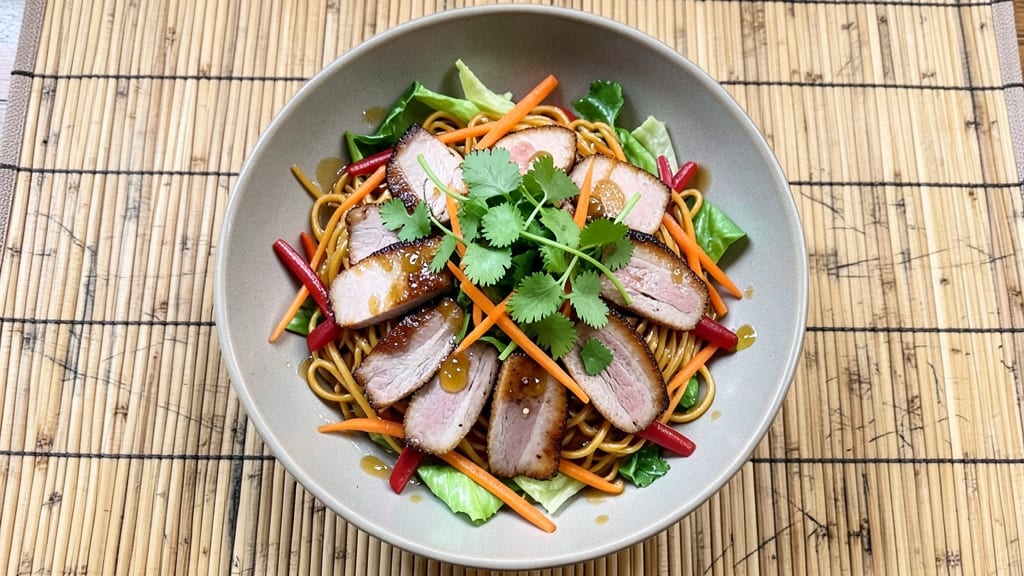
This Asian pork salad recipe delivers restaurant-quality crunch and bold flavors in under 30 minutes. ✨ I developed it after years of perfecting crispy pork techniques—whether you prefer tender shreds or chewy noodles, this salad balances everything with a tangy lime dressing that cuts through the richness.
The secret? A quick sear in the pan followed by a cold water bath for that signature crisp-tender texture. What sets this dish apart is the crispy element—whether you use thinly sliced pork or chow mein noodles, the high-heat method creates satisfying bites that hold up against the fresh vegetables.
I pair it with a dressing that's sweet, tangy, and just spicy enough to wake up every forkful. The vegetables stay crisp, the pork stays tender, and the dressing ties it all together like a perfect harmony.
By the time you're done assembling, you'll have a salad that's as beautiful as it is delicious—golden pork or noodles against vibrant greens, garnished with toasted sesame seeds and fresh herbs. It's the kind of dish that feels special enough for company but simple enough for a weeknight dinner.
The best part? Every bite delivers that perfect balance of textures and flavors. Serve it as a light lunch or bring it to a potluck—this salad always disappears fast. Here's how to make it!"
Ingredients for asian pork salad
Crispy pork, chewy noodles, and zesty lime dressing—this salad delivers restaurant-quality flavor in one bowl.
| Ingredient | Amount | Notes |
|---|---|---|
| Boneless Pork Loin 🥩 | 1 ½ lb | Thinly sliced against grain |
| Chow Mein Noodles 🍜 | 8 oz | Dried, uncooked variety |
| Fresh Carrots 🥕 | 1 cup | Julienned, medium size |
| Red Bell Pepper 🌶️ | 1 whole | Thinly sliced, seeds removed |
| Green Cabbage 🥬 | 3 cups | Shredded, thin strips |
| Fresh Cilantro 🌿 | ¼ cup | Chopped, stems removed |
| Toasted Sesame Seeds 🌰 | 2 tbsp | For garnish |
| Lime Juice 🍋 | ½ cup | Freshly squeezed |
| Rice Vinegar 💧 | ¼ cup | Seasoned preferred |
| Sesame Oil 🫒 | 2 tbsp | Toasted for aroma |
| Granulated Sugar 🍯 | 2 tbsp | Or honey for variation |
| Soy Sauce 🍶 | 3 tbsp | Low-sodium preferred |
| Garlic Cloves 🧄 | 4 cloves | Minced for dressing |
| Vegetable Oil 🫒 | 3 tbsp | For frying pork |
| Salt 🧂 | 1 tsp | Kosher or sea salt |
The pork is everything here. Look for boneless loin at the butcher counter—it stays juicier than shoulder. Slice it paper-thin against the grain for that signature crisp-tender texture. Costco or Whole Foods usually carry pre-sliced pork for stir-fry, but slicing it yourself gives you control. If you can't find loin, pork tenderloin works too—just slice it even thinner. The secret to crispy pork? High heat, then an ice bath. Don't skip it—trust me on this.
No chow mein noodles? Ramen noodles or rice noodles are solid swaps, but cook them al dente. The carrots can be baby carrots if that's what's in the fridge—just slice them lengthwise for uniform strips. Red bell pepper adds sweetness, but yellow or orange works too. For the dressing, Trader Joe's seasoned rice vinegar is a game-changer—it's already got a little sweetness and umami. No fresh lime? Bottled lime juice works in a pinch, but fresh is definitely better. The sesame oil should smell nutty and toasted—if it smells flat, it's gone bad.
Pork stays crispy for about 20 minutes after cooking, so assemble the salad last. The dressing keeps for 5 days in the fridge, but the noodles and veggies are best fresh. Double the dressing if you're making this ahead—it's perfect over rice too. Store components separately: pork and noodles in one container, veggies and dressing in another. Toss everything together just before serving for maximum crunch.
Why You'll Love This Recipe
- I swear by this trick: toss the sliced pork loin with a splash of soy sauce and sesame oil, then let it sizzle on the same pan where I’ll later stir-fry the noodles. No extra dishes, no stress—just that caramelized crust on the pork that makes everything taste like it came from a restaurant.
- One-Pan Magic: I swear by this trick: toss the sliced pork loin with a splash of soy sauce and sesame oil, then let it sizzle on the same pan where I’ll later stir-fry the noodles. No extra dishes, no stress—just that caramelized crust on the pork that makes everything taste like it came from a restaurant.
- Umami Bomb: Between the pork’s savory depth and the crunchy cabbage, this salad packs a flavor punch without needing fancy sauces. Honestly, the moment I mix in the shredded carrots and bell pepper, my kitchen smells like a food truck, and that’s saying something.
- Lunchbox Hero: I make double batches on Sundays because this salad holds up perfectly for days. Pack it in containers with a little extra dressing, and it’s still crisp and satisfying by Wednesday—no sad wilted greens here, thanks to the sturdy chow mein noodles keeping everything together.
Step-by-step instructions for crispy noodles and tangy lime dressing
Here's how to create a perfect Asian pork salad with irresistibly crispy noodles and a bright, tangy dressing.
🔥 Step 1: Sear the Pork to Perfect Crispiness
Slice the 1.5 lb boneless pork loin thinly against the grain for tender bites. Heat 3 tablespoons vegetable oil in a large skillet over medium-high heat until shimmering. Add the pork in a single layer and let it sear undisturbed for 2-3 minutes until the edges turn golden brown.
Flip the pork and cook for another 1-2 minutes until fully cooked through and crispy on both sides. The pork should release easily from the pan—if it sticks, your oil isn't hot enough. Transfer the pork to a plate and tent loosely with foil to keep warm while you prepare the rest of the salad.
🍳 Step 2: Cook the Chow Mein Noodles to Al Dente
Bring a large pot of water to a rolling boil and add 1 teaspoon salt. Add the 8 oz chow mein noodles and cook for 3 minutes less than the package instructions (usually 4-5 minutes). You want them al dente—they'll finish cooking in the dressing.
Drain the noodles and rinse briefly under cold water to stop the cooking process. Toss the noodles with 1 tablespoon toasted sesame seeds while still slightly damp to help them crisp up. Spread them on a baking sheet and let them cool completely before assembling the salad.
👨🍳 Step 3: Prepare the Crunchy Vegetable Medley
While the noodles cool, julienne the 1 cup fresh carrots into thin matchsticks and slice the 1 whole red bell pepper into thin strips. Shred the 3 cups green cabbage into thin, bite-sized pieces. Chop the 0.25 cup fresh cilantro finely, removing any tough stems.
Combine all the vegetables in a large mixing bowl. Add the cooled noodles and toss gently to distribute the sesame seeds evenly. The vegetables should be crisp and fresh—this is the foundation of your salad's texture contrast.
🥘 Step 4: Make the Tangy Lime Dressing
In a small bowl, whisk together the 0.5 cup lime juice, 0.25 cup rice vinegar, 2 tablespoons sesame oil, 2 tablespoons granulated sugar, 3 tablespoons soy sauce, and 4 minced garlic cloves. Taste and adjust the balance—you want sweet, tangy, and slightly garlicky.
This dressing is the heart of your salad. The lime juice brightens everything, the rice vinegar adds tang, and the sesame oil brings depth. If it's too thick, add 1 tablespoon water to loosen it to a pourable consistency. Pour the dressing over the noodle-vegetable mixture and toss gently to coat everything evenly.
🍽️ Step 5: Assemble and Garnish for Maximum Flavor
Add the crispy pork back to the salad and toss everything together gently. The warm pork will help infuse the salad with its savory flavor. Let it sit for 5 minutes to allow all the flavors to meld together.
Garnish with the remaining 1 tablespoon toasted sesame seeds and serve immediately. The contrast of crispy noodles, tender pork, and fresh vegetables with that tangy dressing is what makes this salad truly special. Enjoy it as a light meal or with some steamed rice for a heartier dish!
Pro Tips For Making Asian Pork Salad
- Sear Pork in Stages: I learned this the hard way—trying to cook the pork loin all at once leaves you with uneven doneness. Cut it into 1-inch chunks first, then sear half in a screaming-hot wok with 1 tablespoon oil until deep brown (about 3 minutes). Set aside, then repeat with the rest. The second batch won’t steal heat from the pan, and every piece gets that caramelized crust.
- Shave Cabbage Like Coleslaw: That thick green cabbage wedge? It’s the salad’s backbone, but chopping it into uneven hunks ruins the texture. Instead, cut out the core, then slice the wedge in half lengthwise before thinly shaving it against the grain with a sharp knife. You’ll end up with delicate, uniform ribbons that stay crisp even after the dressing soaks in—no sad, limp leaves here.
- Blanch Noodles First: I used to toss raw chow mein noodles straight into the salad, and they’d either turn to mush or stay rock-hard. Instead, boil them for 1 minute less than package instructions, then immediately shock in ice water. Drain well, toss with a teaspoon of oil to prevent sticking, and they’ll hold their shape while still being tender. Pro move: Let them cool completely before adding to the salad.
- Char Veggies Separately: Bell peppers and carrots burn at different rates, and if you crowd the pan, you’ll end up with one side al dente and the other charred. Slice the carrots into matchsticks and the bell pepper into thin strips, then cook them in batches over medium-high heat for 2–3 minutes each. The peppers will soften faster, while the carrots get that sweet, caramelized edge without turning to ash.
Serving suggestions for asian pork salad
Plating Like a Pro
Start by dividing your salad into 4 wide bowls or a single large platter if serving family-style. I like to use white stoneware bowls because they contrast beautifully with the vibrant colors. Arrange the crispy noodles and vegetables first—they form the base that holds everything together. 🥗
Place the crispy pork in the center of each bowl or along the middle of the platter. The warm pork will help draw people to their plates, and it looks stunning when it's golden and crispy.
Garnish with the remaining 1 tablespoon toasted sesame seeds and a sprinkle of fresh cilantro right before serving.
Beverage Pairings
A crisp Japanese lager like Asahi Super Dry or Sapporo complements the salad perfectly—the light, clean flavors balance the richness of the pork and noodles. If you prefer wine, a dry Riesling or Pinot Grigio adds a refreshing acidity that cuts through the dressing. 🍷
For a non-alcoholic option, try sparkling yuzu soda or ginger beer. The effervescence and citrus notes enhance the salad's bright flavors without overpowering them. Serve these chilled in 12-ounce glasses with ice and a lime wedge for garnish.
Serving for Groups
Double the recipe and serve this salad as a main dish with steamed jasmine rice or warm dumplings on the side. I often make a big batch for potlucks—it’s easy to transport in separate containers.
Store the pork and noodles in one airtight container and the dressing and veggies in another. Toss everything together right before serving to keep the crunch. ✨
For a festive touch, arrange the salad on a large wooden board and serve family-style. Add extra garnishes like mandarin orange segments or crushed peanuts for texture and color. This makes it feel special for gatherings without requiring extra effort.
Leftovers Strategy
This salad doesn’t reheat well, so plan to eat it within 24 hours for the best texture. Store any leftovers in an airtight container in the fridge, but separate the pork and noodles from the dressing.
Reassemble with fresh veggies and a splash of extra dressing when ready to eat. 💡
If you have extra dressing, store it separately in a small jar. It keeps for up to 5 days and works great as a dip for spring rolls or a marinade for grilled shrimp.
The pork and noodles can be stored for 3 days in the fridge, but they’re best enjoyed fresh.
Nutrition facts
Frequently asked questions
Can I use chicken instead of pork in this recipe?
Chicken breast works beautifully—slice it paper-thin against the grain and cook it the same way. For extra flavor, marinate the chicken in 1 tablespoon soy sauce and 1 teaspoon sesame oil for 15 minutes before cooking. The texture will be slightly different but still delicious.
How do I make the noodles extra crispy?
After cooking and rinsing, toss the noodles with 1 tablespoon toasted sesame oil and spread them on a baking sheet. Place the sheet in a 200°F oven for 10 minutes to dry them out completely. This removes moisture and creates that satisfying crunch.
What if I don't have chow mein noodles?
No problem! Use rice noodles, udon noodles, or even spaghetti (cooked al dente). For a low-carb option, try shredded cabbage or kale as a base instead. The key is keeping everything crisp—just adjust cooking times accordingly.
Can I make this salad ahead of time?
Yes, but store components separately to maintain texture. Keep the pork and noodles in one container, and the dressing/veggies in another. Reassemble right before serving—this ensures the noodles stay crispy and the veggies stay fresh. The dressing can be made 2 days ahead and stored in the fridge.
How spicy should the dressing be?
Adjust to your taste! Start with the base recipe, then add ½ teaspoon red pepper flakes or 1 teaspoon sriracha for heat. For a milder version, skip the garlic or reduce the soy sauce slightly. The lime juice and vinegar already provide enough tang without extra spice.