
Main Courses
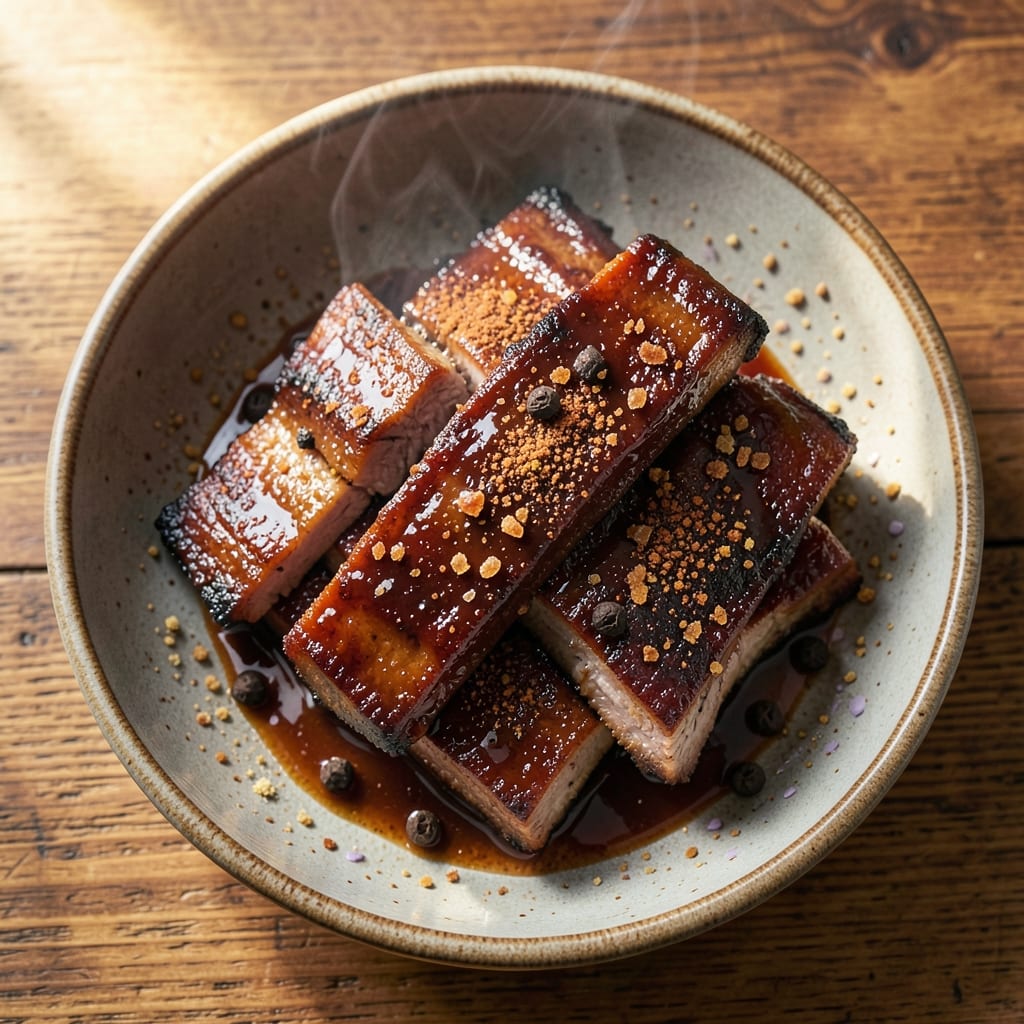
The oven-baked BBQ pork spare ribs with crispy bark and fall-off-the-bone tenderness are the kind of dish that transforms a casual dinner into a showstopper. I learned the hard way that low-and-slow cooking is non-negotiable—skipping this step means tough, flavorless ribs. This recipe delivers restaurant-quality results without a smoker, using simple techniques and a dry rub that builds deep, smoky flavor throughout.
What makes this recipe work is the balance of time and temperature: 3 hours at 275°F ensures the meat becomes tender, while the final 30 minutes at 425°F creates that coveted crispy bark. No wrapping or basting required—just patience and a well-seasoned rub. The secret ingredient? Brown sugar in the dry rub, which caramelizes beautifully for extra depth. This method is foolproof for beginners but refined enough for seasoned cooks.
By the time you pull those ribs from the oven, you’ll have a rack of meat so tender it practically melts in your mouth, with a crust that’s irresistibly crispy. The aroma alone will have everyone gathering around the table. Serve with classic BBQ sauce for dipping or let the dry rub’s flavors shine on their own. This is the kind of dish that makes you look like a pitmaster—even if you’re just heating up your oven.
Perfect for game day, family gatherings, or a special weekend meal, these ribs are worth every minute of wait time. The best part? Leftovers reheat beautifully, making them ideal for meal prep. Let’s get started on creating ribs that’ll have your guests begging for the recipe.
Ingredients for bbq pork spare ribs recipe oven
Six ingredients transform raw ribs into restaurant-quality BBQ—crispy outside, tender inside.
| Ingredient | Amount | Notes |
|---|---|---|
| Pork Spare Ribs 🥓 | 4 lb | Bone-in, meaty ends preferred |
| Brown Sugar 🍯 | ½ cup | Light or dark variety |
| Smoked Paprika 🌶️ | 2 tbsp | For deep smoky flavor |
| Garlic Powder 🧄 | 1 tbsp | Freshly ground preferred |
| Onion Powder 🧅 | 1 tbsp | For balanced sweetness |
| Ground Black Pepper 🌶️ | 1 tbsp | Freshly cracked for bite |
| Kosher Salt 🧂 | 1 tbsp | Diamond Crystal preferred |
| Mustard Powder 🍯 | 1 tsp | For subtle tang |
| Olive Oil 🫒 | 2 tbsp | For rib coating |
| Apple Cider Vinegar 🍎 | 1 tbsp | Balances sweetness |
| BBQ Sauce 🍅 | ½ cup | For serving, optional |
| Fresh Rosemary 🌿 | 1 tbsp | Chopped, for garnish |
| Fresh Thyme 🌿 | 1 tbsp | Chopped, for garnish |
The ribs are the star, so grab the meaty ends—they hold up best to slow cooking. Costco or local butchers often have them pre-cut, but if buying whole, trim excess fat for cleaner bark. Look for ribs with good marbling—they stay juicier. I always buy extra because they disappear fast. For the brown sugar, light or dark works, but dark has more molasses flavor. The smoked paprika is non-negotiable—it's what gives that authentic smoky taste without needing a smoker. Grab the Penzeys brand if you want to splurge, but regular grocery store stuff is fine too.
No smoked paprika? Regular paprika plus a pinch of liquid smoke gets you close. Short on brown sugar? Maple syrup at half the amount works in a pinch. The apple cider vinegar might sound odd, but it cuts through the sweetness and adds depth. Fresh rosemary and thyme? Dried works at one-third the amount, but fresh is worth it if you've got it. For the BBQ sauce, I like Sweet Baby Ray's for serving, but any good store-bought or homemade will do. The olive oil is just for coating—don't skimp here, it helps the rub stick.
These ribs reheat beautifully—just warm in a 350°F oven for 10 minutes with foil. Store leftovers in the fridge for 4 days or freeze for 3 months. I always make a double batch because they're that good. The dry rub keeps in a jar for 3 months in the pantry, so double it up. For game day, double the batch and bake two racks at once—just rotate the pans halfway through for even cooking.
Why You'll Love This Recipe
- One-Pan Magic: I swear by this recipe—just ribs, a dry rub of brown sugar and smoked paprika, and 30 minutes in the oven. No mess, no fuss, and honestly? The cleanup is just wiping one sheet pan.
- Sweet & Smoky Bang: That caramelized brown sugar crust with the deep, smoky paprika? It’s the kind of flavor that makes people ask, "What’s in this?" (Spoiler: mostly garlic powder and patience.)
- Tailgate or Tuesday: Serve these with buns for a crowd or pull out leftovers for sandwiches the next day. Between us, I’ve fed a football team and my lazy Sunday brunch crew with the same batch.
- Budget-Friendly Feast: Pork ribs stretch further than you’d think, especially when you bake them instead of grill. Plus, the rub costs pennies—just a pinch of spices and sugar. My wallet and my family thank me.
Step-by-step instructions for BBQ pork spare ribs
Here's how to achieve that perfect balance of crispy bark and melt-in-your-mouth tenderness in your oven.
Prepare the Dry Rub and Coat the Ribs
In a medium bowl, combine the 0.5 cup brown sugar, 2 tablespoons smoked paprika, 1 tablespoon garlic powder, 1 tablespoon onion powder, 1 tablespoon ground black pepper, 1 tablespoon kosher salt, and 1 teaspoon mustard powder. Mix well with your hands or a fork until the sugar is evenly distributed and the mixture looks like coarse sand.
Pat the 4 lb pork spare ribs dry with paper towels—this is crucial for crispy bark. Then, rub the mixture all over the ribs, pressing firmly so the spices adhere well. The sugar will caramelize during cooking, creating that coveted dark crust. Let the ribs sit at room temperature for 30 minutes while you preheat the oven.
Preheat and Oil the Oven Rack
Preheat your oven to 275°F. This lower temperature ensures tender meat without drying it out. Place a wire rack on a rimmed baking sheet—this allows air to circulate underneath the ribs, promoting even cooking and crispiness.
Brush the wire rack lightly with 1 tablespoon olive oil and 1 tablespoon apple cider vinegar mixed together. This helps prevent sticking and adds a subtle tang. Arrange the ribs bone-side down on the rack, meaty sides facing up. This positioning helps render fat away from the meat, keeping it juicy.
Bake Low and Slow for Maximum Tenderness
Place the baking sheet in the oven and bake for 2 hours. Don't peek or open the oven door during this time—every time you do, you lose heat and moisture. The ribs should be tender enough that a fork slides in easily, but still holding together.
After 2 hours, increase the oven temperature to 425°F for the final 20-25 minutes. This high heat creates the crispy bark you're after. The ribs are done when the internal temperature reaches 195-203°F and the edges are deep mahogany brown. If the bark isn't crispy enough, return them to the oven for another 5-10 minutes.
Rest and Serve with BBQ Sauce
Remove the ribs from the oven and let them rest on a cutting board for 10-15 minutes. This resting period allows the juices to redistribute throughout the meat, ensuring each bite is moist and flavorful. The ribs will continue to carry over to the perfect temperature during this time.
While they rest, warm the 0.5 cup BBQ sauce in a small saucepan over low heat. Brush the ribs lightly with the sauce or serve it on the side for dipping. Garnish with chopped 1 tablespoon fresh rosemary and 1 tablespoon fresh thyme just before serving. The combination of crispy bark, tender meat, and tangy BBQ sauce makes every bite unforgettable.
Pro Tips For Making Bbq Pork Spare Ribs Recipe Oven
- Trim the Fat First: Pork spare ribs have a thick layer of fat on the bone side—cut it off with kitchen shears before seasoning. I used to leave it on, and the ribs would steam instead of crisp up, no matter how long I baked them. Two minutes with scissors changes everything.
- Bake Bone-Side Down: Place the ribs bone-side down on the baking sheet for the first 45 minutes. The bones conduct heat better this way, and the meat cooks more evenly. I learned this after my first batch turned out tough on one side—turning them early isn’t the fix; starting right matters.
- Skip the Wet Brine: Dry rub is enough—no need to soak the ribs in liquid. The brown sugar in your mix will stick better to dry meat, creating that caramelized crust you’re after. I wasted a whole afternoon trying to marinate them, only to end up with soggy ribs. Less is more here.
- Check Internal Temp: Pull them out at 195°F (not 165°F)—that’s when the collagen breaks down and the meat gets tender. Use a meat thermometer in the thickest part, away from bone. I’ve pulled ribs early more times than I’d admit, and they always turned out chewy. Patience pays off.
Regional styles of this recipe
Cincinnati Style
This is where I first fell in love with BBQ ribs—Cincinnati’s signature style uses a dry rub with brown sugar, black pepper, and mustard powder for a tangy-sweet crust. The key difference? They often wrap the ribs in foil during cooking to trap moisture. I’ve adapted this by adding 1 tbsp apple cider vinegar to my rub for that signature tang. Serve with spicy brown sauce (like Skyline Chili’s brand) for the full Cincinnati experience. 🌶️
Texas-Style
Texas ribs are all about bold flavors and a thick, sweet sauce. Swap the dry rub for a marinade with ½ cup BBQ sauce (I love Stubb’s Original), 2 tbsp Worcestershire sauce, and 1 tbsp hot sauce. Baste the ribs every 30 minutes during the 275°F phase. For extra tenderness, Texas pitmasters often use a 3-2-1 method: 3 hours wrapped, 2 hours unwrapped, and 1 hour for bark. This method works great in your oven!
Carolina Pulled Pork
While not a spare rib technique, Carolina’s approach to pork is worth borrowing. For a fusion twist, use the same dry rub but cook the ribs at 250°F for 4 hours (longer for extra tenderness). After resting, shred the meat and mix with ½ cup vinegar-based BBQ sauce (like Sweet Baby Ray’s Carolina Gold). Serve on a bun with coleslaw for a pulled pork sandwich that’s a crowd-pleaser. 🥪
Pacific Northwest Twist
Here in Portland, we love to infuse global flavors into classic dishes. Try adding 1 tsp ground coriander and ½ tsp cinnamon to the dry rub for a Middle Eastern-inspired twist. For a smoky aroma without a smoker, add ½ tsp liquid smoke to the rub. Pair with a fruit slaw (mango, pineapple, and red onion) to balance the richness. The acidity from the slaw cuts through the fat beautifully. 🍍
Game Day Classic
For football season, I double the batch and add 1 tbsp smoked paprika and ½ tsp cayenne to the rub for extra heat. Serve with baked beans and cornbread for a complete tailgate spread. The cayenne gives it a kick, but the sweet brown sugar keeps it balanced. Pro tip: Use a meat thermometer to ensure the ribs hit 203°F—this guarantees fall-off-the-bone tenderness every time. 🏈
Nutrition facts
Frequently asked questions
Why do the ribs need to rest after cooking?
Resting lets the juices redistribute throughout the meat so every bite stays moist and flavorful. When you cut into ribs right after cooking, all the juices rush to the surface, leaving the inside dry. A 10-15 minute rest also lets the temperature stabilize, ensuring perfect doneness when served.
Can I use a slow cooker instead of the oven?
Place the dry-rubbed ribs in a slow cooker with ½ cup apple juice or broth, cook on low for 6-8 hours, then finish with 20 minutes at 425°F in the oven for crispy bark. The slow cooker keeps the meat tender, while the oven creates that coveted crust.
What's the best way to store leftover ribs?
Store in an airtight container for up to 4 days in the fridge. For longer storage, wrap tightly in foil or plastic wrap and freeze for 3 months. Reheat in a 350°F oven for 10 minutes—they reheat beautifully and taste almost as good as fresh!
Do I need to trim the fat off the ribs?
Not necessarily! The fat helps keep ribs juicy, but trimming excess (especially from the edges) creates a cleaner, crispier bark. Use kitchen shears to snip any large fat deposits—just leave some for flavor and moisture. The wire rack method helps render fat away during cooking anyway.
Can I make the dry rub ahead of time?
Yes! Store the dry rub in an airtight container for up to 3 months in your pantry. Just mix it with your hands before applying to the ribs. Pro tip: Double the recipe—you'll want it for future BBQ projects like chicken or brisket!