
Main Courses
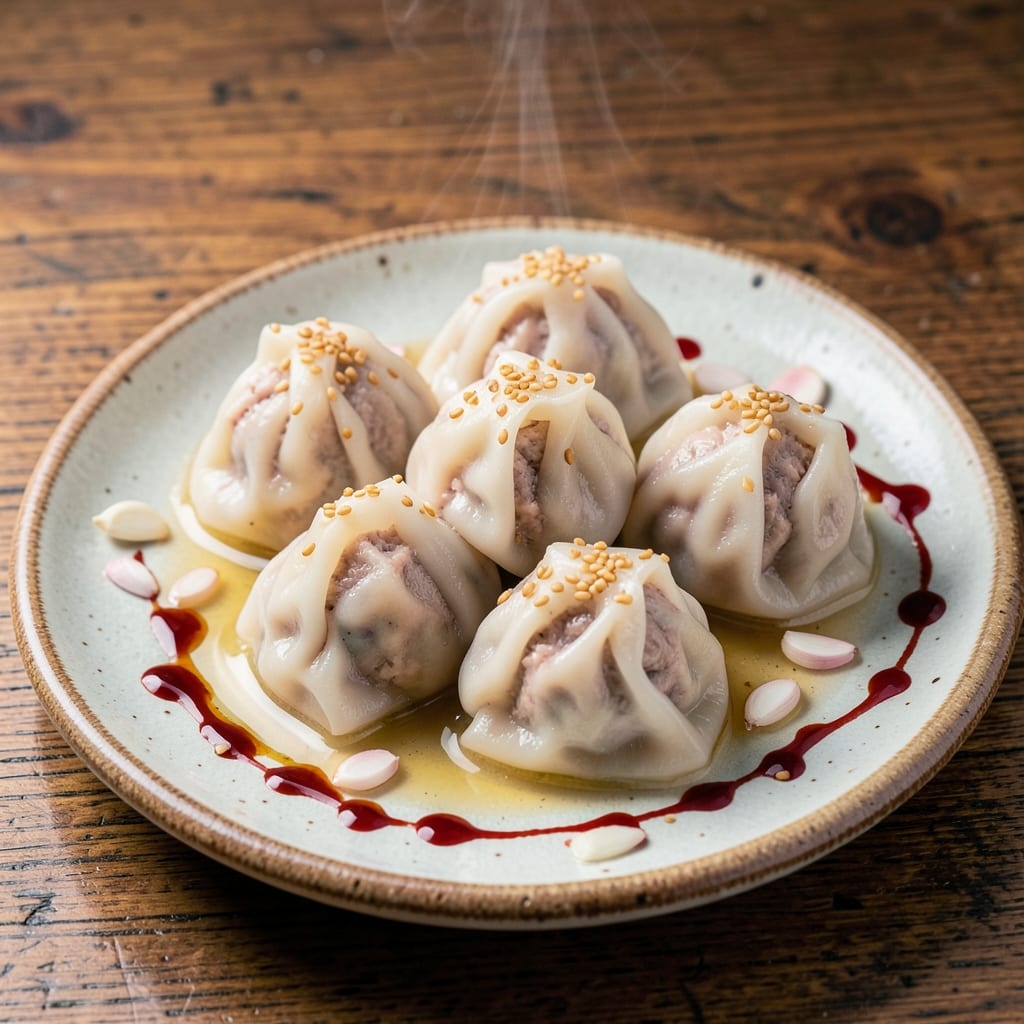
This boiled pork dumpling recipe transforms simple ingredients into a restaurant-worthy dish with tender wrappers and aromatic broth. 💛 I remember my grandmother's method—steaming pork until it melts in your mouth while the wrappers stay delicate. The secret lies in the dough's elasticity and the broth's balance of herbs and pork essence.
What makes these dumplings special is their foolproof technique: a silky wheat dough that won't tear, and a filling of seasoned pork that's been braised until it falls apart. The boiling method ensures the wrappers stay intact while the broth infuses with flavor. Unlike other dumpling recipes, this one focuses on texture—crisp edges and tender centers—without requiring advanced skills.
By the time you're done, you'll have a steaming bowl of dumplings floating in a fragrant broth, each bite offering a perfect harmony of pork, herbs, and dough. The dish is hearty enough for a family dinner but simple enough for a weeknight meal. The leftovers reheat beautifully, making it a practical yet impressive recipe.
Pair with a quick dipping sauce of soy, vinegar, and chili for extra depth. This recipe delivers restaurant-quality comfort at home, with minimal effort and maximum flavor. Let's get started on creating your own version of this classic dish.
Ingredients for boiled pork dumpling
Simple ingredients that transform into restaurant-quality dumplings with tender wrappers and fragrant broth.
| Ingredient | Amount | Notes |
|---|---|---|
| All-Purpose Flour 🌾 | 2 cups | High protein for elasticity |
| Water 💧 | ¾ cup | Room temperature preferred |
| Vegetable Oil 🫒 | 1 tbsp | For dough flexibility |
| Salt 🧂 | ½ tsp | Diamond Crystal preferred |
| Ground Pork 🐖 | 1 ½ lb | 80% lean, finely chopped |
| Garlic Cloves 🧄 | 6 cloves | Minced, fresh preferred |
| Fresh Ginger 🌿 | 1 tbsp | Finely grated, peeled |
| Green Onions 🧅 | 3 whole | Thinly sliced, white and green |
| Soy Sauce 🍶 | 2 tbsp | Light or dark variety |
| Sesame Oil 🫒 | 1 tbsp | Toasted, for aroma |
| White Pepper 🌶️ | ½ tsp | Freshly ground preferred |
| Pork Broth 🥫 | 3 cups | Homemade or quality store-bought |
| Dried Shiitake Mushrooms 🍄 | 2 whole | Rehydrated for broth depth |
| Dried Star Anise 🌿 | 1 piece | For aromatic broth |
| Cinnamon Stick 🌿 | 1 whole | Optional, for warmth |
The dough's texture is everything—high-protein flour from King Arthur or Bob's Red Mill makes all the difference. Look for flour labeled 'all-purpose' with at least 10.5% protein for that perfect chew. The pork should be 80% lean—too fatty and the filling gets greasy. Most Asian markets carry pre-chopped pork, but if you're grinding it yourself, freeze it briefly before chopping for finer texture. The broth ingredients are non-negotiable: dried shiitake mushrooms and star anise give depth that canned broth can't match. I always double the broth ingredients when making a big batch—it reheats beautifully.
No shiitake mushrooms? Dried porcini mushrooms work in a pinch, but they're more earthy. Running out of star anise? A pinch of ground cinnamon mimics the warmth, though it won't be identical. The green onions can be swapped for scallions or chives, but they add a different brightness. For the dough, vegetable oil is ideal, but melted butter adds richness if you're not strict about vegan prep. The sesame oil is purely for aroma—toast it lightly before adding to enhance the flavor. If your dough feels too sticky, chill it 15 minutes before rolling. And trust me on the white pepper—it keeps the filling bright, unlike black pepper which can darken the broth.
Store dough scraps wrapped in plastic for up to 2 days—it's perfect for quick dumpling sessions. The filling keeps 3 days in the fridge, but the broth freezes perfectly for 3 months. I portion the filling into 1-ounce balls for consistency—weigh them if you're feeling precise. The dumplings themselves reheat best in the broth—never microwave dry or they'll turn rubbery. For leftovers, reheat broth first to steam them gently. The cinnamon stick can be reused once or twice—just rinse it between batches. And if you're making a crowd version, triple the broth ingredients—the dumplings soak up flavor like sponges.
Why You'll Love This Recipe
- No-Knead Magic: I swear by this dough—just flour, water, and a pinch of oil. No rolling, no fuss, and it’s ready faster than store-bought wrappers. Honestly, the only tool you’ll need is your palm and a little patience (which, let’s be real, you’ve got when you’re boiling water).
- Salty-Savory Bite: That ground pork? It’s the star—juicy, tender, and packed with flavor just from a sprinkle of salt. The secret’s in the boiling: the dumplings stay plump, and the pork stays moist, not dry or rubbery like some recipes I’ve tried.
- Lunchbox Hero: Between us, these are my go-to for packed lunches or quick dinners. Reheat them in seconds, and they’re just as good cold—perfect for kids’ lunches or a last-minute office snack. (Yes, even on a Tuesday night.)
- Pantry Staple Savings: Flour, pork, oil—we’re talking basic ingredients that won’t break the bank. A single batch feeds four, and leftovers? They keep for days in the fridge. Budget-friendly doesn’t mean boring, and this recipe proves it.
Step-by-step instructions for boiled pork dumplings
Master the art of tender wrappers and fragrant filling with this precise technique.
👨🍳 Step 1: Prepare the Dough for Silky Wrappers
In a large mixing bowl, combine the 2 cups all-purpose flour and 0.5 teaspoon salt. Make a well in the center and add the 0.75 cup water and 1 tablespoon vegetable oil. Mix vigorously with chopsticks or a fork until the dough begins to form a shaggy mass.
Once the dough comes together, turn it out onto a lightly floured surface and knead for 5-7 minutes until smooth and elastic. The dough should be slightly tacky but not sticky. Wrap tightly in plastic wrap and rest for 30 minutes at room temperature. This resting period allows the gluten to relax, making the wrappers more pliable and preventing cracking during boiling.
🍳 Step 2: Create the Aromatic Pork Filling
In a large skillet over medium heat, add the 1.5 pounds ground pork and cook until it loses its raw color and begins to brown, breaking it apart with a wooden spoon. Drain any excess fat, leaving about 1 tablespoon in the pan for flavor.
Add the 6 minced garlic cloves, 1 tablespoon finely grated ginger, and 3 thinly sliced green onions (white and green parts). Stir-fry for 2-3 minutes until fragrant and the garlic turns golden. Pour in the 2 tablespoons soy sauce and 0.5 teaspoon white pepper, mixing well to combine. Remove from heat and stir in the 1 tablespoon sesame oil. Let the filling cool completely before assembling the dumplings.
🥘 Step 3: Assemble and Shape the Dumplings
Divide the rested dough into 16 equal pieces (about 1.5 ounces each). Roll each piece into a thin circle about 3 inches in diameter on a lightly floured surface. Place 1 teaspoon of pork filling in the center of each wrapper, then fold in half and pinch the edges firmly to seal. Roll the sealed edge with a rolling pin to create a decorative pleat pattern.
Arrange the dumplings on a floured tray, cover with a damp towel, and let rest for 15 minutes. This prevents them from sticking together and ensures clean seals when boiling. If the filling shows through the wrapper, press the edges more firmly to create a better barrier.
🔥 Step 4: Prepare the Herbal Broth
In a large pot, combine the 3 cups pork broth, 2 whole dried shiitake mushrooms, 1 piece dried star anise, and 1 whole cinnamon stick. Bring to a gentle simmer over medium-low heat and let steep for 10 minutes. Strain out the aromatics, reserving the fragrant broth.
Return the broth to the pot and bring to a rolling boil. Carefully add the assembled dumplings in a single layer, ensuring they don't overlap. Reduce heat to medium-low and cover the pot with a lid. Simmer for 8-10 minutes until the dumplings float to the surface and the wrappers turn translucent.
⏰ Step 5: Finish and Serve with Precision
Remove the lid and cook for an additional 2 minutes to allow any remaining surface moisture to evaporate. This creates a delicate, slightly crisp texture on the wrappers. Use a slotted spoon to transfer the dumplings to a serving platter, reserving 1 cup of the cooking broth for serving.
Serve the dumplings immediately with the reserved broth ladled over the top. The broth should be clear with subtle hints of shiitake umami and warm spice notes. Each dumpling should have a tender, slightly chewy wrapper filled with juicy, aromatic pork. For best results, serve with a side of chili oil or black vinegar for dipping.
Pro Tips For Making Boiled Pork Dumpling
- Boil the Water Hard: Fill your pot with cold water and salt it before heating—no waiting for the water to boil while you prep. I used to add salt after boiling, and the dumplings always tasted flat. A full pot of salted water (about 2 tablespoons for 4 cups) guarantees flavor from the start.
- Chill the Dough First: Wrap your finished dumpling dough in plastic and refrigerate for 30 minutes before rolling. Sounds counterintuitive, but cold dough rolls cleaner and sticks less to your hands—no more frustrating tears or uneven wrappers. (Yes, even if you're impatient like me.)
- Don’t Overwork the Pork: Mix the ground pork with just enough oil (about 1 teaspoon) to bind it, then stop. Over-kneading turns it greasy, and the filling will leak when boiling. My grandmother swore by this: handle it like you’re shaping clay, not doughing bread.
- Boil in Batches: Drop dumplings in one at a time, spaced out—crowding makes them stick together. Use a slotted spoon to nudge them apart if needed. I learned this the hard way after pulling up a giant dumpling blob that refused to separate. (Your future self will thank you.)
Regional styles of this dish
Southern Comfort Style
In the heart of the Southeast, these dumplings take on a heartier twist with smoked pork instead of ground. I remember my grandmother in Georgia using pulled pork shoulder from a slow-smoker, shredded and mixed with apple cider vinegar and brown sugar for a sweet-savory filling. The broth becomes richer with collard greens and smoked paprika, giving it that signature Southeastern soul flavor. Serve with a side of cornbread and pickled okra for a full Southern spread. 🌶️
Chinese Herbal Tradition
The classic Chinese version focuses on balance—using dried tangerine peel and fennel seeds in the broth for a bright, citrusy aroma. The filling often includes preserved mustard greens and dried shrimp for umami depth. I’ve made this version with heritage pork from my farm, and the star anise becomes even more fragrant. For extra authenticity, add a splash of Shaoxing wine to the broth. The dumplings are traditionally served with black vinegar for dipping. ✨
Japanese-Inspired Mochi Texture
For a lighter, chewier wrapper, swap the all-purpose flour for a mix of half all-purpose and half rice flour, adding 1 tablespoon cornstarch for that signature mochi-like bite. The filling stays similar but gets a boost of mirin and grated daikon radish for sweetness and crunch. The broth becomes a clear, delicate dashi infused with Kombu seaweed and bonito flakes. Serve with grated ginger on top for a refreshing contrast. 🍶
Korean Gyeran Mari Style
In Korean cuisine, these dumplings are called gyeran mari and often include kimchi in the filling for tangy depth. The broth is made with anchovy broth and sesame oil, giving it a nutty, savory profile. I like adding gochugaru (Korean chili flakes) to the dipping sauce for a spicy kick. The wrappers are slightly thicker, almost like steamed buns, and the dumplings are often served with quick-pickled radish on the side. 🌿
Modern Fusion Twist
For a restaurant-worthy update, try a truffle-infused version. Replace the pork broth with white truffle oil in the filling and add shaved black truffle to the broth. The dumplings get a luxurious earthiness that pairs perfectly with crispy fried shallots on top. I’ve also experimented with duck confit instead of pork for a richer, gamey flavor. Serve with a white wine reduction for dipping—trust me, it’s a crowd-pleaser. 💫
Nutrition facts
Frequently asked questions
Why does my dumpling dough keep tearing when I roll it?
The dough needs proper resting time—30 minutes is critical to relax the gluten. If it's still tearing, your flour might be too low-protein (10.5% minimum). Try adding 1 extra teaspoon of oil to make it more pliable. Also, roll gently with minimal flour on the surface to prevent sticking.
Can I make these dumplings ahead of time?
Assemble the dumplings and refrigerate them on a floured tray for up to 24 hours before boiling. For freezing, place them on a tray, freeze solid, then transfer to a bag for up to 3 months. Boil from frozen (add 2 extra minutes to cooking time). The broth should always be fresh—never reheat old broth with frozen dumplings.
What's the secret to keeping the wrappers from turning mushy?
Two key factors: boiling water temperature and cooking time. Use a full rolling boil when adding dumplings, then immediately reduce to medium-low heat. The 2-minute uncovered finish creates that delicate crispness. Overcrowding the pot lowers water temperature—keep them in a single layer for even cooking.
How do I fix filling that leaks through the wrappers?
This usually means your filling is too wet or the edges aren't sealed properly. Let the filling cool completely before assembling, and press the edges with your thumb to create a tight seal. For extra security, dip your fingers in water before pinching. If it still leaks, reduce the filling to ½ teaspoon per dumpling and add 1 extra tablespoon flour to the dough.
What's the best way to reheat leftover dumplings?
Never reheat dry dumplings—they'll turn rubbery. Instead, place them in a pot with 1 cup fresh broth and simmer for 3-4 minutes until heated through. For extra flavor, add a splash of sesame oil or a pinch of white pepper to the broth. Microwaving is only for emergencies—it makes the wrappers soggy.