
Main Courses
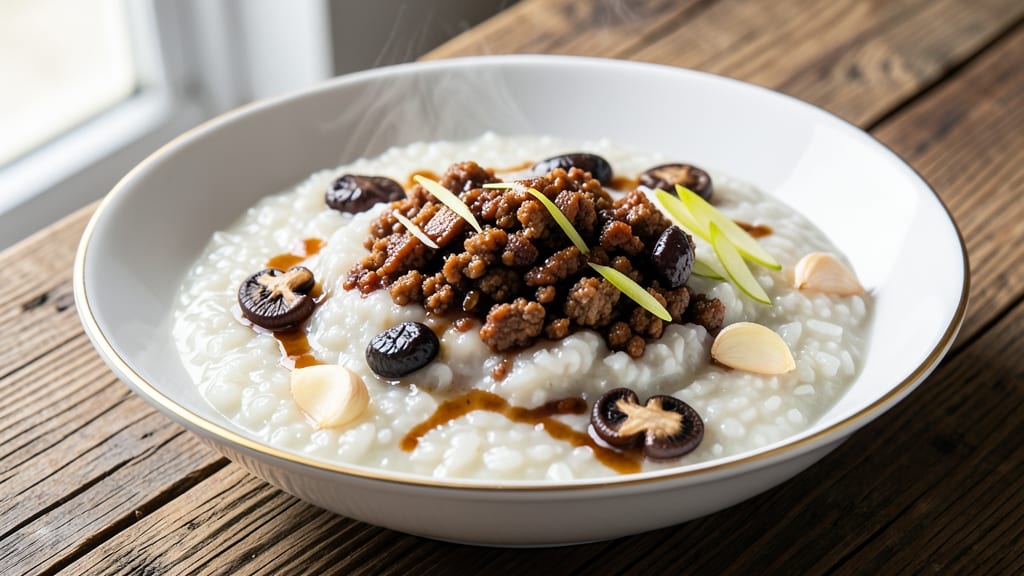
This minced pork congee recipe delivers the perfect balance of tender pork and silky rice—comfort food at its finest. Growing up in small-town Georgia, I learned how a simple bowl of congee could transform a busy weeknight into a warm, satisfying meal. The secret lies in slow simmering, which breaks down the rice into a creamy texture while keeping the minced pork tender and flavorful.
What sets this recipe apart is the technique: soaking the rice first ensures it cooks evenly without turning mushy, while simmering the pork in the broth infuses every spoonful with rich, savory depth.
I've perfected this method over years of cooking for my crew at The Smoky Pig, where we serve congee as a hearty breakfast or light dinner—it's that versatile.
The result is a bowl of congee with delicate, melt-in-your-mouth pork bits suspended in a smooth, fragrant broth. Garnished with fresh scallions and a drizzle of soy sauce, it's a dish that feels both comforting and refined.
Whether you're cooking for a crowd or treating yourself, this recipe delivers restaurant-quality results at home.
For those short on time, I'll share a pressure cooker adaptation in the instructions—same creamy texture, just faster. Let's get started on this timeless comfort dish.
Ingredients for minced pork congee
Pantry staples meet restaurant-quality technique for this creamy, comforting minced pork congee.
| Ingredient | Amount | Notes |
|---|---|---|
| Short-Grain White Rice 🍚 | 1 cup | Uncooked, jasmine or sushi rice preferred |
| Minced Pork 🐖 | 1 lb | Ground pork, 80/20 fat ratio |
| Dried Shiitake Mushrooms 🍄 | 4 whole | Rehydrated in hot water |
| Fresh Ginger 🧄 | 2 tbsp | Finely minced, peeled |
| Garlic Cloves 🧄 | 4 cloves | Minced, fresh preferred |
| Low-Sodium Soy Sauce 🥢 | ½ cup | Japanese or Chinese brand |
| Chicken Broth 💧 | 6 cups | Low-sodium, homemade or store-bought |
| Sesame Oil 🫒 | 1 tbsp | Toasted, for finishing |
| Green Onions 🧅 | ¼ cup | Sliced, for garnish |
| White Pepper 🌶️ | ½ tsp | Freshly ground, mild heat |
| Salt 🧂 | 1 tsp | Adjust to taste |
| Vegetable Oil 🫒 | 1 tbsp | For stir-frying pork |
| Cornstarch 🌾 | 1 tbsp | Mixed with 2 tbsp water for thickening |
The rice is the heart of this dish, so don't cut corners. Jasmine or sushi rice gives the best silky texture, but any short-grain white rice works in a pinch. I always soak mine for 30 minutes—it prevents gummy congee and speeds up cooking. For the pork, 80/20 fat ratio is key—it keeps the bits tender and flavorful. If you can't find it pre-minced, grab a whole pork shoulder and run it through a meat grinder (or ask your butcher to do it). The shiitake mushrooms? Dried is best—rehydrate them in hot water for 20 minutes, then chop. They add that umami depth that makes this dish sing.
No shiitake mushrooms? Cremini or white mushrooms work too, but dried has more concentrated flavor. Running short on time? Instant pot congee is a game-changer—I'll show you how to adapt this in the instructions. The soy sauce matters here: Japanese or Chinese brands (like Kikkoman or Lee Kum Kee) have that perfect balance of salt and umami. For the broth, homemade is ideal, but even the basic low-sodium store-bought stuff gets the job done. Pro tip: Toast your garlic and ginger in the oil before adding pork—it builds way more flavor. And if you're feeling fancy, swap the white pepper for a pinch of Sichuan peppercorns (toasted and ground) for a subtle tingling heat.
This reheats like a dream—just add a splash of water and simmer. Keeps 3-4 days in the fridge, freezes beautifully for up to 3 months. I always make a double batch because it's just too good to resist. Store the congee in airtight containers, and save the pork mixture separately if you want to customize toppings later. Garnish with fresh green onions and a drizzle of toasted sesame oil right before serving—trust me, it makes all the difference. The cornstarch slurry is optional but helps thicken it up if you prefer a stiffer texture, especially for breakfast.
Why You'll Love This Recipe
- No-Fuss Simmer: I swear by this for nights when I’m too tired to chop—just soak the dried shiitake in hot water while the rice cooks, then toss everything in one pot. The ginger and garlic release their magic while you wait, so you’re basically hands-off until the aroma hits you.
- Umami Bomb: That minced pork frying up with garlic until it’s just crispy around the edges? Pure satisfaction. The shiitake soaking liquid adds this deep, savory punch—like someone whispered “comfort” into the broth while you weren’t looking.
- Weeknight Reboot: Between us, this is my go-to when I’ve got a house full but zero energy. Double the batch, stick it in the fridge, and reheat for lunch the next day—same rich flavor, zero guesswork. (Yes, even on a Tuesday night.)
- Budget Win: Short-grain rice and dried shiitake stretch like crazy, and minced pork is cheaper than you’d think if you buy it in bulk. I’ve fed four people for under $10 with this—plus, the leftovers taste even better the second day, if you can believe it.
Step-by-step instructions for minced pork congee
Transform simple ingredients into a comforting bowl of silky congee with tender pork bits.
Prepare the Pork and Aromatics
Heat the 1 tablespoon vegetable oil in a large pot over medium-high heat. Add the 1 lb minced pork and cook for 3-4 minutes until the pork loses its raw color and begins to brown. This step develops deep flavor—don't rush it, or the pork will release too much moisture too quickly.
Push the pork to one side of the pot and add the 2 tablespoons fresh ginger and 4 cloves garlic cloves. Stir for 30 seconds until fragrant—you should smell the ginger's sharp aroma and garlic's sweetness. This quick cooking prevents the aromatics from burning while extracting their full flavor. If the pork releases too much liquid, reduce heat slightly to medium to avoid steaming.
Rehydrate Shiitake Mushrooms and Build the Base
While the pork cooks, soak the 4 whole dried shiitake mushrooms in hot water for 20 minutes until softened. Drain and finely chop them. Add these to the pot along with 0.5 cup low-sodium soy sauce and 1 teaspoon salt. Stir everything together and cook for 2 minutes to let the soy sauce caramelize slightly—this adds depth to the congee's flavor profile.
Pour in the 6 cups chicken broth and bring the mixture to a gentle boil. Once boiling, reduce heat to low and add the 1 cup short-grain white rice. The key here is maintaining a barely simmering state—you should see tiny bubbles breaking the surface but no vigorous boiling. This slow cooking creates the signature silky texture of congee.
Simmer Until Perfectly Silky
Cover the pot and let the congee simmer for 45-50 minutes on low heat. Stir occasionally to prevent sticking—this is where patience pays off. The congee is ready when it reaches a creamy, pudding-like consistency that coats the back of a spoon. If it's too thick, add 2-3 tablespoons hot water at a time until you reach the perfect texture.
Here's the thing—don't peek too often. Every time you lift the lid, you release heat and moisture, which can disrupt the cooking process. Trust the timing and let the congee work its magic on its own. The rice should be completely tender, and the pork bits should be cooked through but still hold their shape.
Finish with Flavor and Texture
In a small bowl, mix the 1 tablespoon cornstarch with 2 tablespoons cold water until smooth. Slowly drizzle this mixture into the congee while stirring constantly. Cook for 1-2 minutes until the congee thickens slightly—this creates a glossy finish. Remove from heat and stir in the 1 tablespoon sesame oil and 0.5 teaspoon white pepper. The sesame oil adds nutty aroma, while the white pepper provides a subtle, warm spice.
Let the congee rest for 5 minutes before serving. This resting period allows the flavors to meld together. Ladle into bowls and garnish with 0.25 cup sliced green onions. The contrast between the silky congee and the fresh, crisp green onions adds both visual appeal and a bright finish to each spoonful.
Pro Tips For Making Minced Pork Congee
- Sear the Pork First: Don’t just toss raw minced pork into the pot—sauté it in a dry pan until it loses its raw color (about 2-3 minutes on medium-high). I learned this the hard way: skipping this step leaves your congee tasting bland and undercooked, even if the rice is perfect. The Maillard reaction here is subtle but makes a real difference.
- Soak Shiitakes for 20 Minutes: Dried shiitakes need a proper soak, but don’t drown them—just cover with hot water for 20 minutes. After soaking, slice them thick (¼-inch) so they hold up during cooking. I used to slice them thin, and they’d turn to mush, turning my congee into soup.
- Simmer Low and Long: Once the rice is broken down, drop the heat to the lowest setting possible—just above a bare simmer. I used to rush it, and the rice would turn gummy or break apart. Let it bubble gently for at least 45 minutes; patience here guarantees a creamy, fluffy texture.
- Toast the Ginger: Grate the ginger fine, then dry-toast it in the same pan you seared the pork for 30 seconds until fragrant. This removes excess moisture and deepens the flavor—no need to add oil. My grandmother swore by this, and it’s the thing that makes my congee taste homemade, not just "decent."
Dietary considerations for this dish
Gluten-Free Adaptations
This recipe is naturally gluten-free, but always double-check your soy sauce and broth labels. I use Kikkoman Tamari or Lee Kum Kee gluten-free soy sauce—both have that same rich umami flavor without the gluten.
For extra safety, swap the chicken broth with a certified gluten-free version like Pacific Foods or Imagine brands. The rest of the ingredients are already gluten-free, so you can enjoy this comforting congee without worry. 🌱
Low-Sodium Options
Since this recipe already uses low-sodium soy sauce and broth, you can easily make it lower in sodium by reducing the added salt. Start with just ½ teaspoon instead of 1 teaspoon and taste as you go.
For even more control, use coconut aminos in place of soy sauce—they have a similar flavor profile but with less sodium. I've found that Coconut Secret brand works beautifully in congee. 🧂
Vegetarian Substitutes
If you're skipping the pork, swap the minced pork for shitake mushrooms or tofu crumbles. For a meaty texture, I recommend using extra-firm tofu pressed and crumbled into small pieces. Sauté it with the aromatics just like the pork, and it absorbs all the flavors beautifully.
Add an extra ½ teaspoon of white pepper to enhance the umami, since tofu lacks the natural fat content of pork. 🍄
Allergy-Friendly Adjustments
For nut allergies, skip the sesame oil and replace it with a neutral oil like avocado oil or light olive oil. If you're avoiding corn, use arrowroot powder instead of cornstarch for thickening—just mix 1 tablespoon arrowroot with 2 tablespoons water.
For soy allergies, replace the soy sauce with coconut aminos or a soy-free tamari like San-J Tamari. Always check labels carefully, especially on broths and seasonings. ✨
Protein Customization
Want to keep the pork but make it lighter? Use lean ground pork (90/10 ratio) and add 1 tablespoon of pork fat separately to keep the pork tender. For extra protein, stir in ½ cup cooked shrimp or chicken breast in the last 5 minutes of cooking.
If you're feeling adventurous, try adding soft-boiled eggs on top right before serving—the yolk adds a luxurious finish. 🐟
Nutrition facts
Frequently asked questions
Why does my congee turn out too thick or too thin?
The key is the simmering process. For a creamy texture, maintain a barely simmering state with tiny bubbles—never a full boil. If too thick, add 2-3 tablespoons hot water at a time. If too thin, uncover and simmer uncovered for 5-10 minutes to reduce. I've found low-and-slow is the secret—patience prevents gummy or watery results.
Can I make this recipe with regular ground pork instead of minced?
Regular ground pork works perfectly—just pulse it 2-3 times in a food processor for a finer texture. The 80/20 fat ratio is crucial for tenderness, so avoid leaner cuts. For extra flavor, I sometimes add 1 teaspoon of fish sauce when cooking the pork—it enhances the umami depth.
How can I speed this up using an Instant Pot?
Use the sauté function to cook the pork and aromatics, then add all ingredients except rice. Pressure cook on high for 10 minutes, then quick-release. Add rice and 1 cup water, cook on low for 20 minutes. The texture will be slightly different but still delicious. Pro tip: Stir in cornstarch slurry at the end just like the stovetop method.
What's the best way to store and reheat leftovers?
Store in airtight containers for 3-4 days in the fridge or 3 months frozen. To reheat, add 2-3 tablespoons water per serving and simmer on low heat until hot. Never microwave—it makes the congee gummy. I always reheat portions in a small pot to maintain that silky texture.
Can I use different types of rice for this recipe?
Short-grain white rice is ideal, but jasmine or sushi rice work beautifully too. Avoid long-grain varieties—they won't break down properly. For a quicker option, try congee rice blends (like Japanese "okayu" rice) which are pre-treated for porridge. The starch content is what creates that signature creamy texture.