
Soups & Stews
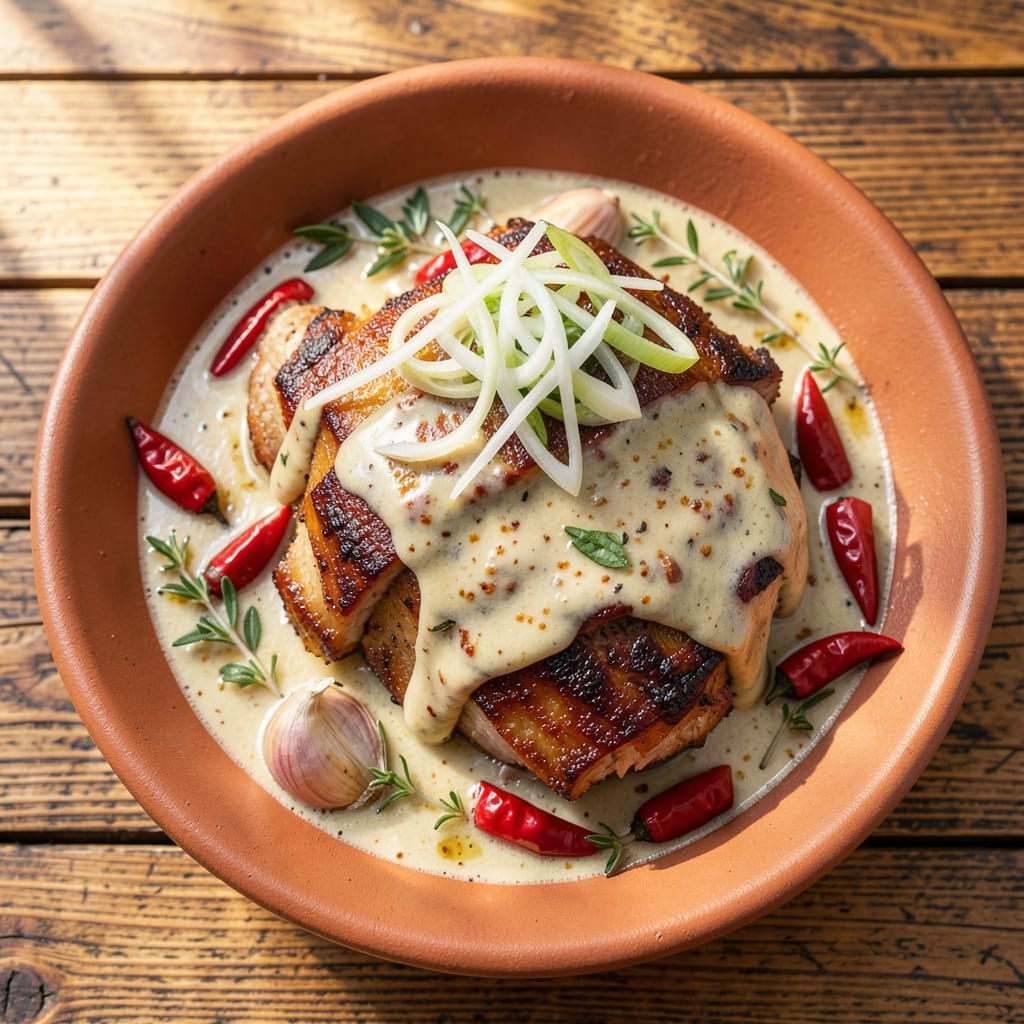
This Belizean stew pork recipe brings the vibrant flavors of Central America to your kitchen with its perfect balance of coconut milk, citrus, and aromatic spices. 🌟 After years of perfecting Caribbean-style stews, I've developed a method that transforms tough pork into tender, melt-in-your-mouth pieces while maintaining the dish's signature rich, velvety sauce. The combination of Scotch bonnet peppers, thyme, and garlic creates a flavor profile that's both complex and approachable for home cooks.
The beauty of this recipe lies in its layered flavors and traditional ingredients that work together seamlessly. We start with a proper sear on the pork to develop deep, caramelized flavors before simmering it in coconut milk that creates a luxurious, creamy base. Okra adds subtle thickening and earthy notes, while plantains contribute natural sweetness that balances the dish's acidity. The long simmering process allows all these elements to meld into a harmonious whole.
What you'll end up with is a restaurant-quality Belizean stew pork that's rich, aromatic, and packed with flavor in every bite. The pork becomes fork-tender while maintaining its structure, and the sauce develops a perfect balance of sweet, spicy, and savory notes. This is the kind of dish that transforms a simple weeknight dinner into a celebration of Caribbean cuisine.
The best part? This recipe scales beautifully for gatherings while remaining manageable for weeknight cooking. Serve it with steamed rice or warm tortillas to soak up every last drop of that delicious sauce. Let's get cooking with this authentic Belizean classic!
Ingredients for belizean stew pork
Sixteen ingredients transform tough pork into restaurant-quality Belizean stew with velvety coconut richness and fiery citrus notes.
| Ingredient | Amount | Notes |
|---|---|---|
| Pork Shoulder 🥩 | 3 lb | Cut into 1.5-inch cubes, bone-in preferred |
| Coconut Milk 🥥 | 2 cans | Full-fat, 13.5 oz each, unsweetened |
| Scotch Bonnet Peppers 🌶️ | 2 whole | Seeds removed, finely chopped |
| Fresh Thyme 🌿 | ¼ cup | Stems removed, loosely packed |
| Garlic Cloves 🧄 | 8 cloves | Peeled, minced finely |
| Green Onions 🧅 | 2 whole | White and green parts separated |
| Okra Pods 🌱 | 1 lb | Trimmed, cut into 1-inch pieces |
| Ripe Plantains 🍌 | 2 whole | Peeled, sliced into 0.5-inch rounds |
| Lime Juice 🍋 | ½ cup | Freshly squeezed, about 4-5 limes |
| Tomato Paste 🍅 | 2 tbsp | Smooth, not chunky |
| Olive Oil 🫒 | ¼ cup | Extra-virgin, for searing |
| Ground Allspice 🌶️ | 1 tsp | Freshly ground preferred |
| Ground Cinnamon 🌿 | ½ tsp | Sweet, not spicy |
| Salt 🧂 | 1 ½ tsp | Diamond Crystal kosher salt |
| Black Pepper 🌶️ | ½ tsp | Freshly cracked |
The pork shoulder is non-negotiable—its collagen-rich fat renders into the sauce, creating that signature velvety texture. Costco or your local butcher will have the best cuts, and look for pieces with good marbling. If you can't find Scotch bonnet peppers (the real deal), habanero or serrano peppers work in a pinch, but reduce the amount to half—these are serious heat carriers. For the coconut milk, Goya or Thai Kitchen brands are my go-tos, but any full-fat canned coconut milk will do. The key is to avoid sweetened versions, which can throw off the balance of flavors in this dish.
No fresh thyme? Dried thyme at one-third the amount works, but fresh is ideal for that bright, aromatic punch. The okra might sound intimidating, but it's essential for that subtle thickening and earthy depth. Trader Joe's usually carries pre-trimmed okra in the frozen section if you're short on time. Plantains should be ripe enough to be slightly soft when pressed—think like a banana that's just past its prime. For the lime juice, Mexican limes (key limes) have a more complex flavor, but regular limes work perfectly fine. The tomato paste can be the squeeze-tube kind for convenience—just measure carefully.
This stew tastes even better the next day, so double the batch if you're feeding a crowd. Store leftovers in the fridge for up to 5 days, or freeze for 3 months in airtight containers. The sauce thickens as it cools, so a splash of water or coconut milk brings it back to perfection when reheating. For serving, keep the lime wedges and fresh thyme sprigs on the table—it makes the dish feel like a true Caribbean feast. The pork will be fork-tender, but if you're in a hurry, braise it for 2 hours instead of 3—just know the texture won't be quite as luxurious.
Why You'll Love This Recipe
- One-Pot Magic: The pork shoulder practically cooks itself while you chop garlic and thyme—just dump everything in one pot, simmer, and walk away. My kids think it’s "fancy," but honestly, the hardest part is resisting the urge to taste-test the Scotch bonnet peppers before they hit the stew.
- Creamy Heat Balance: That coconut milk turns rich and velvety, while the Scotch bonnet peppers bring just enough fire to wake up your taste buds—no blistering spice, just a slow-building warmth. I’ll be real: my husband always asks for seconds, and he’s not usually a "spicy guy."
- Weeknight & Potluck Star: Toss it in a slow cooker for dinner, or serve it over rice at your next gathering—it’s equal parts comforting and impressive without requiring a 10-step process. Between us, I’ve taken it to book clubs and had people beg for the recipe. (They don’t need to know it’s my 30-minute trick.)
- Budget-Friendly Leftovers: Pork shoulder stretches for days, and the coconut milk keeps it luscious even reheated—perfect for lunchboxes or lazy Fridays. I’ve fed my family for three meals with one batch, and the flavor only gets deeper as it sits. Not the prettiest, but the taste makes up for it every time.
Step-by-step instructions for Belizean stew pork
This rich, aromatic stew delivers deep flavors through slow simmering—let's build it layer by layer.
🔥 Step 1: Sear the Pork Shoulder for Deep Flavor
Heat a large Dutch oven over medium-high heat and add the 0.25 cup olive oil. Working in batches to avoid crowding, add the 3 lb pork shoulder cubes and sear until golden brown on all sides, about 4-5 minutes per batch. This step develops the Maillard reaction, creating that irresistible caramelized crust.
Real talk: Don't rush this. You'll know it's ready when the pork releases easily from the pan and has developed a deep brown color. Transfer the seared pork to a plate and set aside. Here's the thing—those browned bits in your pan are pure flavor gold, so we're not wiping them clean.
🍳 Step 2: Build the Aromatic Base
In the same Dutch oven, add the 8 cloves minced garlic and cook for 30 seconds until fragrant—don't let it burn. Add the 2 tbsp tomato paste and stir for 1 minute to cook out the raw taste. Now add the 2 whole finely chopped Scotch bonnet peppers (be careful with those—wear gloves if you're sensitive to heat) and cook for 1 minute.
Here's where it gets good: Stir in the 0.25 cup fresh thyme, 1 tsp ground allspice, 0.5 tsp ground cinnamon, 1.5 tsp salt, and 0.5 tsp black pepper. Let these spices toast in the oil for 30 seconds—you'll smell that warm, earthy aroma filling your kitchen. This is the flavor foundation of your stew.
🥘 Step 3: Simmer the Pork in Coconut Milk
Pour in 1 can coconut milk and stir to deglaze the pan, scraping up all those flavorful browned bits. Return the pork to the pot, add the remaining 1 can coconut milk, and bring to a gentle simmer. Here's the crucial part: Cover and cook on low heat for 1 hour, stirring occasionally to prevent scorching.
After 1 hour, check the pork—it should be tender but still have some resistance. If it's not quite there, continue cooking for another 30 minutes. The coconut milk will start to thicken slightly as it absorbs the pork's flavors. This slow cook is what transforms tough pork shoulder into melt-in-your-mouth tenderness.
🍳 Step 4: Add Vegetables and Finish the Stew
Add the 1 lb cut okra pods, white parts of 2 green onions (sliced), and 0.5 cup lime juice. Stir well and simmer uncovered for 20-25 minutes until the okra is tender and the sauce has thickened to your desired consistency. You want it rich but still spoonable—not too thick that it loses its silky texture.
Here's a pro tip: Taste and adjust seasoning. The Scotch bonnet peppers should add a subtle heat, but if you want more kick, add a pinch of cayenne. If it needs brightness, add another splash of lime juice. The stew should balance sweet, spicy, and tangy flavors perfectly.
🔥 Step 5: Serve with Plantains and Garnish
While the stew simmers, peel and slice the 2 whole ripe plantains into 0.5-inch rounds. In a separate pan, heat 1 tbsp olive oil over medium heat and fry the plantain slices until golden brown on both sides, about 3-4 minutes per side. These will add a sweet, caramelized contrast to the rich stew.
To serve, ladle the stew into bowls and top with fried plantains and the green parts of the green onions (chopped). The contrast of sweet plantains against the spicy, coconut-rich stew is what makes this dish truly special. Each bite delivers layers of flavor that dance on your palate—creamy coconut, tender pork, subtle heat, and bright citrus.
Pro Tips For Making Belizean Stew Pork
- Brown the Pork First: That pork shoulder won’t infuse flavor into the stew if you just toss it in raw. Sear it over medium-high heat until it’s got deep golden-brown crusts—about 8-10 minutes per side. I used to skip this, and the stew always tasted flat until I realized the crust carries all the meaty depth.
- Use Whole Scotch Bonnets: Tossing in chopped bonnet peppers means you’ll lose their fiery punch to the coconut milk. Instead, drop in whole peppers (seeds and all) and remove them after 10 minutes of simmering—just long enough to blister their skins. The heat stays in the broth, but you control the burn.
- Simmer Low and Slow: Belizean stew pork needs time—like, hours of it. Once the pork is browned and the coconut milk is added, drop the heat to a bare simmer (just tiny bubbles, not rolling). I learned this the hard way when I rushed it and ended up with shredded pork that tasted like it was cooked in a microwave.
- Toast the Garlic: Raw garlic in coconut milk stew? Nope. Sauté those cloves in oil until they’re golden and fragrant—about 2 minutes—before adding the broth. My grandmother swore by this, and she was right: it adds a nutty depth that raw garlic just can’t match. (Yes, even if you’re impatient like me.)
Make-ahead tips for this dish
Prep Ahead Strategy
Belizean stew pork tastes even better when flavors meld overnight, so I always prep the aromatics and pork a day ahead. Cut the 3 lb pork shoulder into 1.5-inch cubes and store in an airtight container in the fridge. In a separate container, combine the 2 tbsp tomato paste, 8 cloves minced garlic, 2 chopped Scotch bonnet peppers, 0.25 cup thyme, and 1 tsp allspice. This prep saves 30 minutes on cooking day and intensifies the flavors. 💫
Freezer-Friendly Components
For maximum convenience, freeze the entire stew mixture (pork, sauce, and veggies) up to 3 months before the final simmer. Thaw overnight in the fridge, then cook as directed—just add the plantains fresh. I often freeze the stew in quart-sized freezer bags with 1 inch headspace for easy portioning. The texture remains velvety when reheated properly. ❄️
Plantain Prep Shortcut
Plantains can be prepped ahead too! Peel and slice the 2 whole ripe plantains into 0.5-inch rounds and store in an airtight container with a paper towel to absorb moisture. When ready to cook, simply fry them fresh—they'll caramelize perfectly and add that essential sweet contrast. This saves 15 minutes of prep on the day you serve. 🍌
Slow Cooker Adaptation
For hands-off cooking, brown the pork as directed, then transfer everything (except plantains) to a 6-quart slow cooker. Cook on low for 8 hours or high for 4 hours. The slow cooker's gentle heat creates the same tender pork and rich sauce, with less attention required. Just stir occasionally to prevent sticking. This is my go-to method for busy weeknights. 💡
Sauce Thickening Tip
If you're making this ahead, the sauce will thicken as it cools. To adjust consistency when reheating, add 2-3 tbsp coconut milk or water at a time until it reaches your desired spoonable thickness. I always reheat on the stovetop over medium-low heat to prevent curdling. The sauce should coat the back of a spoon but remain silky, not gluey. 🥄
Serving Prep Timeline
Here's my foolproof timeline: Prep all components 1 day ahead, freeze if needed, then thaw overnight. On serving day, complete the 1-hour simmer while you fry the plantains (10 minutes) and warm rice (15 minutes). This keeps everything perfectly timed for a stress-free meal. The stew will stay warm in a 200°F oven for up to 2 hours if needed. 📅
Nutrition facts
Frequently asked questions
Can I substitute regular bonnet peppers for Scotch bonnet?
Yes, but use half the amount since Scotch bonnet peppers are significantly hotter. For example, if the recipe calls for 2 Scotch bonnet peppers, use just 1 habanero or serrano pepper. Remove seeds to reduce heat further. The flavor will be milder but still deliver that Caribbean kick.
How do I know when the pork is fully tender?
The pork should easily pull apart with a fork and have a fork-tender texture. After 1 hour of simmering, test a piece—it should be soft but still hold its shape. If it's still slightly tough, continue cooking for another 30 minutes. Overcooking can make it mushy, so aim for that perfect balance between tenderness and structure.
What's the best way to reheat leftovers?
Reheat gently on the stovetop over medium-low heat with a splash of water or coconut milk to restore moisture. Avoid microwaving as it can make the sauce watery. If the sauce thickens too much, stir in 1-2 tbsp coconut milk at a time. Leftovers keep well for 5 days in the fridge or 3 months in the freezer.
Can I make this stew without coconut milk?
While coconut milk gives the stew its signature richness, you can substitute with a mix of 1 cup heavy cream and 1 cup chicken broth for a similar texture. However, the flavor will be less authentic. For a dairy-free alternative, use 1 cup cashew cream (soaked cashews blended with water) to maintain the creamy consistency.
What's the secret to balancing the flavors?
The key is the interplay between sweet, spicy, and tangy elements. Start with the Scotch bonnet peppers for heat, plantains for sweetness, and lime juice for acidity. Taste as you go—add more lime if it needs brightness, a pinch of sugar if it's too acidic, or a dash of cayenne for extra heat. The stew should sing with complex flavors, not just one dominant note.