
Soups & Stews
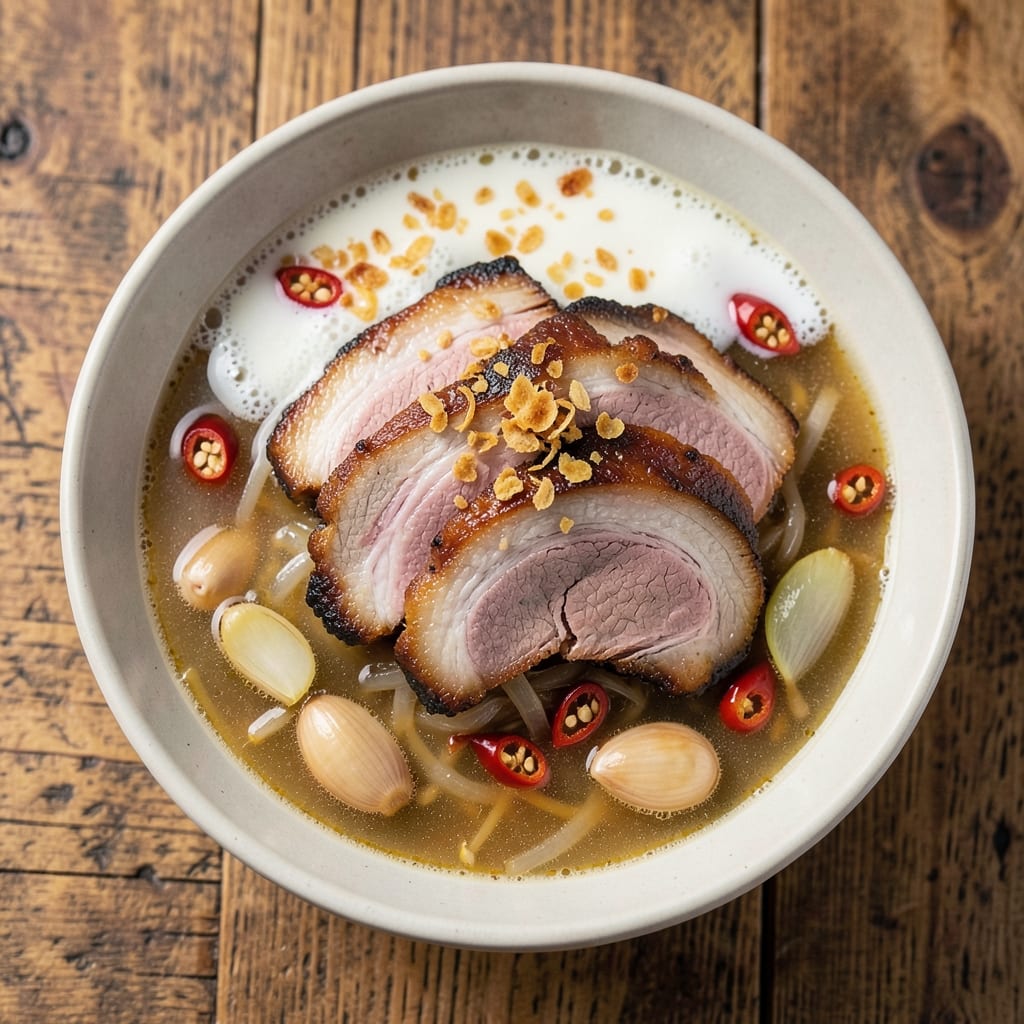
This Bida Manda Pork Belly Soup recipe delivers the ultimate Filipino comfort dish—crispy pork belly with tender meat and a rich, aromatic broth that warms the soul. 🔥 After years of perfecting the balance between caramelized bark and silky broth, I've created a method that captures the essence of home-style Filipino cooking. The secret lies in slow-cooking the pork belly until it develops that irresistible crispy exterior while staying juicy inside, all bathed in a fragrant broth infused with ginger, garlic, and chili.
The beauty of this recipe is its simplicity—just a few key ingredients transform into a deeply satisfying meal. You'll start with a well-seasoned pork belly, then slow-cook it until the edges become golden and crispy, while the meat inside melts in your mouth. The broth, simmered with traditional spices, absorbs all the flavors, creating a dish that's both hearty and comforting. This is the kind of soup that brings people together, perfect for family gatherings or cozy weeknight dinners.
What makes this recipe special is the crispy bark—achieved through a precise cooking technique that ensures every bite delivers a satisfying crunch. The broth, rich and flavorful, complements the pork perfectly, making every spoonful a taste of Filipino home cooking. Whether you're serving it with steamed rice or fresh vegetables, this soup is a celebration of flavor and tradition. Let's get started on creating this comforting classic.
This dish is more than just a meal—it's a taste of home, a moment of warmth, and a celebration of Filipino heritage. The combination of crispy pork belly and silky broth creates a harmony that's impossible to resist. Perfect for those who appreciate the art of slow cooking and the joy of a well-made soup. Here's how to bring this comforting dish to your table.
Ingredients for bida manda pork belly soup
Six servings of Filipino comfort—crispy pork belly meets silky broth in this soul-warming classic.
| Ingredient | Amount | Notes |
|---|---|---|
| Pork Belly 🥓 | 2 ½ lb | Thick-cut, skin-on preferred |
| Garlic Cloves 🧄 | 8 cloves | Minced, fresh preferred |
| Fresh Ginger 🌿 | ½ cup | Finely chopped, peeled |
| Bird's Eye Chili Peppers 🌶️ | 4 whole | Adjust for heat preference |
| Onion 🧅 | 1 whole | Yellow or white, sliced |
| Coconut Milk 🥥 | 1 can | 13.5 oz can, full-fat preferred |
| Tomatoes 🍅 | 4 whole | Medium, crushed by hand |
| Bay Leaves 🌿 | 2 whole | Fresh preferred |
| Salt 🧂 | 1 ½ tbsp | Kosher or sea salt |
| Black Peppercorns 🌶️ | 1 tsp | Freshly cracked |
| Sugar 🍚 | 1 tbsp | White or brown sugar |
| Vegetable Oil 🫒 | ¼ cup | For crisping pork belly |
| Steamed White Rice 🍚 | 3 cups | Cooked, for serving |
| Green Onions 🧅 | 4 whole | Sliced, for garnish |
The pork belly is the star here. Thick-cut, skin-on pieces from the butcher's counter give you that perfect crispy bark. Costco or local Asian markets usually carry it pre-cut, but if you're buying a whole piece, ask for the thickest cut possible—it's worth the extra. Skip the pre-sliced thin cuts; they won't develop that satisfying crunch. For the chili peppers, Filipino markets have the freshest bird's eye varieties, but any small red chili works in a pinch. Just remember: the smaller the pepper, the hotter it is—start with 3 if you're sensitive to heat.
No coconut milk? Full-fat canned coconut milk is non-negotiable here—it's what gives that rich, creamy texture. If you absolutely must substitute, half coconut milk and half heavy cream gets you close, but it won't be quite the same. The tomatoes can be any variety you like—San Marzano if you're fancy, or just grab a handful of ripe ones from the store. For the ginger, fresh is ideal, but if you're in a hurry, powdered ginger at half the amount works in a bind. The bay leaves? Fresh ones add a subtle floral note, but dried are totally fine too—just use one per serving instead of two.
This soup tastes even better the next day—3-4 days in the fridge actually lets the flavors meld perfectly. For the crispy pork belly, store it separately in an airtight container so it doesn't get soggy. Freezes beautifully for up to 3 months if you want to make a big batch. Just reheat the broth separately and the pork belly in a dry pan to restore that crispy texture. Serve it with plenty of steamed rice—at least 3 cups per pot—and those bright green onions scattered on top for freshness.
Why You'll Love This Recipe
- One-Pot Magic: I swear by this recipe when I’m too tired to clean a million dishes—just the pork belly, ginger, and chilies simmering together in one pot. The onions caramelize right in the broth, so you’re left with one pot to wash and a table full of happy eaters.
- Flavor Bomb: That crispy, crackling pork belly with the tender, fatty goodness melting in your mouth? Add the garlic and ginger, and it’s like a symphony of umami and heat. Honestly, I’ve never tasted a soup where every spoonful feels like a hug.
- Leftovers That Don’t Suck: Between us, most soups turn sad after day two. Not this one—the pork belly stays rich and flavorful, and the broth only gets better as it sits. I make a double batch on Sundays because it’s my go-to for lazy nights or when unexpected guests show up.
- Budget Stretch: Pork belly might sound fancy, but it’s way cheaper than you think when you buy it in bulk. A single cut feeds four, and the spices are so minimal that you’re basically getting restaurant-quality flavor for pennies. Plus, the leftovers make it even more cost-effective.
Step-by-step instructions for bida manda pork belly soup
This Filipino classic delivers crispy pork belly with silky broth—here's how to nail it every time.
🔥 Step 1: Crisp the Pork Belly to Perfection
Preheat your oven to 425°F. Place the 2.5 lb pork belly skin-side down on a wire rack set over a baking sheet. This keeps the fat from pooling and ensures even crisping. Rub the skin with 1.5 tbsp salt and 1 tsp black peppercorns—this seasoning will penetrate while roasting.
Roast for 45-50 minutes until the skin is deep golden brown and crispy enough to crackle when touched. Here's the thing—don't flip it. The fat needs to render slowly to create that signature crispy bark. If the skin browns too quickly, tent loosely with foil to prevent burning. Once done, let it rest for 10 minutes before slicing into ½-inch thick pieces.
🍳 Step 2: Build the Flavor-Packed Broth
In a large pot, heat 0.25 cup vegetable oil over medium heat. Add the sliced 1 whole onion, 8 cloves minced garlic, 0.5 cup chopped ginger, and 4 whole bird's eye chili peppers (seeds removed if you prefer less heat). Sauté for 5-6 minutes until the onions soften and the mixture smells fragrant—this is where all the magic happens.
Add the sliced pork belly, 4 crushed tomatoes, 2 bay leaves, and 1 tbsp sugar. Pour in 6 cups water (enough to cover everything) and bring to a boil. Once boiling, reduce heat to low and simmer uncovered for 1 hour, skimming off any foam that rises to the surface. This simmering process develops deep, complex flavors in the broth.
🥘 Step 3: Finish with Coconut Milk for Creamy Depth
After simmering, carefully pour in the 1 can coconut milk (don't let it boil hard—this can cause the milk to separate). Stir gently and simmer for another 15-20 minutes until the pork belly is fork-tender. You'll know it's ready when the meat pulls apart easily and the broth has thickened slightly but remains silky.
Taste and adjust seasoning—you might need a pinch more salt or sugar to balance the flavors. The coconut milk should blend seamlessly, creating that rich, velvety texture that makes this soup so comforting. Remove the bay leaves before serving.
🍽️ Step 4: Serve with Crispy Pork and Steamed Rice
Ladle the hot soup over 3 cups steamed white rice, arranging the crispy pork belly slices on top. Garnish with sliced 4 green onions for freshness and color. The contrast between the crispy pork, silky broth, and tender rice is what makes this dish so special.
Serve immediately while the pork is still crispy and the broth steaming hot. The aroma alone will transport you to a Filipino comfort meal. For extra comfort, offer extra chili peppers on the side—let everyone adjust the heat to their preference!
Pro Tips For Making Bida Manda Pork Belly Soup
- CUT BELLY IN CHUNKS: Pork belly loves a knife—slice it into 2-inch cubes before browning, not after. I learned this the hard way when my first batch turned into a greasy, uneven mess because I tried to brown thick slabs. Smaller pieces render faster and soak up the bida manda broth like a dream.
- BLISTER GARLIC FIRST: Toss whole garlic cloves in the hot pot before onions—let them sizzle and turn golden brown (about 30 seconds) before crushing. This deepens their flavor way more than raw minced garlic ever could. Skip this, and your soup tastes like it’s missing something.
- CONTROL THE CHILI HEAT: Add bird’s eye chilies whole at the end, not chopped into the broth. You’ll get the same fiery punch without turning your soup into a mouth-on-fire disaster. If you’re nervous, slice them lengthwise—just enough to release the heat without drowning the pot.
- SIMMER LOW AND LONG: After the initial sear, drop the heat to lowest possible and let the pork belly cook uncovered for 45 minutes. The fat will render slowly, creating a glossy, aromatic broth. I used to rush this, and the result was always greasy instead of rich. Patience here makes all the difference.
Troubleshooting your bida manda pork belly soup
Pork Too Greasy?
If your pork belly ends up too greasy, it’s likely from rendering too much fat during cooking. To fix this, trim excess fat from the belly before roasting—leave just a thin layer for flavor. When simmering, skim the surface regularly to remove excess fat. For extra crispiness without grease, try this trick: after roasting, place the pork belly on a wire rack over a baking sheet for 10-15 minutes to let excess fat drip away. This keeps the meat crispy while reducing grease. 💡
Broth Too Thin?
A watery broth usually means the pork wasn’t cooked long enough or the coconut milk was added too early. Let the pork belly simmer uncovered for at least 1.5 hours to break down fully. For extra thickness, stir in 1 tbsp cornstarch mixed with 2 tbsp water during the final 5 minutes of simmering. If using coconut milk, add it only after the pork is tender—this prevents dilution. Trust me, patience here makes all the difference.
Pork Not Crispy Enough?
Crispy pork belly is all about temperature control and technique. If yours isn’t crispy, try this: after roasting, place the sliced pork belly on a baking sheet and broil for 2-3 minutes on high heat to restore crispiness. For even better results, score the skin in a crosshatch pattern before roasting—this helps the fat render more evenly. I also recommend using a meat thermometer to ensure the pork reaches 145°F internal temperature before slicing. 🔥
Chili Too Spicy?
If the heat level is overwhelming, reduce the number of bird’s eye chili peppers to 2-3 whole peppers (or remove seeds entirely). For a milder broth, strain out the peppers after sautéing and replace them with ½ tsp chili flakes—this adds flavor without intense heat. If you’ve already cooked the soup, balance the heat with a splash of coconut milk or a pinch of sugar to mellow the flavors. Serve extra rice on the side to help cool things down.
Broth Too Salty?
Over-salting is common when using cured pork belly or adding too much salt early. To fix this, add ½ cup water or coconut milk and simmer for an extra 10 minutes to dilute the saltiness. If the broth is still too salty, stir in 1 small potato, peeled and cubed—it absorbs excess salt as it cooks. Remove the potato before serving. For prevention, taste the broth before adding the full amount of salt—build flavor gradually.
Pork Too Tough?
Tough pork belly usually means it wasn’t cooked long enough or the heat was too high. For next time, simmer the pork belly at a gentle low heat—aim for 180-190°F internal temperature—and extend the cooking time to 2-3 hours if needed. If it’s already tough, try this: shred the pork and return it to the broth for another 30 minutes to rehydrate. The coconut milk will help tenderize it further. Remember, slow and steady wins the race here. 💪
Nutrition facts
Frequently asked questions about bida manda pork belly soup
What makes this pork belly crispy without burning?
The secret is roasting skin-side down on a wire rack at 425°F for 45-50 minutes—this lets fat render slowly while creating that signature crackling bark. Never flip it! After roasting, let it rest 10 minutes before slicing to keep moisture inside while maintaining crispiness.
Can I substitute regular pork for pork belly?
Not ideal—the fat content in pork belly is what creates the rich broth and crispy texture. If you must, use bone-in pork shoulder instead, but expect a different (though still delicious) result. The fat marbling in belly is essential for that authentic bida manda experience.
How do I adjust the heat level for sensitive eaters?
Start with 2-3 whole bird's eye chili peppers (seeds removed) instead of 4. For milder flavor without heat, replace them with ½ tsp chili flakes after sautéing. You can also strain out the peppers after cooking and add a pinch of sugar to balance any remaining spice.
What's the best way to store leftovers?
Store the crispy pork belly separately in an airtight container—it stays crispy for 3-4 days in the fridge. The broth keeps well for 5 days (reheat gently). For freezing, portion the broth and pork separately—freeze pork for 3 months and reheat in a dry pan to restore crispiness.
Can I make this soup in an Instant Pot?
Yes! Sauté the aromatics as directed, then add all ingredients except coconut milk. Pressure cook on high for 45 minutes, then quick-release. Stir in coconut milk and simmer 10 minutes on sauté mode. The texture will be slightly different but still delicious—just watch the broth closely to prevent separation.