
Main Courses
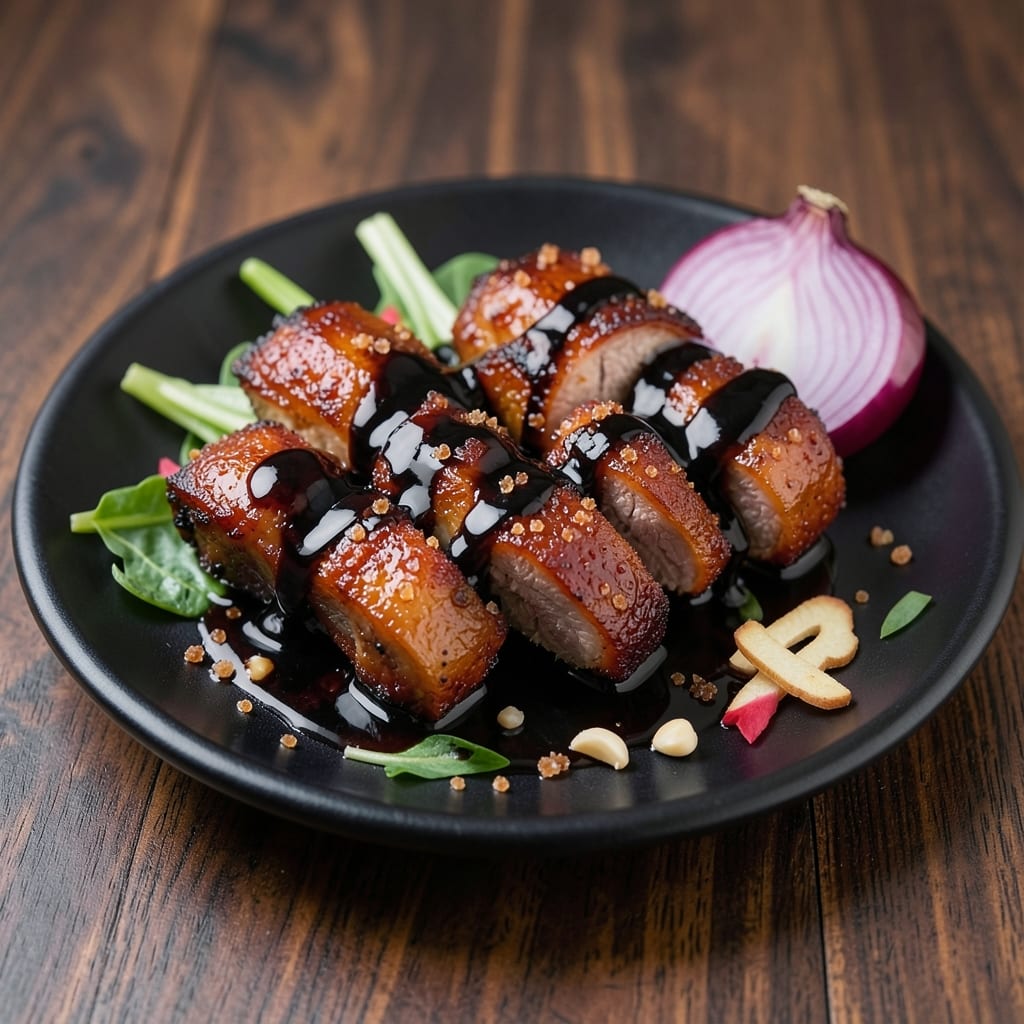
This black vinegar pork trotters recipe delivers the perfect balance of crunchy exterior and tender meat—a Filipino comfort food classic that transforms humble trotters into a showstopping dish. 🔥 After years of perfecting braising techniques with my heritage pigs, I've developed a method that ensures every bite delivers that signature tangy-sweet crunch. The secret lies in the slow cook, where black vinegar works its magic to tenderize while building layers of complex flavor.
What sets this recipe apart is the two-stage cooking process—first parboiling to remove impurities, then a long, slow braise in a rich black vinegar sauce. This technique not only ensures food safety but also creates that signature crispy skin while keeping the meat fall-apart tender. The sauce, packed with aromatics and just the right amount of sweetness, clings to every bite, making these trotters impossible to resist.
By the time you're done, you'll have golden-brown trotters with crispy edges and tender centers, all coated in a glossy, tangy-sweet sauce that's perfect for serving over steamed rice or alongside pickled vegetables. The aroma alone will have everyone gathering around your table, and the first bite delivers that perfect balance of textures and flavors that makes this dish a crowd-pleaser.
This recipe works beautifully for family dinners, holiday feasts, or even a special weekend treat. The leftovers reheat just as well, making it perfect for meal prep. Let's get started on creating this Filipino-style masterpiece that'll have everyone asking for seconds.
Ingredients for black vinegar pork trotter
Pork trotters, black vinegar, and aromatic spices—this trio creates Filipino magic in your kitchen.
| Ingredient | Amount | Notes |
|---|---|---|
| Pork Trotters 🍖 | 2 lb | Fresh, cleaned, joints removed |
| Black Vinegar 🍶 | 1 cup | Filipino-style, not balsamic |
| Brown Sugar 🍯 | ½ cup | Packed, light or dark |
| Garlic Cloves 🧄 | 8 cloves | Minced, aromatic |
| Fresh Ginger 🌿 | ½ cup | Finely grated, aromatic |
| Onion 🧅 | 1 whole | Yellow, sliced |
| Bay Leaves 🌿 | 2 whole | Dried, aromatic |
| Black Peppercorns 🌶️ | 1 tbsp | Crushed, freshly ground |
| Salt 🧂 | 1 ½ tsp | Kosher or sea salt |
| Soy Sauce 🍶 | ¼ cup | Dark, for depth |
| Water 💧 | 2 cups | For parboiling |
| Vegetable Oil 🫒 | 2 tbsp | For searing |
| Steamed White Rice 🍚 | 2 cups | For serving |
The trotters are the star, so look for heritage pigs if possible—they're more flavorful. Filipino markets often carry them fresh, but your local butcher can help too. If you can't find trotters, pork knuckles work in a pinch, though they won't have the same crispy texture. The black vinegar is non-negotiable—Filipino brands like Silver Swan are ideal, but any dark, tangy vinegar will do. For the ginger, freshly grated makes all the difference—pre-grated loses its punch fast.
No black vinegar? Substitute with a mix of balsamic and apple cider vinegar (1:1 ratio), but it won't be quite the same. Short on brown sugar? Coconut sugar or white sugar work, though the color will be lighter. The soy sauce adds depth—dark soy sauce is best, but regular will do. For extra crunch, add 1 tbsp cornstarch to the sauce at the end. The onions can be swapped for shallots or leeks if you prefer a milder flavor. Just make sure to slice them thin so they cook down nicely.
Trotters keep best in the fridge for 3-4 days after cooking, though they're even better reheated. Store them in the sauce—it keeps them moist and flavorful. For longer storage, freeze the trotters and sauce together for up to 3 months. Reheat gently in a skillet with a splash of water to revive that crispy texture. The rice? Steam it fresh—day-old rice gets mushy. This dish tastes even better the next day as the flavors meld.
Why You'll Love This Recipe
- One-Pot Magic: I swear by this—just trotters, vinegar, and sugar in one pot. No chopping, no fuss, and that deep, sticky glaze happens while you sip tea.
- Sweet-Savory Balance: The black vinegar’s tang cuts through the richness, while brown sugar caramelizes into a glossy crust. That crispy skin? Absolute perfection.
- Meal Prep Hero: Make a big batch on Sunday—it reheats like a dream for lunches all week. My kids grab it straight from the fridge, no complaints.
- Budget Feast: Pork trotters are cheap, and this recipe stretches them into something luxurious. Honestly, it’s the kind of dish that makes grocery day feel like a win.
Step-by-step instructions for Filipino-style braised pork trotters
This recipe delivers melt-in-your-mouth pork trotters with that signature tangy crunch—here's how to nail it every time.
🔥 Step 1: Parboil the Trotters for Maximum Tenderness
Place the 2 lb pork trotters in a large pot and cover with the 2 cups water. Bring to a boil over high heat, then immediately reduce to a gentle simmer for 20 minutes. You want the water to bubble steadily but not violently—this prevents toughening the meat.
After 20 minutes, drain the trotters and let them cool slightly. This initial cooking breaks down collagen and connective tissue, ensuring they become fork-tender later. Don't skip this step—it's what makes the final texture so irresistibly tender. While they cool, you can prep the marinade ingredients.
🍳 Step 2: Sear the Trotters for Deep Flavor
Heat the 2 tablespoons vegetable oil in a large Dutch oven over medium-high heat until shimmering. Pat the cooled trotters completely dry with paper towels—this is crucial for browning. Working in batches if needed, sear the trotters for 3-4 minutes per side until they develop a deep golden-brown crust.
Here's the thing—don't crowd the pan. You want that oil hot enough to create a proper sear. The crust isn't just for looks; it traps flavor and adds that satisfying crunch. Once all pieces are browned, remove them and set aside in a clean bowl.
🥘 Step 3: Build the Tangy Braising Sauce
In the same Dutch oven, add the sliced 1 whole onion, 8 cloves minced garlic, and 0.5 cup finely grated fresh ginger. Cook over medium heat for 3-4 minutes until the onions soften and become translucent. You'll smell that aromatic base developing—this is where all the flavor starts.
Pour in the 1 cup black vinegar and scrape up any browned bits from the bottom. Add the 0.5 cup brown sugar, 0.25 cup soy sauce, 1.5 teaspoons salt, and 1 tablespoon crushed black peppercorns. Stir well to combine, then add the 2 whole bay leaves. The sauce should bubble gently—this is your flavor foundation.
⏰ Step 4: Braise Until Fork-Tender
Return the seared trotters to the Dutch oven, nestling them into the sauce. Bring everything to a gentle simmer over low heat, then cover tightly with a lid. Here's where patience pays off—braise for 1.5 to 2 hours until the meat is fork-tender and the sauce has reduced to a glossy, slightly thickened consistency.
Check the trotters periodically—they're done when they pull apart easily with two forks. The sauce should coat the back of a spoon and have that signature tangy-sweet balance. If it reduces too quickly, add 1-2 tablespoons water to maintain moisture. The bay leaves can be removed before serving if you prefer.
🍽️ Step 5: Serve Over Steamed Rice
Transfer the trotters and sauce to a serving platter. Discard the bay leaves and adjust seasoning if needed—perhaps a splash more black vinegar for extra tang or a pinch of salt. Serve immediately over the 2 cups steamed white rice, spooning generous amounts of that glossy, aromatic sauce over the top.
Each bite should deliver tender, slightly crisp-edged pork with layers of sweet, tangy, and umami flavors. The rice soaks up the remaining sauce, making every mouthful a perfect balance. Don't forget to save some sauce for dipping—it's where all the magic happens!
Pro Tips For Making Black Vinegar Pork Trotter
- PARBOIL FIRST: Pork trotters need a head start in boiling water for 30 minutes before braising—this softens the collagen and saves hours of tough chewing later. Skip this, and you’ll be left with rubbery, unappetizing results that even black vinegar can’t fix.
- USE THICK-SKINNED TROTTERS: Ask your butcher for the outer trotters—the ones with the thickest, toughest skin. Thin-skinned ones burn before they render, and you’ll end up with a charred mess instead of a glossy, caramelized crust. Pay the extra 50 cents; your taste buds will notice.
- SIMMER LOW AND SLOW: After the initial sear, drop the heat to a gentle simmer (barely any bubbles) and cover the pot. High heat turns the black vinegar into vinegar-flavored water, and the trotters stay chewy. I learned this the hard way—my first batch tasted like a sad, watery stew.
- STIR IN GINGER LAST: Add the sliced ginger and garlic only in the final 15 minutes of cooking. If you toss them in early, they’ll turn bitter and mushy, overpowering the delicate balance of sweet, sour, and umami. Fresh ginger should brighten, not dominate.
Flavor customization for black vinegar pork trotter
Sweet Heat Balance
Adjust the sweet-to-tang ratio by tweaking the brown sugar and black vinegar amounts. For more heat, add 1 tbsp gochujang or 1 tsp chili flakes to the braising sauce. I once served these trotters at a BBQ competition with a honey-chili drizzle—mix 2 tbsp honey with 1 tbsp sriracha and spoon over the finished dish. 🌶️
Umami Boosters
Elevate the sauce with 1 tbsp fish sauce or 1 tsp oyster sauce> for deeper umami. I keep a bottle of Red Boat fish sauce in my pantry—it adds that signature Southeast Asian depth. For a vegetarian twist, swap the fish sauce with 1 tbsp mushroom powder> (like Better Than Bouillon).
Herb Variations
Swap the bay leaves for cilantro stems> or thai basil> for a brighter finish. I love adding 1 sprig fresh lemongrass> (bruised) to the braising liquid for a citrusy aroma. For a smoky touch, include 1 tsp smoked paprika> in the sauce.
Add crunchy elements> like toasted sesame seeds> or crushed peanuts> to the sauce for texture. I sometimes serve these trotters with quick-pickled cucumbers> (slice 1 cup cucumber>, toss with ¼ cup rice vinegar>, 1 tsp sugar>, and ½ tsp salt>) for freshness. The acidity cuts through the richness beautifully. For a Chinese-style version>, add 1 tbsp Shaoxing wine> to the braising liquid and finish with 1 tsp five-spice powder>. In Vietnamese-inspired> adaptations, I stir in 1 tbsp hoisin sauce> and garnish with bean sprouts>. The key is balancing the vinegar's tang with complementary flavors from each cuisine's pantry. Start with 1 tsp black peppercorns> for mild heat, then increase to 2 tsp> for medium, or add 1 tbsp chopped fresh chili> (like Thai bird's eye>) for spicy. I keep a Penzeys chili powder blend> handy for quick adjustments—just sprinkle ½ tsp> at the end for extra kick. Always taste the sauce before serving!Texture Contrasts
Regional Twists
Spice Level Guide
Nutrition facts
Frequently asked questions
Why do I need to parboil the pork trotters first?
Parboiling removes impurities and breaks down collagen, ensuring tender meat. The 20-minute simmer in water removes blood and bone marrow that would otherwise make the meat bitter. This step is especially important for trotters, which contain more connective tissue than other cuts.
Can I substitute black vinegar with something else?
Yes, but expect a different flavor profile. Use a 1:1 mix of balsamic vinegar and apple cider vinegar—it won't be identical but works in a pinch. For authentic results, seek out Filipino black vinegar (like Silver Swan) at Asian markets. The deep umami and tang are hard to replicate!
How do I know when the trotters are fully cooked?
They're done when they're fork-tender with no resistance. Insert forks into the thickest part—they should slide in easily with minimal effort. The 1.5-2 hour braise ensures perfect tenderness, but check after 1 hour if you're using smaller trotters. Overcooking can make them dry.
What's the best way to reheat leftovers?
Reheat gently in a skillet with 1-2 tablespoons of sauce over low heat for 5-7 minutes. Avoid microwaving—it makes the skin soggy. For extra crispiness, broil for 2-3 minutes at the end. Store leftovers in the sauce to keep them moist for up to 4 days.
Can I make this recipe without a Dutch oven?
Use a heavy-bottomed pot with a tight-fitting lid. If you don't have one, a deep skillet works too—just monitor the liquid level more closely. The key is maintaining even heat distribution for tender meat. For extra insurance, cover with foil if your lid isn't airtight.