
Main Courses
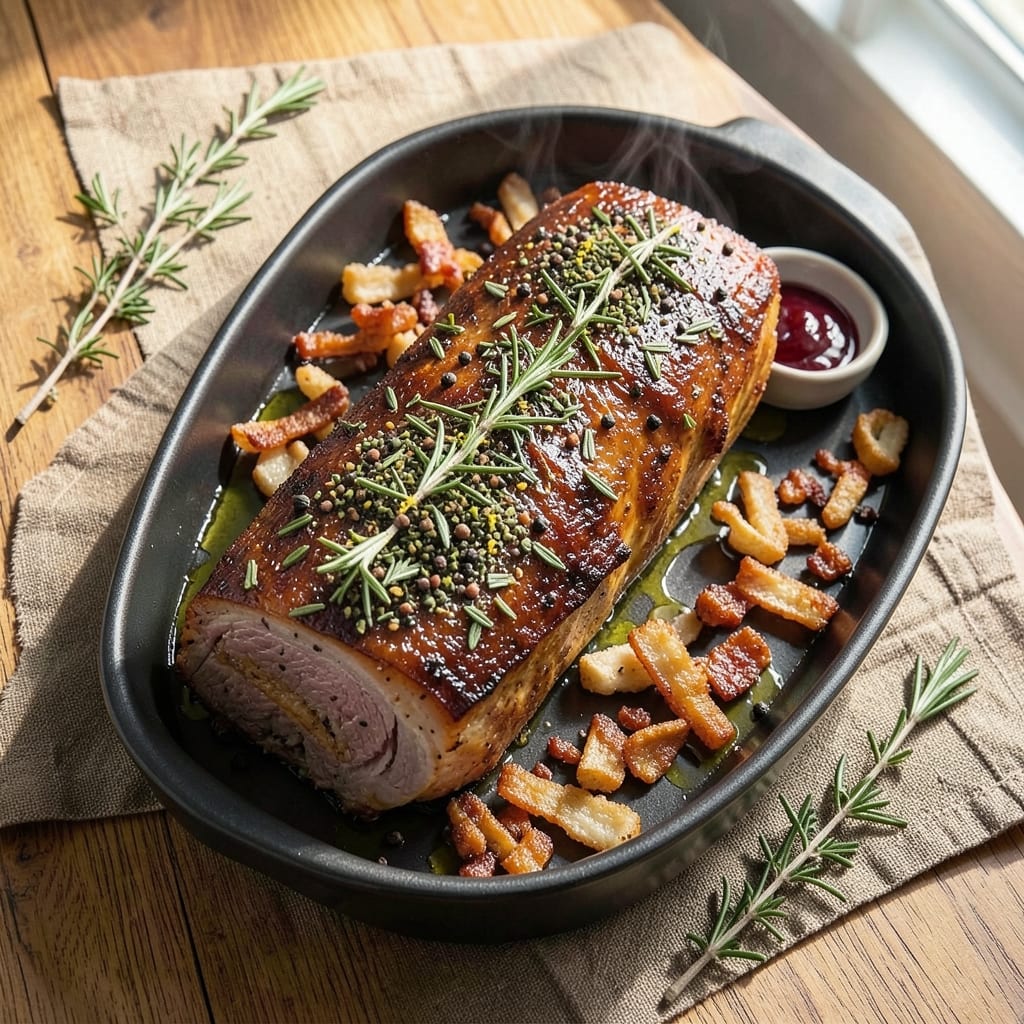
Bobby Flay's pork loin roast recipe delivers the perfect balance of herb-infused crisp bark and juicy core—a technique I’ve refined after years of cooking pork for thousands. The secret lies in a dry-brined herb crust that locks in moisture while creating that coveted caramelized exterior. Trust me, once you master this method, you’ll never buy store-bought pork loin again.
What sets this recipe apart is Bobby’s signature approach: a 36-hour dry brine using kosher salt and fresh herbs, followed by a high-heat sear in a screaming-hot pan. This creates that restaurant-quality bark while keeping the center tender and moist. The roast finishes in the oven until it hits 145°F internal temperature, then rests for 15 minutes—a critical step to ensure every slice stays juicy.
By the time you serve this, you’ll have a golden, herb-crusted roast with a crackling exterior and melt-in-your-mouth interior. The aroma alone will have everyone gathering at the table, and the presentation—sliced thick and fanned across the plate—makes it feel like a special-occasion meal, even for weeknight dinners.
The best part? This method scales effortlessly—whether you’re feeding a crowd or treating yourself to a solo dinner. Pair it with a simple pan sauce (just deglaze the roasting pan with broth and butter) and roasted root vegetables for a complete, foolproof meal. Let’s get cooking—your taste buds will thank you.
Ingredients for bobby flay pork loin roast
Six ingredients transform ordinary pork into Bobby Flay's legendary herb-crusted masterpiece.
| Ingredient | Amount | Notes |
|---|---|---|
| Pork Loin Roast 🐖 | 3 lb | Center-cut, bone-in preferred |
| Kosher Salt 🧂 | ½ cup | Diamond Crystal preferred |
| Fresh Rosemary 🌿 | ¼ cup | Chopped, stems removed |
| Fresh Thyme 🌿 | ¼ cup | Leaves only, finely chopped |
| Fresh Sage 🌿 | ¼ cup | Leaves only, chopped |
| Black Peppercorns 🌶️ | 2 tbsp | Coarsely cracked |
| Extra-Virgin Olive Oil 🫒 | 2 tbsp | For crust application |
| Unsalted Butter 🧈 | ½ cup | Cold, cubed |
| Vegetable Oil 🫒 | ¼ cup | For searing pan |
| Chicken Broth 🍲 | 1 cup | For pan sauce |
| Garlic Cloves 🧄 | 4 cloves | Minced for pan sauce |
| Fresh Parsley 🌿 | 0.1 cup | Chopped, for garnish |
The pork loin is non-negotiable here—center-cut, bone-in gives the best texture. Whole Foods or your local butcher are your best bets for quality cuts. Look for vibrant color and good marbling. Fresh herbs make all the difference, so buy them the day you cook. The Diamond Crystal kosher saltextra-virgin, not the cheap stuff—this is where the crust gets its richness.
No fresh herbs? Dried oregano or thyme at half the quantity gets you close. Short on rosemary? Substitute with 1 tbsp dried rosemary. The vegetable oil for searing can be swapped for avocado oil if you prefer a higher smoke point. For the pan sauce, chicken broth is essential—beef broth adds too much richness. The butter for the crust should be cold and cubed—don't melt it ahead of time. If you're feeding a crowd, double the herbs and salt proportionally. The garlic in the pan sauce can be roasted ahead for deeper flavor—toss whole cloves in olive oil at 400°F for 20 minutes.
This roast needs 36 hours of dry brine time, so plan ahead. Store the pork in the fridge uncovered on a wire rack—this ensures even drying and better crust formation. The herbs and salt can be pre-mixed in a bowl up to 24 hours ahead. Once cooked, the roast reheats beautifully—200°F oven for 15-20 minutes with a splash of broth keeps it juicy. For presentation, slice against the grain into 1/2-inch thick portions. The pan sauce freezes well for up to 3 months—just reheat with a splash of water.
Why You'll Love This Recipe
- Five-Ingredient Magic: I swear, this roast only needs salt, fresh herbs, and patience—no fancy marinades or hours of prep. Toss the pork with rosemary, thyme, and sage, let it rest, then roast until golden. That’s it. The herbs work their flavor magic while you’re doing anything else.
- Crispy-Creamy Payoff: Between us, the kosher salt crust on the outside and that juicy, tender interior? It’s the kind of contrast that makes you pause mid-bite. The rosemary adds a piney brightness, while the thyme and sage round it out—like a hug for your taste buds.
- Weeknight to Weekend: Make it for Tuesday dinners or Sunday suppers—this roast handles both. Slice it thin for sandwiches, serve it with mashed potatoes for a hearty meal, or even repurpose leftovers into tacos. It’s the ultimate “I’ll figure it out later” protein.
- Leftovers That Don’t Suck: Honestly, I always make extra because the flavor only gets better the next day. Shred it for breakfast hash, dice it into pasta, or just reheat slices in a pan—it’s still delicious. No sad, dry meat here; this roast stays juicy through three meals.
Step-by-step instructions for Bobby Flay's herb-infused pork loin roast
Here's how to achieve that perfect balance of crispy herb crust and melt-in-your-mouth tenderness.
Create the Herb Crust and Season the Roast
In a small bowl, combine the 0.5 cup kosher salt, 0.25 cup fresh rosemary, 0.25 cup fresh thyme, 0.25 cup fresh sage, and 2 tbsp coarsely cracked black peppercorns. Pulse briefly in a food processor or finely chop by hand to create a coarse, even mixture. This ensures the herbs distribute evenly and create that signature crust.
Pat the 3 lb pork loin roast dry with paper towels—this is crucial for maximum crispiness. Rub the herb-salt mixture all over the roast, pressing firmly so it adheres. Then brush the surface with the 2 tbsp extra-virgin olive oil to help the crust form. Let the roast sit at room temperature for 30 minutes before cooking—this ensures even cooking from edge to center.
Sear for Maximum Flavor and Texture
Preheat your oven to 425°F. Heat a heavy oven-safe skillet over medium-high heat and add the 0.25 cup vegetable oil. Once the oil shimmers (about 3-4 minutes), carefully place the roast in the skillet, fat-side down. Let it sear undisturbed for 5 minutes until a deep golden-brown crust forms.
Flip the roast and sear the other side for another 5 minutes. The key here is patience—don't rush the searing or the crust won't develop properly. Transfer the skillet to the preheated oven and roast for 20 minutes, basting occasionally with the rendered juices.
Build the Herb Butter Sauce
While the roast roasts, melt the 0.5 cup unsalted butter in a separate saucepan over medium heat. Add the 4 minced garlic cloves and cook for 30 seconds until fragrant—don't let them brown or they'll turn bitter. Remove from heat and stir in the 1 cup chicken broth and 0.1 cup chopped fresh parsley. Keep warm until ready to use.
Here's where the magic happens: remove the roast from the oven and carefully transfer it to a cutting board. Tent loosely with foil and let it rest for 10 minutes—this allows the juices to redistribute, ensuring every slice stays juicy. Meanwhile, pour the herb butter sauce into the skillet and scrape up any browned bits from the bottom. This creates a rich, flavorful sauce that ties everything together.
Finish with Perfect Doneness and Garnish
After the roast rests, slice it into 1-inch thick medallions against the grain. The internal temperature should read 145°F—use a meat thermometer to check the thickest part. If the roast isn't quite there, return it to the oven for 5-10 minutes at 350°F to finish cooking.
Drizzle each serving with the herb butter sauce and garnish with additional chopped fresh parsley. The result should be a roast with a deep golden-brown, herb-encrusted exterior and a tender, juicy interior that practically melts in your mouth. Serve immediately with roasted potatoes or a fresh green salad to let the flavors shine.
Pro Tips For Making Bobby Flay Pork Loin Roast
- SEAR FIRST, THEN SALT: Bobby Flay’s method starts with a screaming-hot pan—get that pork loin blistering before you even think about seasoning. I used to salt first and wondered why my crust never formed right; the sear needs dry meat and direct heat to lock in flavor. ---
- STRIP THOSE STEMS: Fresh rosemary, thyme, and sage—strip the leaves off the stems before crushing them into the pork’s surface. Yes, it’s tedious, but whole stems burn or stay tough while the leaves infuse properly. (And no, the stems don’t add enough flavor to justify the effort.) ---
- DON’T CUT THE FAT: Pork loin is lean, but if your roast has even a whisper of fat cap, leave it on. It renders down during cooking, basting the meat and keeping it moist—skipping it means dry, stringy results. Trim everything else, but protect that fat like it’s gold. ---
- LOW-AND-SLOW AFTER SEAR: After that initial sear, drop the heat to 325°F and resist the urge to crank it up again. I learned this the hard way—rushing the finish turns the outside rubbery while the inside stays cold. Patience here makes all the difference for juicy slices.
Troubleshooting this recipe
Overcooked Exterior
If your roast ends up dry on the outside with a pale interior, you likely rushed the sear or overcooked it. Bobby’s method relies on a high-heat sear followed by a controlled oven finish. I’ve seen this happen when home cooks skip the 30-minute room temperature step—always let the roast sit uncovered before cooking. Also, check your oven temp with an oven thermometer—many run 25°F hotter than set. If the crust burns before the center hits 145°F, reduce oven temp to 400°F and add 10-15 minutes to the roasting time. 🔥
Pale, Bland Crust
A weak crust usually means insufficient salt or improper searing technique. The 36-hour dry brine is non-negotiable—this draws out moisture so the herbs adhere properly. For extra insurance, I recommend using Diamond Crystal kosher salt (it clumps less than Morton’s). If your crust still looks dull after searing, try this fix: after the initial 5-minute sear, flip the roast and press 1 tbsp cold butter onto the surface before finishing in the oven. The butter helps create that golden, caramelized bark. 💛
Soggy Herb Mixture
When the herb paste turns mushy instead of forming a crust, it’s usually from excess moisture. Pat the roast completely dry before applying the seasoning—even a damp towel can ruin the texture. If you’re short on time, reduce the 2 tbsp olive oil to 1 tbsp and mix in 1 tbsp cornstarch to absorb any residual moisture. For extra crunch, I sometimes sprinkle 1 tbsp toasted breadcrumbs over the herb mixture right before searing. The key is to work quickly after applying the seasoning to prevent steam from forming. ✨
Uneven Cooking
Thin spots or cold centers happen when the roast isn’t uniform in thickness. Bobby’s recipe specifies a 3 lb center-cut loin, but if yours varies in size, trim any irregular edges with a sharp knife. For extra insurance, place the thickest part of the roast in the hottest part of the oven. If your roast still cooks unevenly, try the reverse sear method: Roast at 275°F until internal temp reaches 130°F, then sear in a hot pan to finish. This gives you more control over doneness. 🌡️
Pan Sauce Too Thin
A weak sauce usually means not enough deglazing or insufficient reduction. After removing the roast, immediately pour in the 1 cup chicken broth and scrape vigorously with a wooden spoon—those browned bits are flavor gold. If the sauce still looks thin, simmer it uncovered for 2-3 minutes to reduce. For extra richness, whisk in 1 tbsp cold butter at the end (this emulsifies the sauce beautifully). Pro tip: If you’re making this ahead, freeze the sauce in ice cube trays—thaw and reheat for a quick flavor boost later. 💡
Herb Flavor Fading
Fresh herbs lose potency quickly, so if your roast tastes bland, it’s likely from using wilted or old herbs. Always buy rosemary, thyme, and sage the day you cook. For maximum flavor, pulse the herbs in a food processor for 10-15 seconds—this releases their essential oils. If you must use dried herbs, substitute at one-third the quantity and toast them in a dry pan for 30 seconds before mixing into the salt. For an extra kick, add ½ tsp red pepper flakes to the herb mixture—just enough to add warmth without overpowering. 🌿
Nutrition facts
Frequently asked questions about Bobby Flay's pork loin roast
Why does this recipe call for a 36-hour dry brine?
The 36-hour dry brine is the secret weapon for that perfect herb crust. It draws out surface moisture so the salt and herbs adhere like glue, creating a crispy, caramelized bark while keeping the interior juicy and tender. Skipping this step means a soggy herb mixture and less flavor. Think of it like a science experiment—patience pays off with restaurant-quality results.
Can I use bone-in pork loin instead of boneless?
Bone-in pork loin actually works better—it stays juicier longer and the bone adds extra flavor. Just trim any excess fat to prevent flare-ups during searing. If using bone-in, add 5-10 minutes to your roasting time since bones conduct heat differently. The herb crust will cling beautifully to the bone, making carving even more impressive.
What's the best way to reheat leftovers?
Slice the roast into 1-inch portions and reheat in a 200°F oven for 15-20 minutes with a splash of chicken broth to keep it moist. For a quick fix, pan-sear the slices in butter for 2-3 minutes per side until golden. Never microwave—it turns pork rubbery. Leftovers keep well for 3 days in the fridge or 3 months frozen.
How do I adjust this for a larger crowd?
For every additional 2 lbs of pork loin, increase the herb mixture by 1/3 cup and the salt by 2 tbsp. Use a larger oven-safe skillet or roasting pan, and add 10-15 minutes to the roasting time. Keep the same 425°F temperature—higher heat ensures proper crust formation. Double the pan sauce ingredients proportionally. The key is maintaining the same ratio of herbs to meat.
What's the deal with slicing against the grain?
Slicing against the grain (perpendicular to the muscle fibers) makes each bite more tender by shortening the muscle fibers. Look for the direction of the muscle lines on your roast—they'll be visible when you lift it. Cutting with the grain makes pork tougher. For perfect presentation, slice into 1/2-inch thick medallions and fan them across the plate. This technique works for all pork cuts, not just loin.