
Main Courses
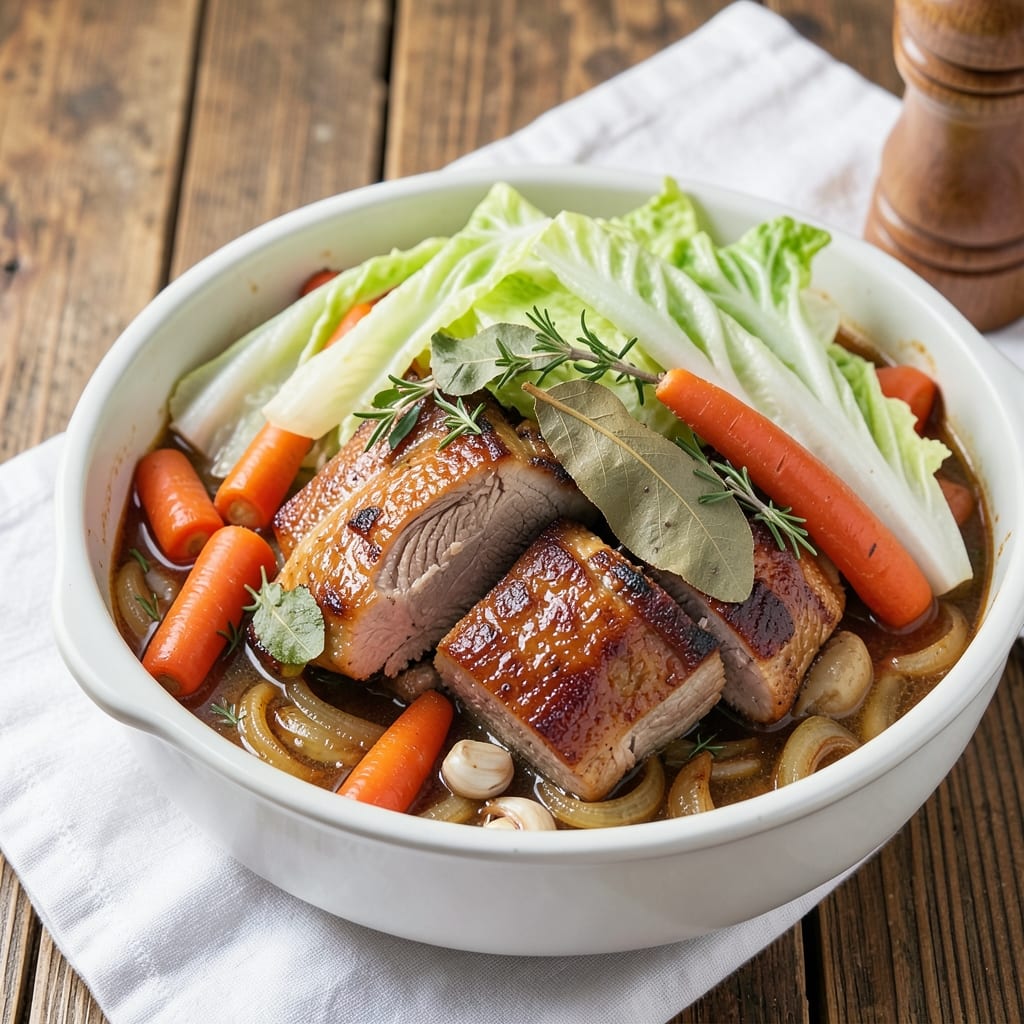
This German Sunday roast brings hearty tradition to your table with tender pork and perfectly boiled cabbage—just like my grandmother used to make. The secret lies in slow simmering the pork until fork-tender while keeping the cabbage crisp yet flavorful. I've perfected this recipe over years of Southern-style cooking, balancing rich pork with the fresh bite of cabbage and aromatic herbs.
The beauty of this dish is its simplicity: a foolproof method that delivers restaurant-quality results with minimal effort. You'll start with a well-seasoned pork shoulder, then simmer it until it falls apart, while the cabbage cooks in the same pot, absorbing those savory flavors. The key is patience—letting the pork break down slowly creates melt-in-your-mouth texture that's impossible to resist.
What you'll end up with is a Sunday-worthy meal that feels special without requiring hours in the kitchen. The pork remains juicy and tender, the cabbage bright and slightly crisp, and the broth rich enough to serve as a simple gravy. It's the kind of dish that tastes even better the next day, making it perfect for meal prep or feeding a crowd.
Serve with crusty bread to soak up the juices or alongside roasted potatoes for a complete meal. The recipe scales effortlessly, so you can adjust portions for any gathering. Here's how to make it—traditional German comfort food, simplified for modern kitchens.
Ingredients for boiled pork and cabbage
Six simple ingredients transform into a hearty German Sunday roast with tender pork and crisp cabbage.
| Ingredient | Amount | Notes |
|---|---|---|
| Pork Shoulder 🐷 | 3 lb | Bone-in, cut into chunks |
| Green Cabbage 🥬 | 1 whole | Heads cut into wedges |
| Carrots 🥕 | 4 whole | Medium, peeled, halved |
| Onions 🧅 | 2 whole | Yellow, quartered |
| Garlic Cloves 🧄 | 4 cloves | Peeled, smashed |
| Bay Leaves 🌿 | 2 whole | Dried, standard size |
| Salt 🧂 | 2 tbsp | Kosher or sea salt |
| Black Peppercorns 🌶️ | 1 tsp | Freshly cracked |
| Juniper Berries 🌲 | 5 whole | Lightly crushed |
| Apple Cider Vinegar 🍎 | 2 tbsp | For tangy depth |
| Parsley 🌿 | ¼ cup | Fresh, chopped, for garnish |
| Crusty Bread 🍞 | 1 loaf | For serving, optional |
The pork shoulder is non-negotiable here—bone-in cuts stay juicier. Look for well-marbled pork at the butcher counter or pre-cut sections at Whole Foods or Costco for convenience. Cabbage should be firm and heavy for its size; avoid any with yellowing leaves. Carrots and onions can be prepped ahead, but keep them dry until cooking. The juniper berries add that classic German flavor—find them in the spice aisle or online if your grocery store doesn't carry them. If you can't get juniper, extra black peppercorns work in a pinch.
No juniper berries? Substitute with 1 tsp ground allspice or an extra bay leaf. Fresh parsley is ideal, but dried parsley at one-third the amount works if you're in a hurry. The apple cider vinegar can be swapped for white vinegar or lemon juice, though it'll change the flavor slightly. For a lighter touch, reduce the salt to 1 tbsp and use Diamond Crystal kosher salt—it dissolves better. The crusty bread is purely optional but perfect for soaking up those delicious juices. Sourdough or rye from the bakery section adds authenticity.
This dish tastes even better the next day—double the recipe and freeze half for lazy Sundays. Store leftovers in the fridge for 4-5 days or freeze for 3 months. The broth thickens as it cools, so add a splash of water when reheating. For meal prep, portion the pork and cabbage separately to keep the cabbage crisp. The flavors meld beautifully overnight, so make extra—it's perfect for sandwiches or as a hearty lunch the next day.
Why You'll Love This Recipe
- One-Pot Wonder: I swear by this for lazy nights—just toss everything in a pot, add water, and walk away. No fancy techniques, no extra bowls, no stress. The cabbage softens while the pork stays juicy, all thanks to that slow simmer.
- Garlic-Onion Magic: That deep, savory punch from caramelized onions and minced garlic? It’s the star here. The pork absorbs it like a sponge, and the cabbage gets a subtle sweetness from the carrots—simple spices make it taste like you slaved over it.
- Lunchbox Hero: Between us, this is my go-to for meal prep. The flavors only get better the next day, and it reheats like a dream. Pack it cold for work or serve it warm—either way, it’s the kind of dish that makes people ask, "What’s for dinner?"
- Budget Dinner: Pork shoulder stretches for days, and cabbage lasts forever. I’ve fed four people for under $10 with this—no fancy cuts, no waste. Honestly, it’s the kind of meal that makes grocery day feel like a win.
Step-by-step instructions for German Sunday roast pork and cabbage
Here's how to create a hearty, comforting meal that feels like a Sunday tradition every time.
Prepare the Pork Shoulder for Slow Cooking
Start by trimming any excess fat from the 3 lb pork shoulder, leaving about ¼-inch thickness for flavor. Cut the meat into 2-inch chunks—this ensures even cooking and tender results. In a large Dutch oven, combine the pork with 2 tbsp salt, 1 tsp freshly cracked black peppercorns, 5 lightly crushed juniper berries, and 2 whole bay leaves. Toss gently to coat the meat evenly with the spices.
Here's the thing—juniper berries add that classic German depth, but they're potent. Lightly crushing them releases flavor without overpowering. If you don't have juniper berries, a pinch of allspice works in a pinch, though it won't be exactly the same.
Build the Vegetable Layer for Maximum Flavor
In the same Dutch oven, add 1 whole green cabbage cut into wedges, 4 whole carrots peeled and halved, and 2 whole yellow onions quartered. The vegetables should surround the pork in a single layer—this prevents overcrowding and ensures everything cooks evenly. Add 4 peeled and smashed garlic cloves and 2 tbsp apple cider vinegar to brighten the dish.
Don't skip the vinegar—it cuts through the richness of the pork and cabbage, adding a subtle tang that balances the meal. The cabbage will soften beautifully during the long cook, but starting with wedges keeps it intact enough to serve whole if you prefer.
Cover with Water and Begin Simmering
Pour in enough cold water to cover the pork and vegetables by about 2 inches. Bring to a boil over high heat, then immediately reduce to a gentle simmer. The water should bubble softly—if it boils vigorously, the pork will toughen. Once simmering, cover the Dutch oven with a tight-fitting lid and transfer to the oven.
Preheat your oven to 300°F before adding the Dutch oven. The slow cook in the oven keeps the pork tender and juicy while letting the vegetables absorb all that delicious pork flavor. I like to cook it for 3 to 3½ hours, checking occasionally to ensure there's always enough liquid to cover the meat.
Check for Doneness and Final Seasoning
After 3 hours, use a meat thermometer to check the pork—it should reach an internal temperature of 195°F at the thickest part. If it's not quite there, return it to the oven for another 30 minutes. The meat will continue cooking slightly after you remove it from the heat, so don't worry if it's not quite perfect yet.
Once the pork is tender, remove it from the pot and let it rest for 10 minutes before slicing. Skim any excess fat from the cooking liquid, then taste and adjust seasoning if needed. The vegetables should be fork-tender but still hold their shape—if they're too soft, they've been in too long. The pork should pull apart easily with two forks.
Serve with Fresh Parsley and Crusty Bread
Return the pork and vegetables to the pot and warm through for 5 minutes over low heat. Stir in ¼ cup chopped parsley just before serving to add a fresh, bright note that cuts through the richness. Ladle the pork and vegetables onto plates, drizzling the cooking liquid generously over the top.
Serve with 1 loaf crusty bread on the side—it's perfect for soaking up every last bit of that flavorful broth. This dish tastes even better the next day, so make extra if you can. The flavors meld and deepen as it sits, making it ideal for meal prep or a cozy family dinner.
Pro Tips For Making Boiled Pork And Cabbage
- Sear the Pork First: I learned this the hard way—skipping the sear means bland, gray pork instead of rich, flavorful meat. Brown the pork shoulder in a hot pot with oil for 3-4 minutes per side before adding water. The crust locks in juices and builds depth of flavor that simmering alone can’t match.
- Shred the Cabbage Thin: Thick cabbage wedges turn mushy while pork cooks. Cut the cabbage into ¼-inch slices (or even shred it) so it softens evenly without falling apart. If you’re lazy, a mandoline does this in seconds—no more fighting soggy bites.
- Watch the Water Level: Too much water dilutes the broth; too little risks sticking. Aim for 2-3 inches of liquid over the pork shoulder, enough to cover half the meat. If it evaporates too fast, add hot water—not cold—so the pork keeps cooking steadily.
- Salt the Pork Early: Season the pork shoulder before searing and let it sit 30 minutes uncovered. This guarantees even flavor penetration, not just salted edges. (Yes, even if you’re impatient like me—just don’t skip the wait.)
Creative variations of this recipe
Southern BBQ Twist
For a true Southern take, swap the juniper berries for ½ cup BBQ rub (I love Sweet Baby Ray's Original) and add 2 cups apple cider instead of vinegar. Braise the pork at 275°F for 4 hours until fall-apart tender. The cabbage gets a smoky depth from the pork juices, and the apples add natural sweetness that balances the heat. Serve with cornbread instead of crusty bread for the ultimate comfort food mashup. 🌶️
Asian-Inspired Fusion
Transform this into a Chinese-style braised pork by adding 2 tbsp soy sauce, 1 tbsp Shaoxing wine, and 1-inch ginger sliced. Use Napa cabbage instead of green cabbage and cook for 2 hours on the stovetop instead of the oven. Finish with 1 tsp sugar and ½ tsp five-spice powder—this version is perfect over steamed rice. The pork stays juicy while absorbing those umami-rich flavors. 🥢
Herb-Infused French Style
Give it a French bistro touch by adding 1 tbsp fresh thyme, 1 tbsp fresh rosemary, and 3 sprigs tarragon to the Dutch oven. Deglaze with ½ cup dry white wine after removing the pork, then reduce the liquid by half before returning everything to the pot. Simmer for 2 hours instead of 3—this keeps the cabbage slightly crisp. Garnish with chopped tarragon and serve with crusty baguette and Dijon mustard on the side. 🌿
Spicy Cajun Kick
For a Cajun-inspired version, add 1 tbsp Cajun seasoning (like Tony Chachere's), ½ tsp cayenne pepper, and 1 tbsp hot sauce (like Crystal or Tabasco) to the pork. Use red cabbage instead of green for a vibrant color and extra heat. Cook for 2½ hours and finish with ½ cup chicken stock to deepen the sauce. Serve with corn muffins and a side of collard greens for a full Louisiana-style feast. 🌶️
Vegetarian Adaptation
For a meatless version, replace the pork with 3 lb extra-firm tofu pressed and cubed, or 3 lb king oyster mushrooms sliced. Use vegetable broth instead of water and add 1 tbsp soy sauce for umami. Cook for 2 hours and finish with 1 tbsp maple syrup to balance flavors. The cabbage and carrots will still absorb the savory broth beautifully, making this a hearty vegetarian option. 🌱
Holiday Feast Version
Elevate this for special occasions by adding 1 cup pearl onions, 1 cup baby potatoes, and 1 cup dried apricots to the pot. Deglaze with ½ cup port wine after cooking and reduce the liquid to make a rich gravy. Garnish with toasted almonds and fresh sage for a festive touch. This version feels luxurious enough for Christmas dinner but still simple enough for a weeknight. 🎄
Nutrition facts
Frequently asked questions
Can I use pork chops instead of pork shoulder?
Pork chops won't work as well for this recipe—they cook too quickly and won't develop the same tender, fall-apart texture. Use pork shoulder (or pork butt) for the best results, as the fat and connective tissue break down beautifully during the long simmer. If you're set on chops, try pan-searing them separately and serving with the braised cabbage on the side.
How do I keep the cabbage from getting mushy?
Start with whole cabbage wedges (not shredded) and don't overcook! The cabbage should be fork-tender but still hold its shape. Simmer for 2-2½ hours max—if it's too soft, you've cooked it too long. For extra crispness, add the cabbage to the pot only during the last 1 hour of cooking.
What's the best way to reheat leftovers?
Reheat gently in the oven at 300°F for 20-30 minutes with a splash of water or broth to keep everything moist. Microwaving works in a pinch, but the cabbage may get soggy. The pork actually tastes better reheated—it gets even more tender as the flavors meld overnight.
Can I make this in a slow cooker?
Combine everything in your slow cooker and cook on low for 8 hours or high for 5 hours. The slow cooker maintains gentle heat, which is perfect for tenderizing the pork. Just add ½ cup water if the liquid reduces too much during cooking.
Why does my pork turn out dry?
Overcooking is the #1 cause—pork shoulder needs patience! Check the internal temp with a meat thermometer (195°F is perfect). Also, never boil vigorously (keep it at a gentle simmer) and always cover the pot. The fat in the pork renders naturally, keeping it moist.