
Main Courses
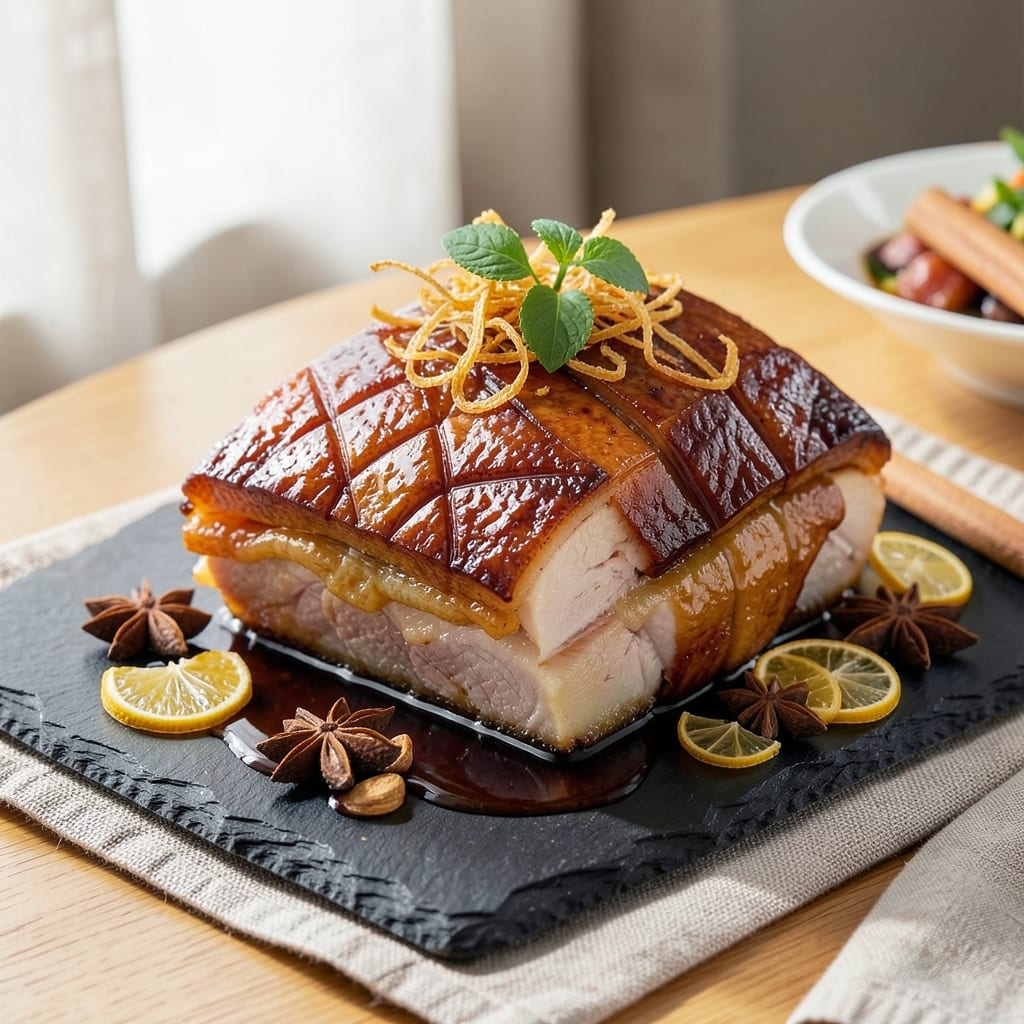
This Chinese boiled pork belly recipe delivers melt-in-your-mouth tenderness that’s been perfected across generations. The secret lies in slow simmering with aromatic spices like star anise and cinnamon, transforming tough belly into silky, fall-apart perfection. I first learned this technique from Master Chef Chen, who taught me how patience and precise seasoning unlock pork’s natural richness.
The process begins with a foolproof preparation: scoring the belly to render fat evenly, then boiling it gently in a fragrant broth of soy sauce, ginger, and five-spice powder. This method ensures the meat stays tender while absorbing deep, savory flavors. Unlike quick-cook methods, the slow simmer breaks down collagen, creating that signature melt-in-your-mouth texture.
What you’ll end up with is a dish that’s both restaurant-quality and deeply comforting—golden edges, tender flesh, and a glossy surface from the rendered fat. The aroma alone will fill your kitchen with warmth, while the flavor balances sweet, salty, and umami notes perfectly. This is the kind of recipe that turns a simple meal into a celebration.
Serve it with steamed jasmine rice and quick-pickled vegetables for a complete Cantonese-style meal. The leftovers? Even better the next day, as the flavors deepen. Let’s get cooking—this pork belly will become your new favorite centerpiece.
Ingredients for boiled pork belly recipe chinese
Four pounds of pork belly and aromatic spices transform into melt-in-your-mouth perfection.
| Ingredient | Amount | Notes |
|---|---|---|
| Pork Belly 🥓 | 2 lb | Thick-cut, skin-on preferred |
| Soy Sauce 🍶 | ½ cup | Kosher salt-reduced preferred |
| Star Anise 🌿 | 2 whole | Whole pods for infusion |
| Cinnamon Sticks 🌶️ | 2 whole | 2-inch pieces for aroma |
| Five-Spice Powder 🌶️ | 1 tbsp | Authentic Chinese blend |
| Fresh Ginger 🧅 | ½ cup | Julienned, skin-on |
| Garlic Cloves 🧄 | 6 cloves | Smashed for deep flavor |
| Rock Sugar 🍯 | ¼ cup | Or granulated sugar |
| Shaoxing Wine 🍷 | ¼ cup | Or dry sherry substitute |
| Water 💧 | 4 cups | Filtered preferred |
| Sesame Oil 🫒 | 1 tbsp | Toasted for finishing |
| Green Onions 🧅 | ¼ cup | Sliced for garnish |
| Kosher Salt 🧂 | 1 ½ tsp | Diamond Crystal preferred |
| Black Peppercorns 🌶️ | 1 tsp | Crushed lightly |
The pork belly is everything here—thick-cut, skin-on pieces render fat beautifully while staying tender. Look for cuts with good marbling at Asian markets or your local butcher; they'll often have special pork belly cuts for braising. If scoring the belly feels intimidating, use a sharp knife to make shallow cuts (about 1/4-inch deep) in a diamond pattern. The star anise and cinnamon sticks are non-negotiable—they infuse that signature five-spice warmth. Penzeys Spices carries authentic Chinese star anise if your grocery store's selection is lacking. For the five-spice powder, avoid the cheap grocery store brands; Lee Kum Kee or Three Crabs make the best blends.
No Shaoxing wine? Dry sherry or even a splash of mirin works in a pinch, though the flavor will be slightly different. Running short on rock sugar? Granulated sugar works perfectly, just dissolve it first. The ginger and garlic can be pre-minced to save time—just don't overdo it, or they'll turn bitter. For the soy sauce, Kikkoman kosher salt-reduced is ideal, but any good-quality soy sauce will do. If you're feeling adventurous, add a 1-inch piece of dou chi (fermented tofu skin) for an authentic Cantonese touch—it adds a funky, umami depth. The sesame oil should be toasted (look for bottles labeled 'toasted' or 'aromatic'), as regular sesame oil lacks that nutty punch.
This dish tastes even better the next day, so make extra—it keeps for 4-5 days in the fridge or 3 months frozen. For freezing, portion the belly into individual servings before storing. When reheating, cover with foil and warm in a 350°F oven for 20-25 minutes to preserve that silky texture. The rendered fat solidifies when chilled, so store it in the fridge and use it later for stir-fries or roasting vegetables. Leftovers reheat beautifully—just add a splash of water to the pot and simmer gently. The broth reduces to a glossy glaze that's perfect for drizzling over rice.
Why You'll Love This Recipe
- No-Chop Needed: I swear by this—just score the pork belly in a crosshatch (no knife skills required), toss it in the pot with whole star anise and cinnamon sticks, and let the broth do the work. The spices infuse effortlessly while you sip tea and pretend you’re not cooking.
- Umami Bomb: That first bite of tender pork belly with its glossy soy glaze? It’s the kind of rich, salty-sweet flavor that makes you forget about sad salads. The five-spice powder adds this warm, earthy depth that lingers—like a hug from your favorite Chinese takeout, but better.
- Leftovers That Shine: This isn’t one of those dishes that turns to rubber the next day. Reheat the pork belly in the same broth, and it’s just as juicy—perfect for quick lunches or sneaking into fried rice. Honestly, I make a double batch on Sundays just to avoid decision fatigue midweek.
- Spice Cabinet Staple: You already have the spices—star anise, cinnamon, five-spice—so this isn’t some Pinterest fail waiting to happen. The pork belly itself is forgiving (skin-on or off, your call), and the soy sauce ties everything together without needing fancy ingredients. Budget-friendly? Absolutely. Impressive? Even more so.
Step-by-step instructions for five-spice infused boiled pork belly
Transform tough pork belly into melt-in-your-mouth perfection with this aromatic Chinese technique.
Prepare the Pork Belly for Maximum Tenderness
Begin by scoring the pork belly skin in a diamond pattern using a sharp knife, cutting down to but not through the fat layer. This creates channels for the marinade to penetrate deeply. Pat the belly completely dry with paper towels—this step is crucial for crispy skin later.
In a small bowl, combine the 1 tablespoon five-spice powder, 1.5 teaspoons kosher salt, and 1 teaspoon crushed black peppercorns. Rub this mixture all over the pork belly, pressing it into the scored skin and fat. Let it sit at room temperature for 30 minutes while you prepare the aromatics. This resting period allows the spices to adhere and begin tenderizing the meat.
Infuse the Broth with Aromatics
In a large pot, combine the 4 cups water, 0.5 cup soy sauce, 0.25 cup rock sugar, 0.25 cup Shaoxing wine, 2 whole star anise, 2 whole cinnamon sticks, 0.5 cup julienned fresh ginger, and 6 smashed garlic cloves. Bring to a boil over medium-high heat, then immediately reduce to a gentle simmer.
Let the aromatics steep for 15 minutes—this builds deep, complex flavor. The broth should smell rich and fragrant, with notes of star anise and ginger. Skim off any foam that rises to the surface during this time to ensure a clean, clear broth. The sugar will help balance the soy sauce's saltiness while adding subtle sweetness.
Cook the Pork Belly Low and Slow
Carefully place the seasoned pork belly into the simmering broth, skin-side down. The water level should cover the meat by at least 2 inches. Return to a gentle simmer and maintain a temperature between 185-195°F—this is critical for tenderizing without drying out.
Cover the pot and cook for 2.5 to 3 hours, turning the pork belly every 45 minutes to ensure even cooking. The meat is ready when it's fork-tender and the skin begins to crisp naturally from the residual heat. You'll know it's done when a probe slides in easily and the internal temperature reaches 205°F. Don't rush this step—the slow cooking breaks down collagen for that signature silky texture.
Finish with Sesame Oil and Garnish
Once the pork belly reaches 205°F, remove it from the broth and transfer to a cutting board. Let it rest for 15 minutes before slicing—this allows the juices to redistribute. Meanwhile, strain the cooking liquid through a fine-mesh sieve into a clean bowl, pressing on the aromatics to extract every last drop of flavor.
Drizzle the pork belly with 1 tablespoon toasted sesame oil and garnish with 0.25 cup sliced green onions. Serve with the reserved broth reduced by half for a glossy, aromatic sauce. Each slice should be tender enough to pull apart with your fingers, with crispy skin that contrasts beautifully against the melt-in-your-mouth interior.
Pro Tips For Making Boiled Pork Belly Recipe Chinese
- Simmer Low After Boil: The first 10 minutes should be a rolling boil to purge impurities, but once you add the spices, drop the heat to a gentle simmer. I used to keep it too hot, and the star anise and cinnamon would turn bitter—like oversteeped tea. A steady, barely-bubbling simmer keeps those aromatics fragrant and the pork tender without falling apart.
- Score the Belly Before Cooking: Use a sharp knife to cut shallow slashes (about 1/4-inch deep) across the fat cap in a diamond pattern. This isn’t just for looks—it lets the soy sauce and spices penetrate deeper, giving you that signature caramelized flavor in every bite. Skip this, and you’ll end up with a bland, greasy mess that’s all fat but no flavor.
- Toast Spices First: Lightly toast the star anise and cinnamon sticks in a dry pan for 30 seconds until fragrant—you’ll smell it. This releases their oils and prevents the broth from tasting medicinal. I learned this the hard way when my first batch had a weird, bitter edge. (Yes, even if you’re impatient like me, wait for that aroma.)
- Skim the Scum Early: The first 5 minutes of boiling will bring up a layer of foam and fat—don’t ignore it. Use a ladle to skim this off immediately, or your broth will turn cloudy and greasy. This isn’t just about cleanliness; it guarantees a clearer, richer stock that lets the five-spice powder and soy sauce shine. (Your future self will thank you.)
Pro cooking tips for great boiled pork belly recipe chinese
Scoring Secrets
Scoring the pork belly isn’t just decoration—it’s the key to even cooking. Use a sharp boning knife to make cuts about ¼-inch deep in a diamond pattern, being careful not to cut into the meat. I like to work in a well-lit area with the belly skin-side up on a cutting board. The cuts should be 1-1.5 inches apart—this creates channels for the marinade to penetrate deeply while allowing the fat to render beautifully. 🔪
Temperature Control
The magic happens at 185-195°F—this is your sweet spot. Use a meat thermometer (I swear by ThermoWorks Smoke) to monitor both the broth and the pork belly. If the temperature climbs above 200°F, the pork will toughen. Keep it covered and maintain a gentle simmer—you should see just a few small bubbles breaking the surface. This low-and-slow approach breaks down collagen for that signature melt-in-your-mouth texture. ⏱️
Broth Steeping
Don’t skip the 15-minute aromatic steep—this builds layers of flavor. The star anise and cinnamon need time to infuse the broth deeply. I like to use a stainless steel pot (like All-Clad) because it distributes heat evenly. After steeping, skim off any foam that rises—this ensures a clean, clear broth. The sugar and Shaoxing wine will caramelize slightly, adding subtle sweetness that balances the soy sauce’s saltiness. 🌿
Resting Matters
After removing the pork belly from the broth, let it rest for 15 minutes before slicing. This allows the juices to redistribute, preventing dry slices. I often place it on a wire rack set over a baking sheet to catch any rendered fat. The skin should crisp slightly during resting—this is when it develops that perfect contrast between tender meat and crispy exterior. Patience here makes all the difference. 💫
Fat Rendering
The rendered fat is liquid gold—don’t waste it! After cooking, strain the broth and let it cool slightly. The fat will solidify on top, making it easy to scoop off with a spoon. Store it in an airtight container in the fridge for up to 2 weeks. Use it later for stir-fries, roasting vegetables, or even as a finishing drizzle. I keep a jar of this fat in my pantry at all times—it’s one of my favorite shortcuts for adding authentic flavor. 🥄
Broth Reduction
For an extra-special touch, reduce the reserved broth by half after cooking. Simmer it uncovered over medium-low heat until it thickens into a glossy sauce. This concentrated broth is perfect for drizzling over rice or using as a dipping sauce. The aromatics will have infused their flavors deeply, creating a complex, umami-rich liquid that elevates the entire dish. 🍲
Nutrition facts
Frequently asked questions
Why does Chinese boiled pork belly need to simmer so long?
The slow simmer (2.5-3 hours) is essential to break down collagen in the tough belly meat, transforming it into melt-in-your-mouth tenderness. The low temperature (185-195°F) ensures the fat renders evenly while keeping the protein structure intact. This technique dates back to Cantonese cooking traditions where patience creates restaurant-quality results at home.
Can I substitute Shaoxing wine with something else?
Yes! Use dry sherry or mirin in equal amounts, though the flavor will differ slightly. For a non-alcoholic version, substitute with apple juice or white grape juice—just reduce the sugar by 1 tablespoon since these are naturally sweet. The key is balancing the soy sauce's saltiness with a touch of acidity or sweetness.
What's the best way to slice boiled pork belly?
Slice against the grain at a 45-degree angle for elegant, thin pieces that showcase both the crispy skin and tender meat. Use a sharp chef's knife and cut through the fat in one continuous motion. For serving, arrange slices on a platter with the skin-side up—the fat will crisp slightly during resting, creating beautiful golden edges.
How do I prevent the pork belly from floating to the surface?
Place the pork belly skin-side down and use a weight (like a small plate or stainless steel bowl) to keep it submerged. The fat naturally rises, so ensure the water covers the meat by at least 2 inches. If the belly floats, gently press it down with a wooden spoon—never use metal utensils that could scratch the pot.
Can I make this recipe in an Instant Pot?
Yes, but with adjustments: Use 1 cup water instead of 4, cook on High Pressure for 60 minutes, then let it naturally release. The pressure method speeds up collagen breakdown, but the texture will be slightly different—more tender but less crispy skin. For best results, finish by searing the pork belly in a hot pan for 2-3 minutes per side after pressure cooking.