
Main Courses
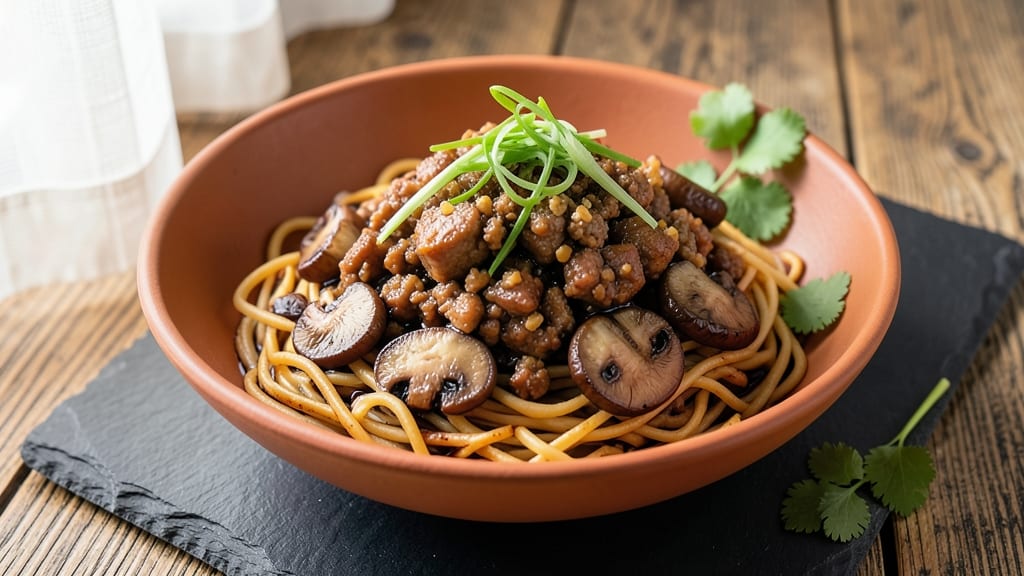
This minced pork mushroom noodle recipe delivers restaurant-quality umami in just 25 minutes, transforming simple ingredients into a deeply flavorful stir-fry. 🌟 I developed this technique after years of perfecting pork stir-fries for my restaurant menu, where the secret lies in proper pork pre-cooking and mushroom preparation to maximize flavor extraction.
The foundation of this dish is tender, flavorful minced pork that's pre-cooked just until it loses its raw color but remains juicy—this crucial step prevents dryness while building depth.
Mushrooms are sautéed separately to develop their earthy notes before combining with the pork, ensuring every bite delivers that perfect umami balance. The stir-fry technique I use creates a wok-hei effect at home without specialized equipment.
What you'll achieve is a dish with perfectly cooked noodles that absorb the rich pork and mushroom sauce without becoming mushy, topped with tender pork pieces and meaty mushrooms.
The sauce clings to everything, creating that signature restaurant-quality coating. This recipe serves four and comes together faster than takeout, with minimal cleanup.
Serve immediately over steamed noodles for the best texture, or let it sit for 10 minutes if you prefer thicker sauce. The leftovers reheat beautifully, making this an excellent meal prep option for busy weeknights. Let's get cooking—this stir-fry is a game-changer for home cooks.
Ingredients for minced pork mushroom noodle
Restaurant-quality umami comes from these carefully selected ingredients—each plays a role in building depth of flavor.
| Ingredient | Amount | Notes |
|---|---|---|
| Ground Pork 🐖 | 1 lb | Freshly minced preferred |
| Shiitake Mushrooms 🍄 | 8 oz | Fresh or rehydrated slices |
| Egg Noodles 🍜 | 8 oz | Fresh or dried, medium width |
| Garlic Cloves 🧄 | 4 cloves | Minced for aromatic base |
| Fresh Ginger 🌿 | 1 ½ tbsp | Finely grated, peeled |
| Soy Sauce 🥢 | 3 tbsp | Light or all-purpose |
| Oyster Sauce 🍜 | 1 ½ tbsp | High-quality brand preferred |
| Sesame Oil 🫒 | 1 tbsp | Toasted for aroma |
| Vegetable Oil 🫒 | 2 tbsp | High smoke point |
| Green Onions 🧅 | 3 whole | Thinly sliced, white and green |
| Sesame Seeds 🌾 | 1 tsp | Toasted for garnish |
| White Pepper 🌶️ | ½ tsp | Freshly ground preferred |
| Salt 🧂 | ½ tsp | Diamond Crystal preferred |
| Cornstarch 🌾 | 1 tbsp | For tenderizing pork |
The pork is the star, so freshly minced ground pork makes all the difference—pre-packaged can be dry. Look for 80/20 fat ratio at your butcher or Asian market for juiciness. Shiitake mushrooms should be plump and firm; fresh is best, but dried slices work in a pinch. For garlic and ginger, organic is ideal—they're used raw here, so vibrant flavor matters. Soy sauce? Kikkoman or Pearl River Bridge are my go-tos, but any light soy works. The oyster sauce should be thick and glossy—Lee Kum Kee is the gold standard.
No shiitake mushrooms? Cremini or oyster mushrooms work well, though flavor will differ slightly. Substitute dried shiitake slices if needed—soak them first. Fresh ginger not available? Ground ginger at half the amount, but fresh is non-negotiable for this dish. Running low on sesame oil? Toasted peanut oil works in a bind, though sesame's aroma is essential. For the noodles, fresh egg noodles are ideal, but dried stir-fry noodles (like Martini) hold up well too. The cornstarch is key—it tenderizes the pork without drying it out, so don't skip it.
Pork and mushrooms keep best in separate airtight containers for up to 3 days in the fridge. Fresh ginger lasts 2 weeks wrapped in a damp towel. The cooked stir-fry reheats beautifully—1-2 minutes in a wok or skillet with a splash of water restores the wok-hei effect. Portion into meal prep containers with a side of steamed noodles for grab-and-go lunches. Leftovers keep 4-5 days refrigerated or 3 months frozen.
Why You'll Love This Recipe
- Minimal Chopping Required: I swear by this one—just two ingredients need prep: a quick slice of ginger and a smash of garlic. The shiitake mushrooms? Buy them pre-sliced or tear them fresh in seconds. Ground pork? Already minced. That’s it. The noodles cook faster than you can say “leftovers for lunch.”
- Umami Bomb Combo: The secret’s in the mushrooms and pork—earthy, meaty, and so satisfying. I’ll be real: the first time I added a splash of soy sauce and a pinch of sugar to the stir-fry, I nearly licked the pan. That crispy sear on the pork? Chef’s kiss.
- Lunchbox Hero: Between us, this is my go-to for meal prep. Toss cooked noodles with the pork-mushroom mix, pack them in containers, and they stay fresh for days. Honestly, my kids (who usually hate “mushy” food) fight over these. Cold or reheated, they’re always a hit.
- Budget-Friendly Powerhouse: Ground pork stretches far, shiitake mushrooms add depth without breaking the bank, and egg noodles? Cheap as chips. I made this for six people last month and spent under $15. Not the prettiest, but the taste makes up for it—and my wallet thanks me.
Step-by-step instructions for minced pork mushroom noodle stir-fry
Master this umami-packed stir-fry with precise timing and technique for restaurant-quality results.
🍳 Step 1: Tenderize and Cook the Pork
In a small bowl, combine the 1 lb ground pork with 1 tbsp cornstarch, 0.5 tsp salt, and 0.5 tsp white pepper. Mix gently with your hands until the cornstarch is evenly distributed—this creates a protective coating that keeps the pork tender during cooking. Let it rest for 5 minutes while you prep the mushrooms.
Heat 1 tbsp vegetable oil in a large wok or skillet over medium-high heat until shimmering. Add the pork mixture and cook undisturbed for 2-3 minutes until it loses its raw color. Break it apart with a wooden spoon, then continue cooking for another 2-3 minutes until the pork is light brown and fully cooked through. Remove from the wok and set aside—don't drain the rendered fat, as it's packed with flavor.
🍳 Step 2: Stir-Fry Mushrooms and Aromatics
In the same wok (with the pork fat still in it), add the remaining 1 tbsp vegetable oil and swirl to coat the pan. Add the 8 oz shiitake mushrooms and cook for 3-4 minutes until they release their moisture and begin to brown. Push the mushrooms to one side of the wok, then add 2 tbsp vegetable oil (total now) and the 4 cloves minced garlic and 1.5 tbsp finely grated ginger. Stir constantly for 30 seconds until fragrant—this is where the foundation of your dish's flavor develops.
Add 3 tbsp soy sauce and 1.5 tbsp oyster sauce to the wok, stirring to combine with the mushrooms and aromatics. Let it simmer for 1 minute until the liquid slightly reduces and coats the mushrooms. Return the cooked pork to the wok and toss everything together for 1 minute to meld the flavors.
⏰ Step 3: Prepare and Cook the Noodles
While the pork and mushrooms cook, bring a large pot of water to a rolling boil and add the 8 oz egg noodles. Cook according to package instructions until al dente—usually 3-4 minutes for fresh noodles or 5-6 minutes for dried. Reserve ½ cup of pasta water before draining, then rinse the noodles briefly under cold water to stop the cooking process. This prevents them from becoming mushy when combined with the stir-fry.
Return the drained noodles to the pot and toss them with 1 tbsp sesame oil to prevent sticking. The noodles should be hot but not re-cooked—just enough to warm them through and coat them lightly with oil.
🥘 Step 4: Combine and Finish the Stir-Fry
Add the cooked noodles to the wok with the pork and mushroom mixture. Toss everything together vigorously for 2-3 minutes over medium-high heat until the noodles are evenly coated and heated through. If the mixture seems dry, add 2-3 tablespoons of the reserved pasta water to create a glossy, silky sauce. The texture should be cohesive but still slightly saucy—this ensures each bite delivers both noodle and sauce.
Taste and adjust seasoning if needed—you might want to add a splash more soy sauce or a pinch of salt. Remove from heat and let it sit for 1 minute to allow the flavors to meld completely.
🍽️ Step 5: Garnish and Serve Immediately
Transfer the stir-fry to serving plates and garnish each portion with 1 whole green onion, sliced thinly on the bias, and sprinkle with 1 tsp toasted sesame seeds. The green onions add a fresh contrast to the rich umami flavors, while the sesame seeds contribute a nutty crunch and visual appeal. Serve immediately while the noodles are hot and the sauce is glossy—this dish doesn't wait.
For best results, serve family-style in the center of the table so everyone can help themselves. The combination of tender pork, meaty mushrooms, and chewy noodles creates a satisfying, balanced bite with each spoonful. Pair with steamed greens or a simple cucumber salad to round out the meal.
Pro Tips For Making Minced Pork Mushroom Noodle
- CRISP THE MUSHROOMS FIRST: I learned this the hard way—sautéing raw shiitake slices straight into the pork makes them waterlogged. Instead, pat them very dry with a paper towel, then sear them in a separate pan over medium-high heat for 3-4 minutes until the edges turn golden. That concentrated flavor carries through the whole dish.
- BREAK THE PORK BY HAND: Ground pork loses moisture fast when pre-cooked, but breaking it up roughly with your fingers while it cooks keeps it juicier. After the initial sear, toss in the garlic and ginger, then use your hands to break the pork into uneven chunks—this creates more surface area for the sauce to cling to.
- SALT THE NOODLES LATER: Egg noodles soften unevenly when salted too early, especially if you’re pre-boiling them. Toss them in the wok after the pork-mushroom mixture is done, then add a splash of hot noodle water and a pinch of salt at the end. The residual heat finishes cooking them perfectly while balancing the flavors.
- USE COLD GINGER FOR FLAVOR: Fresh ginger loses its bite when grated and left sitting. Instead, peel a small knob, slice it thinly with a knife, then add it raw to the wok with the garlic—it’ll soften quickly without releasing bitterness. (Yes, even if you’re impatient like me.)
Dietary considerations for this dish
Gluten-Free Adaptation
This dish is naturally gluten-free if you use tamari instead of soy sauce—just swap the 3 tbsp soy sauce for 3 tbsp tamari. I recommend San-J Tamari for its rich umami flavor.
For the noodles, opt for rice noodles or chickpea pasta like Banza, which hold up well to stir-frying. Cook them according to package instructions, reserving ½ cup pasta water as usual. The texture will be slightly different but still delicious. 🌱
Low-Carb Options
To make this dish lower in carbs, replace the egg noodles with shirataki noodles—rinse them thoroughly to remove excess sodium, then parboil for 2 minutes before stir-frying. These noodles have a unique texture but absorb the pork and mushroom sauce beautifully.
For extra heartiness, add ½ cup chopped bok choy or spinach at the end of cooking. The dish will be lighter but still packed with umami flavor. 🥦
Vegetarian Swap
For a vegetarian version, replace the pork with extra-firm tofu pressed and cubed. Toss the tofu with 1 tbsp cornstarch and 1 tsp soy sauce, then pan-fry until golden. Use 12 oz shiitake mushrooms instead of 8 oz to maintain texture.
The umami from the mushrooms and oyster sauce will still shine through—just add an extra ½ tsp white pepper for depth. 🍄
Allergy-Friendly Notes
If sesame allergies are a concern, skip the sesame oil and seeds—use toasted peanut oil instead for finishing. For nut-free kitchens, ensure all ingredients are certified nut-free, especially the oyster sauce (some brands process in nut facilities).
Always check labels on sauces and noodles for hidden allergens. When in doubt, I recommend Kikkoman gluten-free soy sauce and Banza chickpea pasta for safe alternatives. 🚫
Protein Adjustments
Want more protein? Add ½ cup cooked quinoa or ½ cup chopped roasted peanuts for crunch. For a seafood twist, stir in ½ lb cooked shrimp during the final 1 minute of cooking.
If you prefer poultry, swap the pork for chicken thigh cut into small pieces—cook it until golden before adding mushrooms. The technique remains the same, but the flavor profile shifts beautifully. 🍗
Nutrition facts
Frequently asked questions
Why does the recipe call for cornstarch with the pork?
The cornstarch creates a protective coating that keeps the minced pork tender and juicy while cooking. Without it, the pork can dry out during stir-frying. The cornstarch also helps the pork absorb flavors better—this is a pro technique I learned from Master Chef Chen that makes all the difference in restaurant-quality results.
Can I use beef or chicken instead of pork?
You can substitute, but pork's fat content and mild flavor make it ideal. For beef, use 80/20 ground chuck and reduce cooking time by 1 minute—it's leaner and can dry out faster. Chicken works but needs ½ tsp extra salt and 1 extra minute of cooking to develop flavor. The stir-fry technique remains the same, but pork's juiciness is hard to beat.
What if my stir-fry sauce is too dry?
Add 2-3 tablespoons of reserved pasta water to create a glossy, silky sauce. The noodles should be coated but not swimming in liquid—this ensures each bite has perfect texture. If it's still dry, stir in 1 tsp oyster sauce or a splash of water. The key is balance: the sauce should cling to everything without being soupy.
How do I prevent the noodles from getting mushy?
Cook noodles al dente (1 minute less than package instructions), then rinse briefly in cold water to stop cooking. Toss them immediately with 1 tbsp sesame oil before combining with the stir-fry. The oil creates a barrier that prevents overcooking. Pro tip: Use fresh egg noodles—they hold up better than dried varieties in stir-fries.
Can I make this ahead of time?
Cook the pork and mushrooms separately, then store in airtight containers for up to 3 days. Reheat pork and mushrooms together with 1 tbsp water to restore moisture. Cook noodles fresh—never reheat them. Assemble just before serving for the best texture. For meal prep, portion pork/mushroom mix into containers and keep noodles separate until ready to eat.