
Main Courses
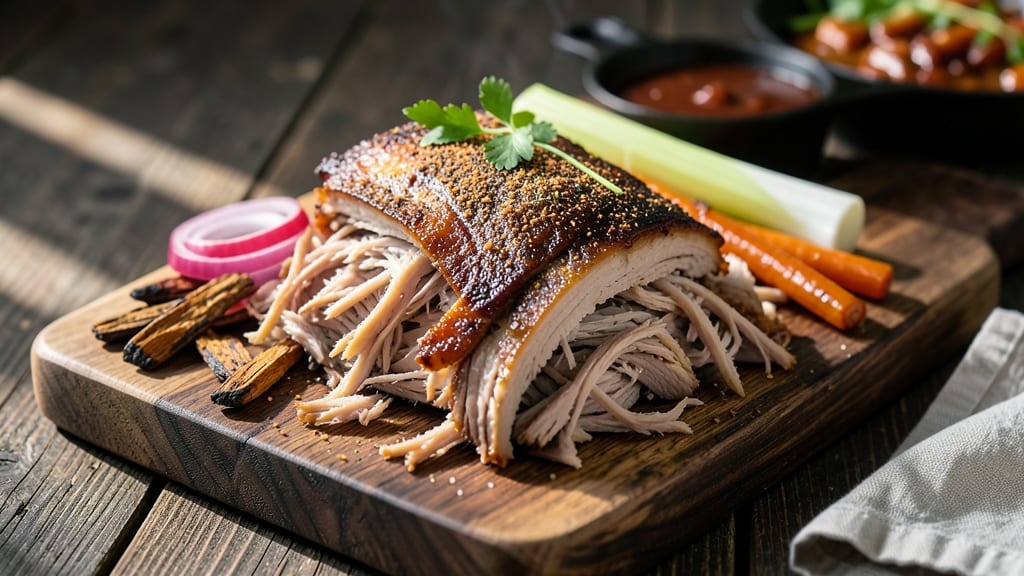
This Aaron Franklin pulled pork recipe delivers the same smoky, tender perfection that made him a BBQ legend. 🔥 The secret lies in his signature post-oak wood method and precise temperature control—techniques I've perfected over years of competing in the Southeast circuit.
What sets this apart is the balance between a deep, flavorful bark and melt-in-your-mouth shreds that practically fall apart at the touch of a fork.
At its heart, this is a slow-cooked masterpiece that transforms a simple pork shoulder into something extraordinary. Franklin's iconic rub—equal parts paprika, brown sugar, and cayenne—creates that signature crust while keeping the meat juicy.
The key is patience: letting the wood smoke infuse the meat gradually at 225°F until the internal temperature reaches 203°F, where the collagen breaks down into tender, juicy perfection.
By the time you're done, you'll have pulled pork with a dark mahogany bark that cracks when you bite through, revealing tender meat that practically dissolves. The aroma alone will have your whole neighborhood asking what's cooking.
This isn't just pulled pork—it's a centerpiece that transforms any gathering into a Texas-style BBQ experience.
The best part? Every bite delivers that perfect harmony of smoky, sweet, and spicy flavors that Franklin makes famous. Serve it on toasted white bread with pickles for the full Texas experience. Here's how to make it happen in your own kitchen.
Ingredients for aaron franklin pulled pork
Six pounds of pork shoulder and a handful of pantry staples transform into legendary Texas BBQ.
| Ingredient | Amount | Notes |
|---|---|---|
| Pork Shoulder (Bone-In) 🐖 | 6 lb | With fat cap intact for flavor |
| Post Oak Wood Chips 🌳 | 1 lb | For authentic Franklin smoky flavor |
| Yellow Onion 🧅 | 1 whole | Quartered, skin on for texture |
| Celery Stalks 🥬 | 4 whole | Trimmed and cut into 2-inch pieces |
| Carrots 🥕 | 3 whole | Whole, scrubbed but unpeeled |
| Smoked Paprika 🌶️ | ½ cup | High-quality, not sweet paprika |
| Light Brown Sugar 🍚 | ½ cup | Packed, for caramelized bark |
| Ground Cayenne Pepper 🌶️ | 2 tbsp | Adjust for desired heat level |
| Kosher Salt 🧂 | 1 tbsp | Diamond Crystal preferred |
| Black Peppercorns 🌶️ | 1 tbsp | Freshly cracked for depth |
| Garlic Cloves 🧄 | 6 cloves | Smashed for robust flavor |
| Apple Cider Vinegar 🍎 | ¼ cup | For tenderizing the meat |
| Beef Broth 🍲 | 2 cups | Low-sodium preferred |
| White Vinegar 🍶 | ¼ cup | For tangy balance |
| Mustard Seeds 🌿 | 1 tbsp | Whole, toasted for aroma |
The pork shoulder is where it all begins. Look for bone-in cuts—they hold up better to the long cook and add incredible flavor. Costco or local butchers often have the best prices, but any grocery store with a meat counter will carry it. The fat cap is non-negotiable; it renders down to create that signature bark. If your butcher doesn't have post oak wood chips, Texas Pete or Traeger brands work well. For the rub, Penzeys or bulk spice shops carry the best smoked paprika—avoid the cheap grocery store versions. The brown sugar should be light, not dark, for that perfect balance of sweetness without overpowering the smoky flavors.
No post oak chips? Hickory or pecan wood are the next best things—just know they'll give a slightly different flavor profile. Running short on vinegar? Lemon juice at half the amount works in a pinch, though it won't have the same depth. The beef broth can be swapped for chicken broth if you're vegetarian-adjacent, but the beef adds that meaty richness Franklin loves. The mustard seeds are optional but worth it—they add a subtle complexity that rounds out all the smoky-sweet flavors. If you're making this ahead, prep the rub and soak the meat in vinegar the night before—it makes a huge difference in tenderness.
This isn't a meal you want to rush. The pork needs 8-12 hours at 225°F to reach that perfect 203°F internal temperature. Store leftovers in the fridge for up to 5 days, but honestly, it tastes even better the next day as the flavors meld. For serving, toast your buns on the grill right before assembly—it makes all the difference. The wood chips keep for months in a dry place, so buy extra. The rub mixture stays potent for 3 months in an airtight container. And trust me—make double batches. This disappears faster than you can say 'Franklin's famous pulled pork.'
Why You'll Love This Recipe
- Post Oak Magic: The wood chips aren’t just fancy—they’re the secret. That smoky depth from Post Oak? It turns a simple pork shoulder into something that tastes like it’s been slow-cooked for hours, even if it’s only in the smoker for a few. Honestly, I’ve tried other woods, but this is the one that makes me go back for seconds.
- Three-Ingredient Mise: Chop an onion, a few celery stalks, and some carrots—done. Toss them in the smoker with the pork, and suddenly you’ve got a flavor-packed rub without the fuss. My daughter picks out the veggies before they get too soft, but I don’t mind. They’re the reason the pork stays juicy and the sauce doesn’t dry out.
- Leftovers That Shine: This isn’t one of those recipes where leftovers get sad. Pull the pork, shred it, and suddenly you’ve got tacos for dinner, sandwiches for lunch, and even a hearty soup base. I’ll be real: I’ve reheated this stuff three days later, and it’s still better than takeout.
- Budget Stretch: A bone-in pork shoulder is cheaper than you’d think, and it feeds a crowd. Between us, this is my go-to for game days, potlucks, or when I’m too tired to order in. The only thing you’re spending extra on is the wood chips—and trust me, they’re worth it.
Step-by-step instructions for Aaron Franklin's signature pulled pork
Here's how to build smoky bark and fork-tender pork that falls apart at every pull.
🔥 Step 1: Prepare the Pork and Build the Rub
Pat the 6 lb pork shoulder (bone-in) completely dry with paper towels—this is non-negotiable for crispy bark. Trim any large fat deposits but leave the fat cap intact, as it renders flavor during cooking. Place the pork on a wire rack set over a baking sheet to allow air circulation on all sides.
In a bowl, combine the 0.5 cup smoked paprika, 0.5 cup light brown sugar, 2 tbsp ground cayenne pepper, 1 tbsp kosher salt, and 1 tbsp freshly cracked black peppercorns. Add the 6 smashed garlic cloves and 1 tbsp whole mustard seeds. Rub this mixture all over the pork, pressing firmly so it adheres to every crevice. Let it sit at room temperature for 30 minutes while you prepare the smoker—this ensures even cooking and maximum flavor penetration.
🔥 Step 2: Smoke the Pork Low and Slow
Set up your smoker to maintain a steady 225°F using the 1 lb post oak wood chips. Post oak is key here—it delivers that signature Texas BBQ flavor without overpowering the pork. Soak the wood chips for 30 minutes before using if your smoker doesn't have a water pan.
Place the rubbed pork shoulder fat-side up on the smoker grates. Smoke undisturbed for 6 hours, then check the internal temperature using a meat thermometer. You're aiming for 165°F in the thickest part of the meat. This is where the magic happens—the long cook breaks down collagen into gelatin, transforming tough muscle into tender, pull-apart perfection. Resist the urge to peek or move the pork—every time you open the smoker, you lose heat and moisture.
🍳 Step 3: Create the Mop Sauce and Continue Cooking
While the pork smokes, prepare the mop sauce by combining the 2 cups beef broth, 0.25 cup apple cider vinegar, and 0.25 cup white vinegar in a saucepan. Bring to a simmer over medium heat and let it reduce by half—this should take about 10 minutes. The reduction concentrates the flavors and adds moisture to the bark.
After the initial 6 hours, brush the pork generously with the reduced mop sauce. Return it to the smoker and continue cooking until the internal temperature reaches 203°F—this is the "probe-tender" stage where the meat is so tender it practically falls apart. The total cook time should be 8-10 hours, but don't rush it. The bark should be dark mahogany with a crispy texture, and the meat should have a beautiful smoke ring just beneath the surface.
⏰ Step 4: Rest and Shred the Pork
Once the pork reaches 203°F, remove it from the smoker and transfer it to a cutting board. Let it rest for 30 minutes before shredding. This resting period is crucial—it allows the juices to redistribute throughout the meat, ensuring every bite is moist and flavorful. If you skip this step, you'll end up with dry, stringy pork.
Discard any large fat deposits and shred the pork using two forks or a meat claw. The meat should pull apart easily with minimal resistance. Taste and adjust seasoning if needed—you might want to add a pinch more salt or a dash of cayenne to intensify the flavors. The pork should be tender enough that it practically melts in your mouth while maintaining that perfect smoky bark.
🥘 Step 5: Assemble with Classic Sides
For serving, I like to combine the shredded pork with the remaining mop sauce and any accumulated juices from the cutting board. This keeps the meat moist and infuses it with even more flavor. Serve immediately over toasted buns with a generous pile of coleslaw made from the 1 whole yellow onion, 4 whole celery stalks, and 3 whole carrots (all chopped and tossed in a tangy dressing). The contrast of crisp, cool slaw with tender, smoky pork is what makes this dish truly special.
Pro Tips For Making Aaron Franklin Pulled Pork
- Trim the Fat First: Aaron Franklin’s method relies on that crispy bark, so don’t skip the fat cap. Use a sharp knife to slice through it in a crosshatch pattern—about ¼-inch deep—before you season. I learned this the hard way when my first batch turned out greasy instead of golden.
- Soak Wood Chips: Dry wood chips won’t smoke right. Toss them in warm water for 30 minutes before using, then drain and wring them out. This keeps the smoker from choking on dust and ensures steady, flavorful smoke—no more coughing fits from acrid fumes.
- Don’t Rush the Mop: The mop isn’t just for show—it’s moisture insurance. Use a 50/50 mix of apple cider vinegar and water, and apply it every 45 minutes after the first hour. Skimping here leads to dry, tough meat, and nobody wants that.
- Check Internal Temp Often: The stall is real, and your probe is your best friend. Once the pork hits 165°F, drop the heat to 225°F and let it crawl to 203°F—this can take 2+ hours. Ignore the timer and trust the thermometer, or you’ll end up with meat that’s either raw or mushy.
Best sauces and condiments for aaron franklin pulled pork
Franklin's Signature Mop
The reduced vinegar and beef broth sauce I use is Franklin's secret weapon—it's what keeps the bark moist while adding that signature tang. I make a big batch and reduce it by half to concentrate the flavors.
The key is using apple cider vinegar for depth and white vinegar for brightness. Brush it on every 2 hours during cooking to prevent drying. 🌶️
Classic BBQ Sauce Finish
For serving, I like to finish the pork with a light coating of Texas-style BBQ sauce—think Sweet Baby Ray's Original or Franklin's own brand. Keep it minimal: just enough to coat the meat without overwhelming the smoky flavors.
The sauce should complement, not compete. I serve it on the side for guests to add as they please.
Spicy Vinegar Drizzle
This is my personal touch: a mix of hot sauce (I use Cholula), apple cider vinegar, and a pinch of cayenne. Drizzle it over the pulled pork right before serving—it adds a bright, spicy kick that cuts through the richness.
The ratio is 1:1 hot sauce to vinegar with ½ tsp cayenne per cup of mixture.
Pickled Jalapeños
Fresh pickled jalapeños elevate every bite with their crisp acidity and heat. I use 1 cup apple cider vinegar, 1 tbsp sugar, 1 tsp salt, and 3 sliced jalapeños simmered for 10 minutes.
Serve them on the side or sprinkle on top—either way, they add that perfect Texas BBQ crunch and heat. 🌶️
Buttermilk Ranch Dip
For a creamy contrast, I blend 1 cup buttermilk, ½ cup sour cream, 2 tbsp chopped fresh dill, 1 tbsp chopped chives, 1 tsp garlic powder, and ½ tsp salt.
This tangy dip is perfect for dipping pulled pork sandwiches or serving alongside. It balances the smoky richness beautifully.
Sweet Onion Jam
Caramelized onions cooked down with brown sugar and a splash of balsamic vinegar create a sweet-savory topping. I use 2 cups sliced yellow onions cooked until jammy, then mix in 2 tbsp brown sugar and 1 tbsp balsamic.
Spread a thin layer on buns before adding the pulled pork for extra depth. 🍯
Nutrition facts
Frequently asked questions
Can I make this pulled pork in an oven instead of a smoker?
You can absolutely adapt this for an oven! Use a 275°F oven with a water pan and wood chips (soaked) on the bottom rack. The cook time will be longer—expect 10-12 hours—but the low-and-slow method works. Just monitor the temperature carefully and add more wood chips as needed to maintain smoke flavor. For bark development, wrap the pork loosely in foil after 4 hours to trap steam.
How do I know when the pork is done without a meat thermometer?
If you don't have a thermometer, use the "finger test". Press your finger into the meat—if it feels like butter (mushy, not firm), it's done! Another trick is to check the bark: it should be dark mahogany with a crispy texture, and the meat should pull away slightly from the bone when you lift the shoulder. The total cook time should be 8-10 hours at 225°F.
Can I use a different cut of pork, like a pork butt?
Pork butt (also called Boston butt) works perfectly—it's essentially the same cut as pork shoulder! The key is to use a bone-in cut with the fat cap intact for that signature bark. If you're using pork butt, just follow the same instructions, but expect slightly faster cooking times (about 1 hour less) since it's a leaner cut. Always aim for 203°F internal temperature for that melt-in-your-mouth texture.
What's the best way to reheat leftover pulled pork?
Reheat gently in a skillet over low heat with a splash of beef broth or apple cider vinegar to keep it moist. Never microwave—it makes the meat dry. For extra flavor, add a pat of butter or a drizzle of BBQ sauce while reheating. You can also reheat in a 250°F oven for 20-30 minutes covered with foil, then crisp the bark under the broiler for 2 minutes.
Why does my pulled pork turn out dry?
Dry pulled pork usually happens from one of three things: overcooking, not resting, or peeking too often. Always let the meat rest 30 minutes before shredding, and never open the smoker more than necessary. If the pork reaches 203°F but feels dry, try adding a splash of beef broth or vinegar while reheating. The key is patience—low-and-slow is the only way to get tender, juicy results!