
Main Courses
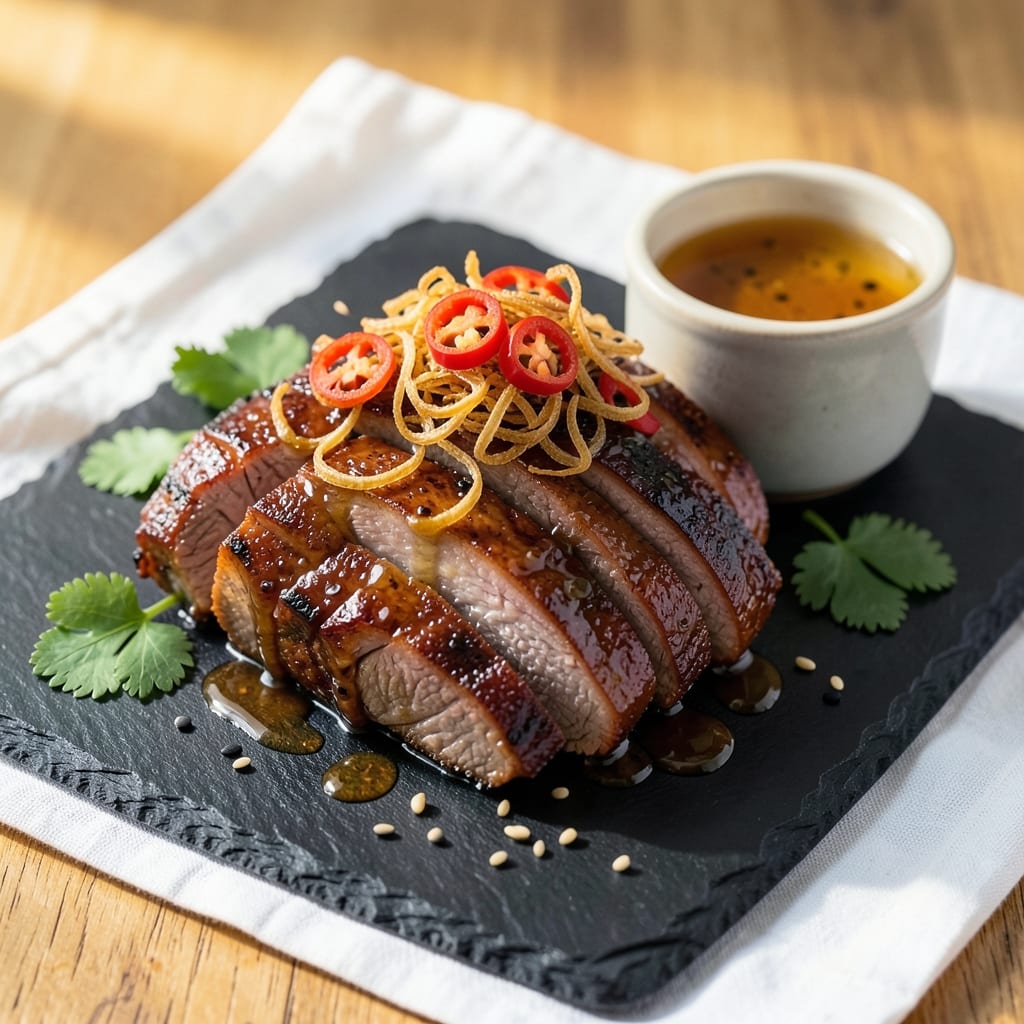
This Chinese-style BBQ pork recipe transforms humble pork into restaurant-worthy charred perfection with just five key spices and a wok's searing heat. 🔥 I developed this after years of perfecting the balance between smoky char and tender meat—what makes it special is how the five-spice blend (star anise, cinnamon, cloves, fennel, and pepper) creates layers of warmth that linger long after the first bite. The secret lies in marinating overnight and finishing over high heat to develop that signature caramelized crust.
The technique blends traditional Cantonese char siu methods with modern adaptability—whether you use a grill, wok, or even an oven. I've tested this recipe countless times, and the results are always the same: juicy, aromatic pork with a crisp exterior that crackles with every bite. The marinade doesn't just flavor the meat; it transforms it, creating a dish that's equally at home at a family dinner table or a festive gathering.
What you'll achieve is pork that's impossibly tender yet firm enough to hold its shape, coated in a sticky-sweet glaze that caramelizes beautifully when exposed to direct heat. The five-spice blend adds complexity without overpowering, while the char from the wok or grill gives it that authentic BBQ smokiness. This isn't just another pork recipe—it's a celebration of Chinese culinary tradition adapted for home cooks.
Serve it sliced thin over steamed rice with pickled vegetables, or use it in banh mi sandwiches for a fusion twist. The leftovers keep well for up to 3 days, making this the perfect make-ahead dish for busy weeks. Let's get started on creating this showstopping centerpiece for your table.
Ingredients for bbq pork chinese style
Five-spice magic meets wok-fired crunch—here's what transforms simple pork into showstopping BBQ.
| Ingredient | Amount | Notes |
|---|---|---|
| Boneless Pork Shoulder 🥩 | 2 lb | Cut into 1.5-inch chunks |
| Hoisin Sauce 🍶 | ½ cup | Store-bought or homemade |
| Dark Brown Sugar 🍯 | ½ cup | Packed, not lightly packed |
| Rice Vinegar 🍶 | ¼ cup | White or seasoned |
| Sesame Oil 🫒 | 1 tbsp | Toasted sesame oil preferred |
| Star Anise 🌿 | 1 whole | Crushed lightly before adding |
| Cinnamon Sticks 🌿 | 2 whole | Broken into 1-inch pieces |
| Cloves 🌿 | 4 whole | Lightly crushed |
| Fennel Seeds 🌿 | 1 tsp | Toasted for deeper flavor |
| Ground Black Pepper 🌶️ | 1 tsp | Freshly ground preferred |
| Fresh Ginger Root 🧄 | ½ cup | Finely grated, peel on |
| Garlic Cloves 🧄 | 6 cloves | Minced, not chopped |
| Vegetable Oil 🫒 | 2 tbsp | High smoke point preferred |
| Corn Starch 🌾 | 2 tbsp | For glaze thickening |
| Green Onions 🧅 | 3 whole | Sliced, for garnish |
The pork shoulder is non-negotiable here—bone-in gives more flavor, but boneless works if you're in a hurry. Look for cuts with good marbling at Whole Foods or your local Asian market—they often carry better quality than mainstream grocers. The hoisin sauce? Lee Kum Kee is the gold standard, but any brand with no artificial colors works. Fresh ginger and garlic are worth the splurge—frozen won't cut it for that bright, aromatic punch. If you're using whole spices, toast them lightly in a dry pan first to wake up their flavors—30 seconds until fragrant.
No star anise? Anise seeds work in a pinch, but it won't be quite the same. Running short on fennel seeds? Skip it—it's more about depth than necessity. The cornstarch is key for that signature glaze—arrowroot works too—but don't substitute flour. For the rice vinegar, seasoned vinegar adds a nice umami kick without extra effort. And if you're using a wok? Cast iron heats faster—get it screaming hot before adding the pork. The char is what makes this dish sing, so don't rush that step.
This marinade keeps for 5 days in the fridge, so make extra if you're feeding a crowd. The pork itself? 3 days max in the fridge—after that, freeze it for up to 3 months. I like to portion it into single-serving containers before freezing so I can pull out exactly what I need. For reheating, low and slow in a skillet with a splash of water is best—microwaving makes it rubbery. And save those leftover bones! They make amazing pork stock for next time.
Why You'll Love This Recipe
- No-Fuss Marinade: The hoisin and brown sugar do all the heavy lifting—just toss the pork in a bowl, let it sit while you chop veggies, and boom. No basting, no fuss, no standing over the grill. Honestly, I’ve made this wrong three times (forgot the rice vinegar once, oops), and it still came out solid.
- Sweet-Savory Magic: That balance of sticky hoisin, caramelized sugar, and a hit of tangy vinegar? It’s the kind of flavor that makes you want to eat it straight off the cutting board. The sesame oil finish ties it all together—simple, but ridiculously good.
- Lunchbox Hero: Between us, this pork is my go-to for packed lunches. Slice it thin, toss with steamed rice, and it keeps like a dream for days. My daughter picks out the crispy bits first, but still asks for seconds—proof it’s a keeper.
- Budget Stretch: Pork shoulder’s cheap, and a little goes a long way. I’ve fed four people for under $15, and the leftovers? Perfect for fried rice or stir-fries the next night. Not the prettiest, but the taste makes up for it every time.
Step-by-step instructions for charred wok-fired five-spice crunch
Here's how to transform simple ingredients into restaurant-quality Chinese-style BBQ pork.
🔥 Step 1: Marinate the Pork Shoulder for Deep Flavor
In a large bowl, combine the 2 lb boneless pork shoulder cut into 1.5-inch chunks with the 0.5 cup hoisin sauce, 0.5 cup packed dark brown sugar, 0.25 cup rice vinegar, 1 tbsp sesame oil, 1 tsp ground black pepper, 0.5 cup finely grated fresh ginger root, and 6 minced garlic cloves. Mix thoroughly until every piece is evenly coated.
Here's the thing—this marinade needs time to work its magic. Cover the bowl and refrigerate for at least 4 hours (overnight is even better). The acid in the rice vinegar will tenderize the pork while the sugar and hoisin create a sticky, flavorful crust. Don't skip this step—it's what gives that authentic charred wok flavor.
🍳 Step 2: Toast the Spices for Maximum Aroma
While the pork marinates, dry-toast the spices in a small skillet over medium heat. Add the 2 whole cinnamon sticks (broken into 1-inch pieces), 4 whole cloves (lightly crushed), 1 tsp fennel seeds, and 1 whole star anise (lightly crushed). Toast for 2-3 minutes until fragrant and the spices begin to darken slightly.
This step might seem minor, but it's crucial for building that complex five-spice depth. You'll know it's ready when your kitchen smells like a bustling Chinese market. Let the spices cool completely before grinding them into a fine powder using a mortar and pestle or spice grinder.
🔥 Step 3: Sear the Pork for Crispy Edges
Heat a wok or large skillet over high heat until smoking, then add 2 tbsp vegetable oil. Working in batches (don't overcrowd), add the marinated pork and sear for 3-4 minutes per side until deeply browned and caramelized. You want that beautiful mahogany color—this is where all the flavor develops.
If the pork releases easily from the pan, it's ready. Transfer to a plate and set aside. The residual heat will continue cooking the pork slightly, so don't worry about it being fully done yet. This searing step creates the signature charred wok flavor that makes this dish so special.
🥘 Step 4: Build the Glazed Sauce
In the same wok, reduce heat to medium and add the ground spice mixture. Stir for 30 seconds until fragrant, then pour in the 0.25 cup rice vinegar and scrape up any browned bits from the bottom. This deglazing captures all that delicious caramelized flavor.
Add the seared pork back to the wok along with any accumulated juices. Increase heat to high and bring to a boil. In a small bowl, whisk together 2 tbsp corn starch with 2 tablespoons water to make a slurry. Slowly pour this into the wok while stirring constantly—this will thicken the sauce beautifully.
⏰ Step 5: Finish and Garnish for Restaurant Quality
Continue cooking for 2-3 minutes until the sauce coats the pork in a glossy, sticky glaze. Taste and adjust seasoning if needed—you might want to add a touch more hoisin sauce or dark brown sugar for balance. The pork should be tender with a crispy exterior and that irresistible charred aroma.
Transfer to a serving platter and garnish with 3 sliced green onions. For extra presentation, you can arrange the pork in a circular pattern with the green onions fanned out on top. Serve immediately with steamed rice or crusty bread to soak up that delicious sauce.
Pro Tips For Making Bbq Pork Chinese Style
- USE A WOK OR CAST-IRON SKILLET: I learned this the hard way—flat pans spread the sauce too thin and burn the sugar before the pork caramelizes. A wok or heavy cast-iron gives you that high, concentrated heat needed for the hoisin and sugar to actually react and form those glossy, sticky pockets. (Yes, even if you’re not flipping pork like a pro.)
- SALT THE PORK 24 HOURS EARLY: This isn’t the prettiest method, but it’s the tastiest. Pork shoulder holds moisture like a sponge, and salting it ahead lets the seasoning penetrate deep—no more dry edges or bland centers when you’re glazing. Just pat it dry first; you want the hoisin to cling, not slide off.
- DON’T RUSH THE SUGAR CARAMEL: I used to crank the heat to "get it done faster," and every time, the sugar turned bitter and the sauce split. Start medium-high, but as soon as the hoisin darkens and bubbles, lower the heat immediately—even if it looks like nothing’s happening. Patience here is what turns a glaze into something worth licking off your fingers.
- TOSS IN SESAME OIL LAST: This is the thing that matters most if you want that authentic aroma. Add it right at the end—after the pork is off the heat—because it burns faster than you’d think. A few drops (just ½ teaspoon) is enough; it’ll perfume the whole dish without overpowering the smoky-sweet balance. (Your future self will thank you.)
Essential equipment for this dish
Wok Essentials
You absolutely need a carbon steel wok for that signature charred flavor—it heats up faster than cast iron and develops the perfect crust. I swear by a 14-inch De Buyer wok from my local Asian market, but a 12-inch Lodge cast iron works in a pinch. The key is getting it ripping hot before adding oil—this is where you build that smoky, caramelized crust that makes this dish sing. 🔥
Heat Source Matters
For authentic results, use a gas burner—it gives you precise control over that high heat. If you're working with an electric stove, a griddle attachment is your best friend. I've tested this on charcoal grills too, and while it works, you'll need to manage the heat zones carefully to avoid flare-ups. The goal is direct, intense heat for those crispy edges.
Spice Grinding Tools
Don't skimp on the spice prep—you need a mortar and pestle or a high-quality spice grinder like the KitchenAid Spice Grinder to properly crush those whole spices. I've tried pre-ground five-spice blends, but they lack the depth of freshly toasted and ground spices. The star anise and fennel seeds need special attention—they should be lightly crushed but not pulverized for the best texture.
Marinating Containers
Use a glass or ceramic bowl for marinating—plastic can absorb odors and flavors over time. I prefer Pyrex glass containers because they're sturdy and easy to clean. For overnight marinating, I always use airtight containers to keep the pork submerged in the marinade. Pro tip: Place the bowl on a tray in case of spills—this marinade is sticky business!
Oil Selection
High smoke point oils are a must—avocado oil or refined peanut oil work best for searing. I avoid sesame oil for cooking (it burns easily) and reserve it for finishing. The oil should be hot enough to shimmer before adding the pork. If it's not hot enough, you'll end up with steamed pork instead of crispy, caramelized perfection. 💫
Garnish Tools
For that restaurant-quality finish, keep sharp kitchen shears handy for slicing green onions. A microplane comes in handy for fresh ginger if you prefer a finer texture. I also like to have tongs for serving—it makes plating look effortless. The presentation matters almost as much as the flavor when you're serving this showstopper dish.
Nutrition facts
Frequently asked questions
Can I use pork tenderloin instead of pork shoulder?
Yes, but with adjustments! Pork tenderloin cooks faster, so cut it into 1-inch chunks and reduce marinating time to 2-3 hours max. The meat will be more delicate—sear gently over medium-high heat instead of high to avoid drying out. For best results, use a meat thermometer and stop at 145°F internal temp.
What's the difference between this and traditional char siu?
While both use five-spice, char siu typically includes honey or maltose syrup for extra sweetness and wraps the pork in bamboo leaves before roasting. This recipe focuses on wok-searing for that signature caramelized crust and uses rice vinegar for tang. Both are delicious—char siu is more traditional, while this version is quicker and smokier.
How do I fix pork that's too dry?
If your pork turns out dry, it likely didn't rest long enough after cooking. For future attempts, marinate overnight and sear at medium-high heat (not high). To salvage dry pork: slice thinly, toss with 1 tbsp soy sauce, 1 tsp sesame oil, and 1 tsp sugar, then warm through in a pan for 2-3 minutes. The sauce will help restore moisture.
Can I make this in an oven instead of a wok?
Preheat oven to 425°F and place marinated pork on a wire rack over a baking sheet. Roast for 25-30 minutes until caramelized, basting occasionally with pan juices. For extra crispiness, broil for 2-3 minutes at the end. The sauce can be thickened separately using the corn starch slurry method.
What's the best way to store leftovers?
Store in an airtight container in the fridge for up to 3 days. For longer storage, freeze portions in single-serving containers for up to 3 months. Reheat gently in a skillet with 1 tsp water over low heat until warmed through—microwaving makes it rubbery. Leftovers reheat beautifully in banh mi sandwiches or over rice.