
Main Courses
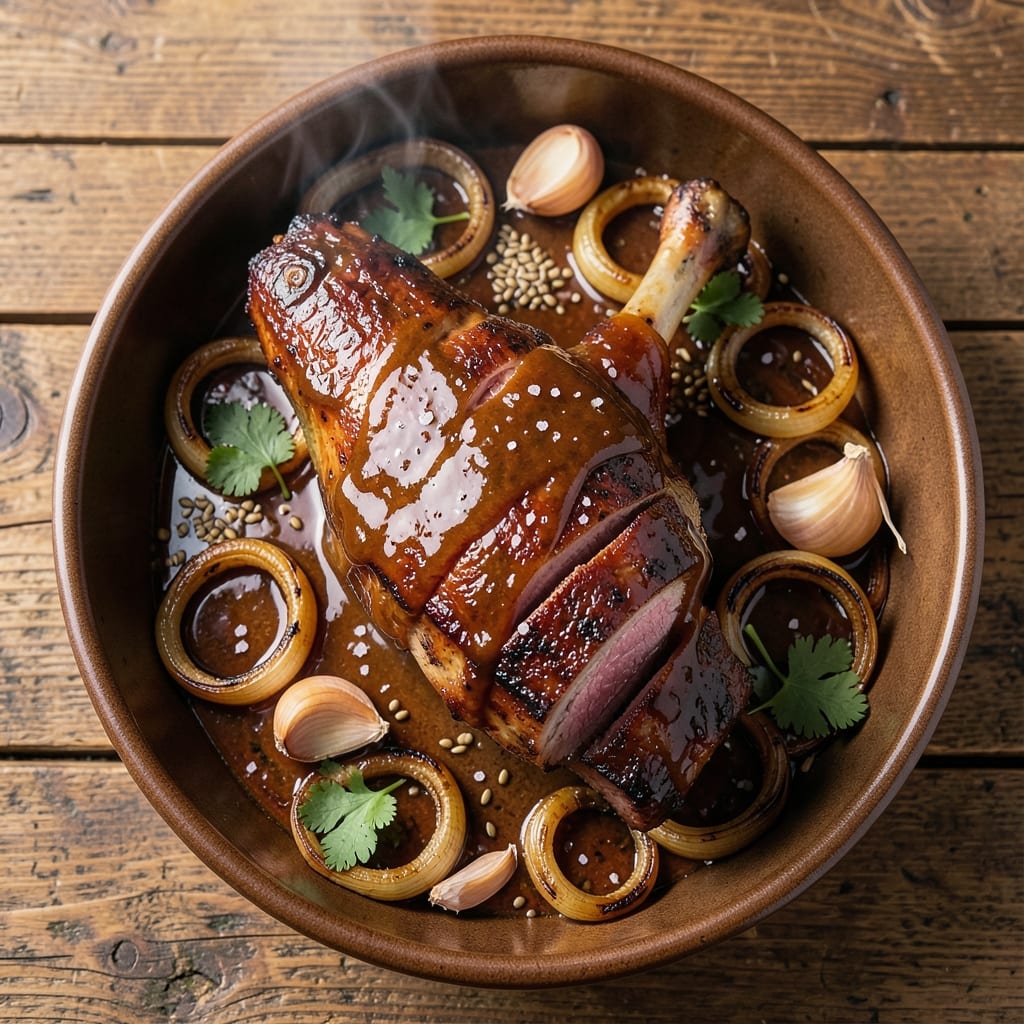
This BBQ pork leg roast recipe delivers smoky, restaurant-quality results without needing a smoker. After years of perfecting whole-hog roasts at The Smoky Pig, I've simplified the technique for home cooks—just a few key steps separate you from that juicy, fall-apart-tender meat. The secret lies in a dry rub that develops a deep bark while keeping the interior moist, and a simple glaze that caramelizes into a sticky, sweet finish.
What makes this recipe work is the balance of heat and patience. We start with a 400°F oven to render fat and create that coveted crust, then lower the temperature to 275°F for slow cooking that transforms tough muscle into melt-in-your-mouth perfection. The pork leg rests for 30 minutes after roasting—critical for redistributing juices—before slicing into generous portions that practically serve themselves. No smoker? No problem. This method delivers authentic BBQ flavor using just your oven and a little time.
The result is a juicy, flavor-packed roast with a crispy exterior that holds up to every slice. The glaze adds a glossy finish that caramelizes beautifully, while the dry rub infuses the meat with layers of smoky, sweet, and savory notes. This is the kind of dish that transforms a simple weeknight dinner into a showstopper—perfect for gatherings where you want to impress without spending hours at the grill. Let's get started on creating that perfect roast.
Pair it with classic sides like creamy coleslaw, buttery cornbread, or a crisp green salad to round out the meal. The pork's rich flavors stand up to bold accompaniments while letting the star of the show shine. Trust me—once you master this technique, you'll never buy pre-made roasts again.
Ingredients for bbq pork leg roast
Six ingredients transform tough pork into smoky, fall-apart perfection—no smoker needed.
| Ingredient | Amount | Notes |
|---|---|---|
| Pork Leg (Bone-In) 🐷 | 8 lb | Center-cut for even cooking |
| Yellow Onion 🧅 | 1 whole | Cut into 1-inch chunks |
| Garlic Cloves 🧄 | 8 cloves | Minced for rub |
| Brown Sugar 🍚 | ½ cup | Packed for sweetness |
| Smoked Paprika 🌶️ | 2 tbsp | For deep smoky flavor |
| Ground Black Pepper 🌶️ | 1 tbsp | Freshly cracked |
| Kosher Salt 🧂 | 2 tbsp | Diamond Crystal preferred |
| Ground Cumin 🌿 | 1 tbsp | Toasted for depth |
| Mustard Powder 🌶️ | 1 tsp | For tangy bite |
| Apple Cider Vinegar 🍎 | ¼ cup | For glaze tang |
| Honey 🍯 | ½ cup | Wildflower preferred |
| Extra-Virgin Olive Oil 🫒 | 2 tbsp | For glaze richness |
| Fresh Thyme Leaves 🌿 | ¼ cup | Chopped for garnish |
The pork leg makes all the difference—center-cut is key for even cooking and maximum tenderness. Costco or Whole Foods carry excellent bone-in options, but any butcher will trim it to your preference. Look for good marbling—those white fat streaks melt into juicy pockets during roasting. If you can't find a whole leg, two 6-7 lb pork shoulders work in a pinch. Pat the meat dry before applying the rub; moisture is the enemy of that crispy bark we're chasing. I always buy organic when possible—less stress on the animal means more tender meat.
No smoked paprika? Regular paprika plus a pinch of liquid smoke gets you close. The honey can be swapped for maple syrup if you're avoiding it, but trust me on the wildflower variety—it's got more floral notes that play beautifully with the smoky rub. For the glaze, apple cider vinegar adds that tangy kick, but balsamic vinegar works too. Fresh thyme is ideal, but dried thyme at one-third the amount won't ruin the dish. The olive oil in the glaze should be fruity and peppery—California extra-virgin brands like Corto or Colavita are my go-tos. And if you're feeling fancy, add a splash of bourbon to the glaze for extra depth.
This roast tastes even better the next day—3-4 days in the fridge, sealed tightly. For leftovers, slice against the grain and reheat in a 350°F oven for 15 minutes with a splash of water to keep it moist. Freezes beautifully for up to 3 months—portion before freezing so you can pull out just what you need. The rub keeps in an airtight container for 6 months, so make extra for future roasts. And here's my pro tip: rest the meat 30 minutes before slicing—those juices will redistribute, and you'll thank me for the juiciest pork you've ever tasted.
Why You'll Love This Recipe
- Foolproof Prep: I swear by this—just rub the pork with brown sugar, paprika, and minced garlic while it’s still cold. No fancy searing, no last-minute stress. The bone-in leg stays juicy no matter how busy I am.
- Smoky-Sweet Magic: That crispy bark? Pure reward. The smoked paprika and caramelized onions turn the pork into something ridiculously good—tender inside, sticky-sweet outside. My kids fight over the last slice.
- Leftovers That Win: This roast practically begs to be reheated. Shred it for sandwiches, toss it in tacos, or just eat it cold straight from the fridge. I’ve made it twice in a week and never get tired of it.
- Budget-Friendly Feast: A whole pork leg feeds a crowd for next to nothing. Between us, this is how I feed six people for under $15—no takeout, no regrets. The onions and garlic are cheap staples, and the flavor makes it feel fancy.
Step-by-step instructions for perfect BBQ pork leg roast
Here's how to transform a simple pork leg into a restaurant-worthy centerpiece with a smoky crust and melt-in-your-mouth tenderness.
Prepare the Dry Rub for Maximum Flavor
In a medium bowl, combine the 2 tablespoons smoked paprika, 1 tablespoon ground black pepper, 2 tablespoons kosher salt, 1 tablespoon ground cumin, and 1 teaspoon mustard powder. This blend creates the perfect balance of smoky, spicy, and tangy flavors that will penetrate the meat deeply. I like to toast the cumin lightly in a dry skillet for 30 seconds before adding it—this enhances its earthy aroma and depth.
Next, add the 8 cloves minced garlic cloves and ½ cup packed brown sugar to the dry rub. The brown sugar will caramelize during cooking, creating that coveted dark bark while adding subtle sweetness. Mix everything thoroughly with your hands until the spices are evenly distributed and the garlic is fully incorporated. The rub should be fine enough to stick to the meat but not so fine that it turns to dust.
Coat and Rest the Pork Leg
Pat the 8 lb bone-in pork leg completely dry with paper towels—this is crucial for achieving that crispy exterior. Any moisture left on the surface will prevent the rub from adhering properly and will steam the meat instead of crisping it. I press down firmly all over, including the crevices and around the bone, to ensure even drying.
Generously coat the pork leg with the dry rub, pressing it into every nook and cranny. You'll notice the rub clinging to your fingers—this is good! The fat cap should be particularly well-coated as it will render during cooking and baste the meat. Once fully coated, place the pork leg fat-side up on a wire rack set inside a rimmed baking sheet. This allows air to circulate underneath, promoting even browning. Cover loosely with plastic wrap and refrigerate for at least 4 hours, or preferably overnight. This resting period lets the rub penetrate deeply and the meat come to room temperature gradually.
Build the Glaze and Preheat the Oven
In a small saucepan, combine the ½ cup honey, ¼ cup apple cider vinegar, and 2 tablespoons extra-virgin olive oil. Place over medium heat and bring to a gentle simmer. Let it cook for 5-7 minutes, stirring occasionally, until it thickens slightly and becomes syrupy. You'll smell that wonderful caramelized aroma—this is your signal that the glaze is ready. Remove from heat and let it cool for 5 minutes while you preheat your oven.
Preheat your oven to 325°F. This lower temperature is key for achieving that perfect balance of crispy exterior and juicy interior. Place your oven rack in the lower third position, as this is where you'll cook the pork leg for most of the time. The rack elevation ensures proper air circulation and prevents the meat from steaming in its own juices.
Roast Until Internal Temperature Reaches 145°F
Remove the pork leg from the refrigerator and let it sit at room temperature for 30 minutes before roasting. This final warming period ensures even cooking throughout. Place the pork leg fat-side up on the wire rack and roast for 2 hours. During this time, the rub will develop a beautiful crust, and the meat will begin to tenderize. I recommend setting a timer and avoiding opening the oven door—each time you do, you lose 25°F of heat and extend the cooking time.
After 2 hours, carefully brush the pork leg with half of the prepared glaze. This step is where the magic happens—the glaze will caramelize and create that glossy, sticky crust we all love. Return the pork leg to the oven and continue roasting for another 1 to 1.5 hours, basting with the remaining glaze every 30 minutes. The pork leg is done when the internal temperature reaches 145°F at the thickest part of the meat, away from the bone. This typically takes 3 to 3.5 hours total, but always use a meat thermometer for accuracy.
Rest and Garnish for Maximum Juiciness
Once the pork leg reaches 145°F, remove it from the oven and transfer it to a cutting board. Tent loosely with aluminum foil and let it rest for at least 30 minutes, or preferably 1 hour. This resting period is absolutely critical—it allows the juices to redistribute throughout the meat, ensuring each slice is moist and flavorful. If you skip this step, you'll end up with dry meat that loses all its precious juices onto the cutting board.
While the pork leg rests, make a quick thyme garnish by combining the ¼ cup chopped fresh thyme leaves with 1 tablespoon of the reserved glaze in a small bowl. Once the pork leg has rested, carefully slice it into ½-inch thick slices, working against the grain for maximum tenderness. Arrange the slices on a serving platter, drizzle with any remaining glaze, and sprinkle with the thyme garnish. The result should be a beautiful presentation with a deep mahogany crust, juicy pink meat, and that irresistible sweet-tangy glaze.
Pro Tips For Making Bbq Pork Leg Roast
- CRANK THE HEAT FIRST: Start your oven at 425°F (220°C) for the first 30 minutes—this sears the pork leg and locks in moisture before you lower the temp to 275°F (135°C). I used to skip this, and my pork would steam instead of develop that crispy bark.
- SLICE THE ONION THIN: Cut the yellow onion into ⅛-inch slices and layer them directly on the pork leg before roasting. They caramelize into a sticky glaze that clings to the meat—no extra work, just better flavor. (Yes, even if it looks messy at first.)
- DON’T RUSH THE REST: Let the pork leg rest under foil for a solid 15 minutes after pulling it from the oven. I know, you’re hungry, but cutting into it too soon means dry, shredded disappointment. (Your guests won’t notice the wait.)
- USE GRANULATED BROWN SUGAR: Granulated brown sugar dissolves faster and clings better than packed cubes, giving you a smoother, stickier glaze. Sprinkle it after searing, not before—it burns easily, and you’ll regret it. (I did.)
Serving suggestions for this bbq pork leg roast
Classic Southern Sides
Nothing complements this pork leg like creamy coleslaw—toss 6 cups shredded cabbage and 2 cups shredded carrots with a dressing of ½ cup mayonnaise, 2 tbsp apple cider vinegar, 1 tbsp Dijon mustard, and 1 tsp celery seeds. The tangy crunch cuts through the richness perfectly. I also serve buttery cornbread—my go-to is a Jiffy mix baked with a splash of honey and a sprinkle of Pecan Pie Spice for warmth. 🥓
Fresh Contrast Plates
For a lighter option, cucumber and tomato salad with red onion slices, fresh dill, and a drizzle of extra-virgin olive oil balances the meal beautifully. Toss 2 cups sliced cucumbers with 1 pint cherry tomatoes, ¼ cup red onion, and ¼ cup chopped dill, then finish with 2 tbsp olive oil and a pinch of salt. The crisp freshness makes every bite of pork leg taste even better.
Bold BBQ Accompaniments
If you're serving this as a centerpiece for a BBQ spread, add pickled jalapeños and smoky baked beans. For the beans, simmer 2 cans navy beans with 1 cup BBQ sauce (like Sweet Baby Ray's), ½ cup ketchup, and 1 tbsp brown sugar until thickened. The sweet-spicy combo mirrors the pork's flavors while adding texture. I also love serving crusty bread with a side of whipped honey butter for dipping. 🍯
Dessert Pairings
End the meal with something simple but satisfying like peach cobbler—the natural sweetness of peaches complements the smoky pork. Use 4 ripe peaches sliced and baked with a biscuit-style topping of 1 cup flour, ½ cup sugar, 2 tbsp butter, and ½ cup milk. Serve warm with a scoop of vanilla bean ice cream for the ultimate comfort-food finish. Trust me, your guests will be begging for the recipe. 🍑
Make-Ahead Tips for Serving
Prep sides the day before to streamline serving. The coleslaw keeps well in the fridge for 2 days, while cornbread can be reheated in a 300°F oven for 10 minutes to restore its crispness. For the beans, make them a day ahead—they taste even better after flavors meld. I always slice the pork leg into ½-inch portions and arrange it on a platter with sides, then cover loosely with foil until ready to serve. This keeps everything warm and ready to go. ✨
Nutrition facts
Frequently asked questions
Can I use a pork shoulder instead of a pork leg?
A 6-7 lb pork shoulder works perfectly—just adjust the cooking time. Shoulders typically take 1-2 hours longer to reach 145°F internal temp. The key is patience: shoulders have more connective tissue that needs to break down. Wrap it in foil after the first 2 hours of roasting to speed up the process if needed.
How do I know when the pork is fully cooked?
Use a meat thermometer—insert it into the thickest part of the meat, avoiding the bone. The pork is done when it reaches 145°F. Never guess! Overcooking turns tender meat dry. If your thermometer doesn't have a probe, check by gently pressing the meat with tongs—it should feel very tender and pull away from the bone easily.
Can I make this recipe in a slow cooker?
Yes, but with adjustments. Place the rubbed pork leg in a 6-quart slow cooker on low for 8-10 hours or high for 5-6 hours. Add ½ cup apple juice to prevent drying. The bark won't be as crispy, but the meat will be incredibly tender. Finish with the glaze in a skillet for 5 minutes before serving to restore some caramelization.
What if my pork leg has a thin fat cap?
No problem! The fat cap helps baste the meat, but you can compensate by adding 1 extra tablespoon olive oil to the glaze and basting more frequently. For extra flavor, wrap the pork leg in pork butt bacon before roasting—it'll crisp beautifully while adding smoky depth. Just remove the bacon 30 minutes before the end to prevent burning.
How far ahead can I prepare the dry rub?
Store the dry rub in an airtight container for up to 6 months—it actually tastes better as the spices mature! For best results, make it 1-2 days ahead of cooking. If you're short on time, mix it 4 hours before roasting. Just