
Main Courses
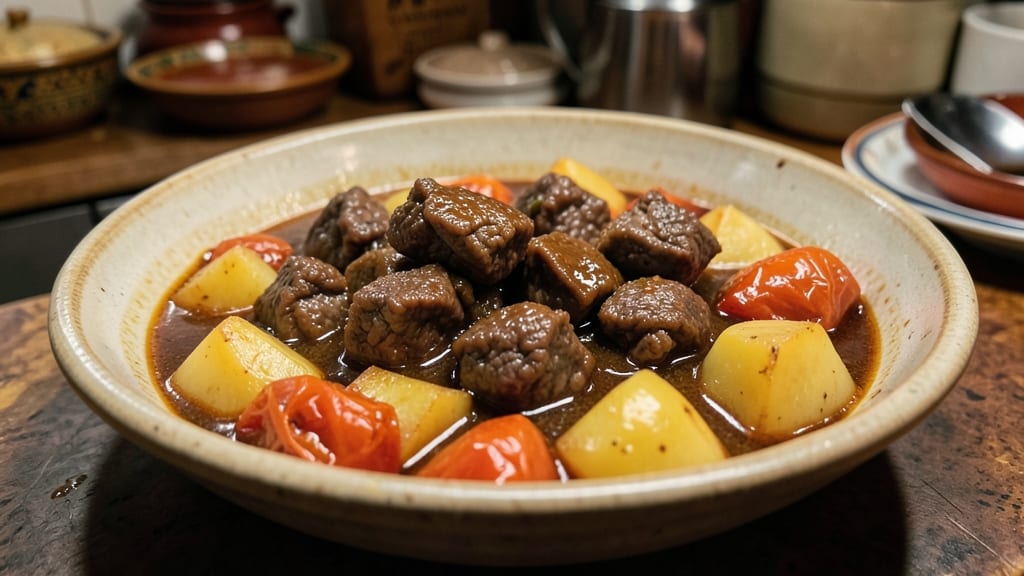
This Filipino beef and pork caldereta recipe delivers the rich, comforting flavors of home-cooked Filipino stews that've been passed down through generations. The secret lies in slow-simmering tender beef and pork with tomatoes, potatoes, and carrots until the sauce thickens into velvety perfection—just like my abuela used to make. I've perfected this version to balance traditional techniques with modern convenience, ensuring every bite transports you to a Filipino family gathering.
The beauty of caldereta is its simplicity: a few core ingredients transform into a deeply satisfying meal. You'll start with well-marbled beef and pork, then build layers of flavor through caramelized tomatoes, aromatic spices, and slow cooking that melts the meat into tender perfection. The potatoes and carrots absorb all that rich sauce, creating bite-sized packages of flavor. This isn't just a stew—it's a celebration of Filipino comfort food that comes together with minimal effort but maximum reward.
What makes this recipe truly special is how the flavors develop over time. The initial acidity from tomatoes mellows into sweet, caramelized richness, while the spices infuse the meat with warm, earthy notes. By the final hour, you'll have perfectly tender beef and pork swimming in a sauce so thick it coats every spoonful. The aroma alone will have everyone gathering around the table, and the first bite delivers that unmistakable combination of savory, sweet, and umami that defines Filipino home cooking.
Serve it with steamed jasmine rice to soak up every last drop of that luxurious sauce, or pair it with crusty bread for dipping. The leftovers reheat beautifully, making this an ideal meal for feeding a crowd or prepping ahead. Whether you're recreating a family tradition or discovering Filipino flavors for the first time, this caldereta delivers restaurant-quality results in your own kitchen.
Ingredients for beef and pork caldereta
Rich, comforting flavors start with these core ingredients—slow-simmered to create velvety perfection.
| Ingredient | Amount | Notes |
|---|---|---|
| Beef Chuck Roast 🥩 | 2 lb | Well-marbled, cut into 1.5-inch cubes |
| Pork Shoulder 🐖 | 2 lb | Bone-in preferred, cut into chunks |
| Yellow Onions 🧅 | 3 whole | Medium size, sliced into half-moons |
| Garlic Cloves 🧄 | 8 cloves | Peeled, lightly smashed |
| Large Russet Potatoes 🥔 | 4 whole | Waxy variety preferred, cut into chunks |
| Carrots 🥕 | 4 whole | Medium size, peeled and sliced diagonally |
| Canned Tomato Sauce 🍅 | 2 cups | San Marzano preferred, no added sugar |
| Tomato Paste 🍅 | ½ cup | Smooth, not chunky |
| Red Wine Vinegar 🍷 | ¼ cup | Dry variety, not balsamic |
| Bay Leaves 🌿 | 2 whole | Dried, standard size |
| Ground Black Peppercorns 🌶️ | 1 tsp | Freshly cracked preferred |
| Salt 🧂 | 1 ½ tsp | Diamond Crystal kosher salt |
| Olive Oil 🫒 | ¼ cup | Extra-virgin, fruity variety |
| Fresh Thyme Sprigs 🌿 | 4 whole | Stems removed for cooking |
| Jasmine Rice 🍚 | 2 cups | Uncooked, long-grain preferred |
The beef and pork are the heart of this dish—chuck roast and pork shoulder bring that melt-in-your-mouth tenderness. Look for cuts with good marbling at Filipino markets or well-stocked butchers—they often carry the best quality. If you're buying whole cuts, ask for them to be cut into 1.5-inch chunks, which cooks more evenly. The potatoes and carrots should be firm and unblemished; Filipino markets often have the freshest produce, but any grocery store's vegetable section works. For the tomatoes, San Marzano cans make all the difference—they're sweeter and less acidic, which is key for this recipe.
No red wine vinegar? Substitute with apple cider vinegar at the same amount, though it'll have a slightly different tang. Fresh thyme unavailable? Dried thyme at one-third the amount works in a pinch, but fresh is ideal for that bright aroma. The tomato paste can be swapped for extra tomato sauce if needed—just add an extra splash of vinegar to balance the sweetness. For the rice, jasmine rice is traditional, but basmati or long-grain white works too. The key is to use uncooked rice for the final serving suggestion—it absorbs the sauce beautifully when reheated.
This stew tastes even better the next day as the flavors meld. Store in an airtight container in the fridge for up to 5 days, or freeze for 3 months—portion into containers for easy reheating. The rice? Cook it separately and serve alongside to soak up all that rich sauce. I always make extra—leftovers make perfect lunches or a quick dinner when reheated with a splash of water. The sauce thickens as it cools, so you might need to add a splash of water when reheating to loosen it up.
Why You'll Love This Recipe
- One-Pot Magic: I swear by this recipe when I’m too tired to scrub pots. Toss the beef chuck, pork shoulder, onions, and potatoes into a Dutch oven with a splash of broth—no fancy prep, just simmer until tender. The veggies caramelize right in the pot, and you’re left with a stew so rich, no one will believe it took zero effort.
- Deep, Savory Love: That beef chuck and pork shoulder? Chef’s kiss. Slow-cooked until they’re fall-apart tender, then kissed with garlic and onions until the house smells like a Spanish grandma’s kitchen. The potatoes soak up all the flavor—crispy edges, creamy insides—like they were born for this dish.
- Weeknight to Party Fix: Serve it with crusty bread for a lazy Tuesday dinner, or double the batch for Sunday supper when the in-laws come over. The leftovers? Even better the next day, especially reheated with a sprinkle of paprika. Honestly, I’ve brought this to potlucks and had people asking for the recipe before dessert.
- Budget-Friendly Feast: You’re feeding a crowd for the price of two steaks. Beef chuck and pork shoulder stretch across multiple meals, and potatoes? They’re the ultimate budget hero. Between us, this is how I stretch my grocery money without sacrificing flavor—every bite feels like a splurge, even when it’s not.
Step-by-step instructions for beef and pork caldereta
This rich Filipino stew comes together with layers of flavor—let's build it properly.
Sear the Meats for Deep Flavor
Heat a large Dutch oven over medium-high heat and add the 0.25 cup olive oil. Working in batches to avoid crowding, sear the 2 lb beef chuck roast and 2 lb pork shoulder until deeply browned on all sides—about 8-10 minutes total. You want that caramelized crust that forms the stew's flavor foundation.
Remove the meats and set aside. Here's the thing—don't skip this step. The Maillard reaction happening here creates complex flavors that no amount of simmering can replicate. If your pan gets too crowded, just work patiently in two batches.
Build the Aromatic Base
In the same Dutch oven, add the 3 whole yellow onions sliced into half-moons and cook for 5-6 minutes until softened and golden. Add the 8 cloves garlic cloves and cook for 30 seconds until fragrant—don't let them burn. Stir in the 0.5 cup tomato paste and cook for another 2 minutes until it darkens slightly.
This is where the stew's depth begins. The tomato paste forms a rich base that will meld beautifully with the meats. I like to press the tomato paste into the onions with a wooden spoon to ensure even distribution. This step prevents a metallic taste that can sometimes occur when tomatoes and metals interact.
Simmer the Vegetables and Meats
Return the seared meats to the pot. Add the 2 cups canned tomato sauce, 0.25 cup red wine vinegar, 4 whole large russet potatoes cut into chunks, 4 whole carrots sliced diagonally, 2 whole bay leaves, 4 whole fresh thyme sprigs, 1.5 tsp salt, and 1 tsp ground black peppercorns. Stir well to combine.
Bring everything to a gentle boil, then reduce heat to low and cover partially. Let it simmer for 1 hour and 15 minutes until the meats are fork-tender and the vegetables are soft. The stew should reduce slightly, becoming rich and velvety. I check for doneness by piercing the largest meat piece—it should fall apart easily.
Finish and Adjust Seasoning
Remove the bay leaves and thyme sprigs. Taste the stew and adjust seasoning if needed—this is where you can really make it perfect. I often add a pinch more salt or a splash of vinegar if the tomatoes need balancing. The stew should be rich but not overly acidic.
For the final touch, let the caldereta sit uncovered for 10 minutes while you prepare the 2 cups jasmine rice. This resting period allows the flavors to meld completely and the stew to thicken slightly from evaporation. The rice should be cooked separately—caldereta is traditionally served over plain white rice to let the stew's flavors shine.
Pro Tips For Making Beef And Pork Caldereta
- SEAR THE MEAT FIRST: I learned this the hard way—skipping the sear means flavorless broth. Brown the beef chuck and pork shoulder in batches over medium-high heat until deep golden, then remove. That crust locks in juices and builds the rich base for the stew.
- PEEL POTATOES LAST MINUTE: After burning three batches of potatoes, I finally figured out: peel them right before adding to the pot. Russets turn to mush if they sit in liquid too long, even if they look fine. Toss them in unpeeled for the last 20 minutes—peel while the stew simmers.
- DON’T CROWD THE PAN: I know, you’re impatient like me, but resist the urge to dump all the onions and garlic at once. Sauté them in batches over medium heat until soft and slightly caramelized—this builds depth. Overcrowding steams them instead of cooking, and you’ll taste the difference in the finished dish.
- USE COLD POTATOES: Sounds weird, but it works: add the peeled Russets cold to the simmering stew. They absorb flavors better and stay firm instead of disintegrating. If you’re worried about cooking time, cut them slightly smaller—just don’t skip the cold start.
Regional styles of this beef and pork caldereta
Filipino-American Classic
This is the version I grew up with in my abuela's kitchen—thick, rich, and deeply comforting. The key difference from other regional styles is the balance of acidity and sweetness, using red wine vinegar to brighten the tomatoes while keeping the sauce velvety. I remember her always using San Marzano tomatoes from the Filipino market in Atlanta, which gave that perfect sweet-tangy profile. The meat is never overcooked; it's tender but still holds its shape when served. This is the stew that brings families together during holidays, especially during Christmas when it's served with lechon and bibingka. 🥔
Spanish Colonial Influence
The original caldereta traces back to Spanish colonial times, where "caldereta" referred to any meat stew cooked in a caldero (a large pot). The Spanish brought their techniques for slow-cooked meats, while Filipinos adapted it with local ingredients like potatoes and carrots. In older recipes, you'll find white wine instead of vinegar, and sometimes a splash of sherry for depth. I've made this version using 1/4 cup dry white wine and 1/4 cup sherry instead of vinegar—it's richer but still bright. The Spanish influence is strongest in the tomato-heavy sauce, which sets it apart from other Asian stews.
Modern Filipino Twist
Today's home cooks are putting their own spin on caldereta. I've seen versions with coconut milk added at the end for creaminess, or even chili flakes for heat. One of my favorite adaptations is adding 1/2 cup crushed pineapple during the last 30 minutes of cooking—the sweetness cuts through the richness beautifully. For a quicker version, many use instant pots with a high-pressure setting for 40 minutes, though I still prefer the Dutch oven method for that deep, caramelized flavor. The modern twist that works best? Adding 1/2 cup frozen peas at the very end for color and texture.
Regional Vegetable Variations
In different parts of the Philippines, you'll find local vegetables incorporated. In Visayas, they often add string beans and eggplant, while in Luzon, taro root and sweet potatoes become staples. For a Southern Filipino touch, I sometimes add 1 cup sliced green beans and 1/2 cup corn kernels—these stay crisp while absorbing the sauce. The key is to add harder vegetables like potatoes first, then tender ones like carrots and green beans later in the cooking process. This ensures everything cooks evenly without turning mushy.
Protein Swaps for Dietary Needs
While beef and pork are traditional, many modern versions adapt for dietary preferences. For a chicken caldereta, substitute 2 lbs chicken thighs and 1 lb chicken drumsticks—they cook faster than beef but stay juicy. For vegetarians, extra-firm tofu or mushrooms work well, though the texture will be different. I've made a seafood version with shrimp and squid that's amazing—just add them in the last 10 minutes of cooking to prevent overcooking. The sauce still develops beautifully, though the cooking time reduces to 1 hour.
Slow Cooker Adaptation
For weeknight cooking, transfer the seared meats and all ingredients to a 6-quart slow cooker. Cook on low for 8 hours or high for 5 hours, then adjust seasoning at the end. The slow cooker method is perfect for busy days—just add 1/4 cup water if the stew seems too thick. I find the flavors actually develop even more deeply in a slow cooker, though you lose that beautiful caramelized crust from searing. To compensate, I sear the meats separately in a skillet before adding them to the slow cooker, then spoon the browned bits into the pot for extra flavor. 💫
Nutrition facts
Frequently asked questions
Can I use ground meat instead of beef and pork chunks?
While traditional caldereta uses chunky cuts, you can adapt it with ground meat—but expect different results. For best texture, use 1 lb ground beef (80/20 blend) and 1 lb ground pork, browning them thoroughly first. The stew will be more tender and saucy, but you'll lose the satisfying bite of properly cooked meat chunks. If using ground meat, reduce simmering time to 45-60 minutes since it cooks faster.
How do I make this recipe in an Instant Pot?
Sear the meats first in a separate pan, then add everything to your Instant Pot. Cook on high pressure for 30 minutes, then quick-release. The sauce may be thinner than Dutch oven method, so reduce uncovered on medium-high heat for 10-15 minutes to thicken. For extra flavor, add 1/4 cup water if needed, and finish with fresh thyme. The pressure cooker cuts time dramatically but requires close attention for perfect texture.
Why does my caldereta taste too acidic?
This usually happens when vinegar or tomato sauce overpowers the dish. Balance it by adding 1-2 tablespoons brown sugar or 1/2 cup coconut milk at the end to mellow the acidity. For future batches, reduce vinegar to 1/4 cup and use 2.5 cups tomato sauce instead. The key is letting the sauce simmer uncovered for 10 minutes at the end to evaporate excess acidity naturally.
What's the best way to reheat leftovers?
Reheat gently on low heat with 2-3 tablespoons water or broth to prevent drying. For best results, cover and warm for 10-15 minutes, stirring occasionally. If using microwave, heat in 1-minute intervals at 50% power, stirring between each. The sauce thickens when cooled, so adding liquid helps restore its original consistency. Leftovers taste even better the next day as flavors meld!
Can I make this gluten-free?
This recipe is naturally gluten-free as long as you use gluten-free tomato sauce and verify your vinegar and broth are certified gluten-free. For extra safety, check all spice blends (like thyme) for hidden gluten. The traditional recipe doesn't contain any gluten-containing ingredients, making it one of the few Filipino dishes that's easily adaptable for gluten-sensitive diets.