
Main Courses
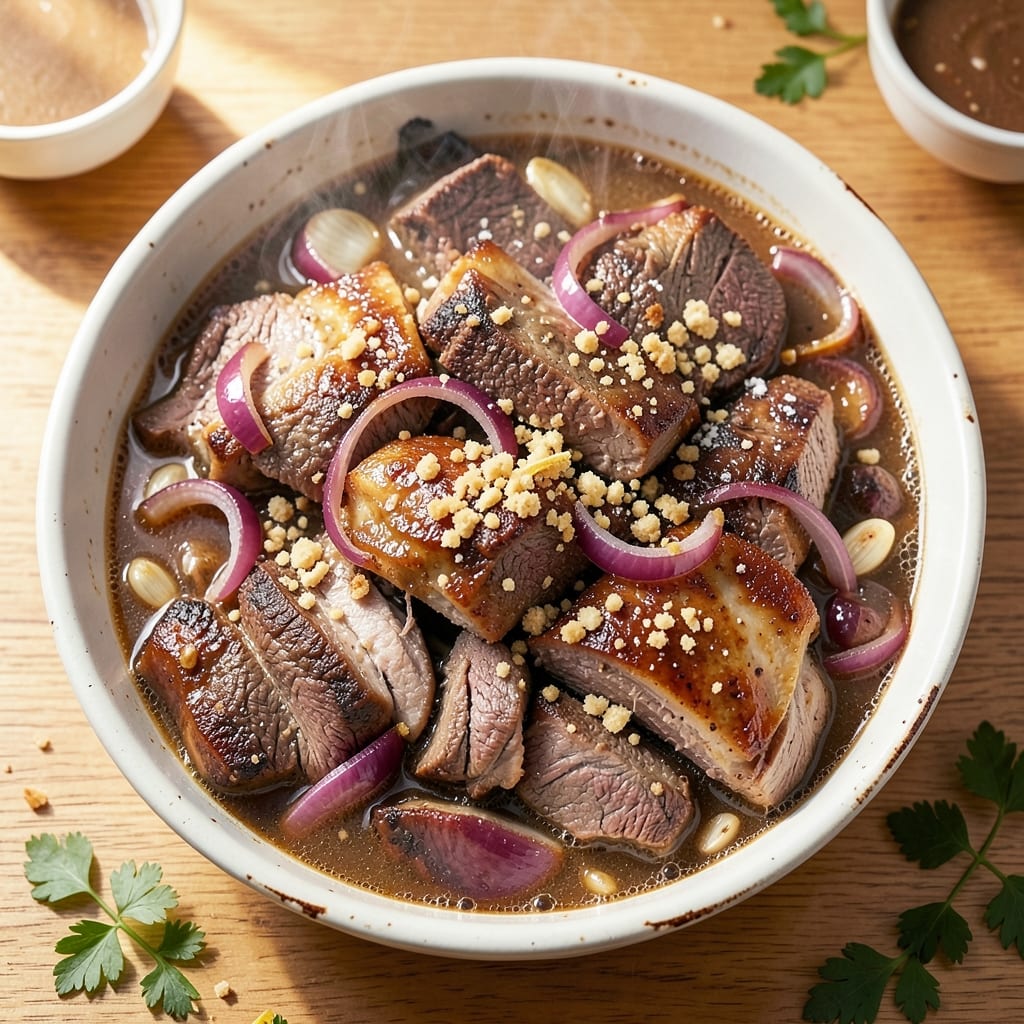
This beef and pork casserole recipe delivers the kind of deep, slow-simmered richness that transforms tough cuts into melt-in-your-mouth perfection. 🔥 I developed it during a particularly busy week when I needed a foolproof dish that could feed a crowd without requiring constant attention—something my team at The Smoky Pig could rely on after long days of pit cooking.
The secret lies in the combination of tender beef chuck and pork shoulder, braised until they practically fall apart, then topped with a golden herbed crust that adds texture and aroma. This isn't just another casserole—it's a restaurant-quality main course that tastes even better the next day, making it ideal for meal prep or holiday gatherings.
What makes this recipe special is the balance of savory gravy, caramelized onions, and herbaceous crust that locks in moisture while creating a crispy finish. The slow cooking process (about 3 hours) ensures maximum flavor extraction, while the final broil step delivers that perfectly golden top that everyone will reach for seconds over.
Pair it with crusty bread to soak up the rich juices or serve alongside roasted vegetables for a complete meal. The beauty of this dish is its versatility—it works as a comforting weeknight dinner or a showstopping centerpiece for special occasions. Here's how to make it from start to finish.
Ingredients for beef and pork casserole
Six hearty ingredients create this restaurant-style casserole with melt-in-your-mouth tenderness.
| Ingredient | Amount | Notes |
|---|---|---|
| Beef Chuck Roast 🥩 | 2 ½ lb | Pre-cut into 1.5-inch cubes |
| Pork Shoulder 🐖 | 2 ½ lb | Cut into 1.5-inch cubes |
| Yellow Onions 🧅 | 3 whole | Peeled, sliced into 1/4-inch pieces |
| Garlic Cloves 🧄 | 8 cloves | Minced for depth of flavor |
| All-Purpose Flour 🌾 | ½ cup | For gravy thickening |
| Beef Broth 💧 | 3 cups | Low-sodium preferred |
| Red Wine 🍷 | 1 cup | Dry variety like Cabernet |
| Tomato Paste 🍅 | 2 tbsp | Smooth texture preferred |
| Dried Thyme 🌿 | 1 tbsp | Or 1 tbsp fresh thyme leaves |
| Dried Rosemary 🌿 | 1 tbsp | Finely chopped for crust |
| Breadcrumbs 🍞 | 1 cup | Panko for extra crunch |
| Parmesan Cheese 🧀 | ½ cup | Freshly grated from block |
| Olive Oil 🫒 | 2 tbsp | Extra-virgin for richness |
| Salt 🧂 | 1 ½ tsp | Kosher or sea salt |
| Black Pepper 🌶️ | 1 tsp | Freshly ground preferred |
The beef and pork cuts are everything here. Chuck roast and pork shoulder give you that fall-apart texture—sirloin or tenderloin won't cut it. Grab these from the butcher counter if you can, or ask for pre-cubed at Whole Foods or Costco. The onions? Yellow onions caramelize best, but red onions add a subtle sweetness if you're feeling fancy. For the wine, any bold, dry red works—Cab Sauv, Merlot, whatever's open. The tomato paste is non-negotiable for that deep umami punch, so don't skimp on quality here.
No red wine? Beef broth with a splash of balsamic gets you close. Fresh thyme is ideal but dried works at one-third the amount. The breadcrumbs can be any type—Italian seasoned adds extra flavor, but plain works too. For the Parmesan, grate it yourself from a wedge—pre-grated gets clumpy. The olive oil matters here too; extra-virgin has more flavor than regular. If you're short on time, Trader Joe's has pre-minced garlic that works in a pinch, but fresh is always better.
This reheats beautifully—honestly tastes better the next day once everything melds. Keeps 4-5 days in the fridge, freezes for 3 months. I portion mine into containers so lunches are sorted for the week. For the crust, don't skip the broil—3-5 minutes gives you that perfect golden finish. If you're making this ahead, assemble everything except the crust, refrigerate overnight, then bake. The flavors deepen overnight, trust me.
Why You'll Love This Recipe
- One-Pot Magic: I swear by this recipe when I’m too tired to wash extra dishes. The beef chuck and pork shoulder practically cook themselves in the same pot, and the onions caramelize right into the sauce—no skillet required.
- Deep, Savory Soul: That flour-thickened gravy clinging to tender beef and pork? It’s like a hug for your taste buds. The garlic and onions develop this rich, umami base that makes even my pickiest eaters linger over seconds.
- Leftovers That Shine: Between us, this casserole tastes better the next day. I make a double batch on Sundays, freeze half, and pull it out for lazy nights when I’d normally order takeout—except this version costs a fraction.
- Budget Stretch: A beef chuck roast and pork shoulder feed a crowd without breaking the bank. I’ve served this at potlucks, game days, and even my book club (yes, really), and no one ever questions the price tag—just the empty plates.
Step-by-step instructions for beef and pork casserole
This hearty casserole delivers melt-in-your-mouth tenderness with a golden herbed crust.
🍳 Step 1: Sear the Meats for Deep Flavor
Heat a large Dutch oven over medium-high heat and add the 2 tablespoons olive oil. Working in batches to avoid crowding, sear the 2.5 lb beef chuck roast and 2.5 lb pork shoulder (pre-cut into 1.5-inch cubes) until deep golden brown on all sides—about 4-5 minutes per batch. This step develops the Maillard reaction, creating that rich, caramelized flavor that forms the foundation of the dish.
As you sear, I like to press down gently on the meat cubes during the first minute—this prevents them from curling and ensures even contact with the pan. Transfer the browned meat to a plate and set aside. Don't drain the Dutch oven yet; those flavorful browned bits are about to become your sauce.
👨🍳 Step 2: Build the Rich Sauce Base
In the same Dutch oven, add the 3 whole yellow onions (sliced into ¼-inch pieces) and cook for 5-6 minutes until softened and slightly caramelized. Stir in the 8 cloves minced garlic and cook for 30 seconds until fragrant—don't let it burn, or you'll taste bitterness.
Sprinkle the 2 tablespoons tomato paste over the onions and garlic, stirring to coat evenly. Let it cook for 1 minute until it darkens slightly, then pour in the 1 cup red wine and scrape up all those delicious browned bits from the bottom of the pan. This deglazing step captures all the meaty flavor you worked so hard to create.
🥘 Step 3: Simmer the Meat in Herbed Broth
Return the seared meat to the Dutch oven. Add the 3 cups beef broth, 1.5 teaspoons salt, and 1 teaspoon black pepper. Bring to a gentle boil, then reduce heat to low and cover partially. Let it simmer for 2 hours, stirring occasionally, until the meat is fork-tender and falling apart easily. This slow cooking transforms tough cuts into melt-in-your-mouth perfection.
Here's the thing—don't be tempted to rush this step. The meat needs time to break down and absorb all those wonderful flavors. If you notice the liquid reduces too much before the meat is tender, add a splash of water or broth to maintain moisture.
🔥 Step 4: Create the Herbed Crust Topping
While the meat simmers, prepare the crust topping in a small bowl. Mix together the 1 cup breadcrumbs, ½ cup parmesan cheese, 1 tablespoon dried thyme, 1 tablespoon dried rosemary, and ½ teaspoon salt. The combination of crispy breadcrumbs and nutty parmesan creates the perfect textural contrast to the tender meat below.
When the meat is tender, preheat your broiler to high. Spoon the meat and sauce into a 9x13-inch baking dish, then sprinkle the herbed breadcrumb mixture evenly over the top. The crust should be about ¼-inch thick—press down gently with a spatula to help it adhere.
🔥 Step 5: Broil to Golden Perfection
Place the baking dish on the middle rack of your oven and broil for 4-6 minutes until the topping is deep golden brown and bubbly. Watch it closely—broilers can vary wildly in heat intensity, so start checking at the 3-minute mark. The crust should be crispy on the outside but still soft underneath.
Remove from the broiler and let the casserole rest for 10 minutes before serving. This resting period allows the flavors to meld together and the crust to set slightly. Serve with a side of crusty bread to soak up all that delicious sauce—every bite will be a perfect balance of tender meat, rich sauce, and crispy herbed crust.
Pro Tips For Making Beef And Pork Casserole
- Sear the Meat First: The difference between a flavorful casserole and one that tastes like stewed mystery meat? A good sear. Cut the beef chuck and pork shoulder into chunks, pat them dry, and hit a screaming-hot pan with oil—2 minutes per side until deep brown. That crust locks in juices and builds depth. (Yes, it’s extra work, but skipping it means bland meat.)
- Slice Onions Thinly: I used to chop onions into big chunks for this dish, and they’d turn to mush while the meat stayed tough. Instead, slice them paper-thin—about 1/8-inch—and cook them low and slow until caramelized. They’ll melt into the sauce without disappearing, adding sweetness that cuts through the richness of the pork and beef.
- Don’t Overcrowd the Pan: This is where people ruin a perfectly good casserole. If you dump all the meat and onions into one pan, you’ll steam instead of sear, and the meat will release moisture like a sad sponge. Work in batches—2-3 minutes per load—so everything gets that golden crust. Patience here saves you from a soggy bottom later.
- Deglaze with Beer or Broth: After searing, don’t just dump in flour and water. Scrape up those browned bits with a wooden spoon, then splash in ½ cup of dark beer (like stout) or rich beef broth. Let it bubble for 30 seconds before adding flour—this adds layers of flavor that plain water can’t match. (I know, I know, but trust the process.)
Common mistakes when making your beef and pork casserole
Skipping the Sear
I've seen so many home cooks rush this step and skip searing the meat entirely, thinking it's optional. Big mistake! That Maillard reaction from searing creates the deep, caramelized flavor foundation. Without it, your casserole will taste flat and one-dimensional. I can't stress enough how critical this is—take the 5-10 extra minutes to properly brown each piece. If you're short on time, at least sear the meat in batches until deeply browned. 🔥
Overcrowding the Pan
Trying to sear all the meat at once in a crowded pan leads to steaming instead of browning. The meat won't develop that crucial crust, and you'll end up with uneven cooking. Work in batches—I recommend 2-3 cups of meat per batch in a large Dutch oven. This ensures each piece gets proper contact with the hot surface. Trust me, your patience will pay off with that rich, caramelized flavor.
Underestimating Cook Time
Many people pull their casserole out too soon because they think the meat looks tender. But 2 hours of simmering is non-negotiable for tough cuts like chuck roast and pork shoulder. The meat needs that time to break down completely. I've seen people cut into it at 90 minutes and be disappointed—it's still tough. Use a fork to test for tenderness, and if it's not falling apart easily, give it another 30 minutes.
Broiling Too Long
The crust is what makes this casserole shine, but it's easy to burn it if you're not careful. Watch that broiler closely—4-6 minutes max is all it takes. I've seen people walk away and come back to find a charred mess. Start checking at 3 minutes and be ready to pull it out immediately when it's golden brown. A second broiler rack helps prevent burning while ensuring even browning.
Skipping the Rest
I can't tell you how many people serve this casserole immediately after broiling. That's a huge mistake! The 10-minute rest lets the juices redistribute and the crust set properly. If you cut into it too soon, you'll end up with a soggy top and dry meat. This is especially important when serving to guests—give it that time to come together before digging in. 💫
Using Wrong Meat Cuts
This isn't the time for tender cuts like sirloin or tenderloin—they'll turn to mush. You need chuck roast and pork shoulder for that perfect melt-in-your-mouth texture. If your butcher doesn't have these pre-cut, ask them to cube them for you. I've seen people use ground beef in a pinch, but that completely changes the texture and flavor profile. Stick to the recommended cuts for that restaurant-quality result.
Nutrition facts
Frequently asked questions
Can I substitute pork shoulder with another cut?
While pork shoulder is ideal for its rich, fatty flavor and tenderizing properties, you can substitute with pork butt or pork rib—both work beautifully. Avoid lean cuts like tenderloin, as they won't break down properly. If using ground pork, reduce the cooking time to 1 hour and add ½ cup extra broth to prevent drying.
How do I make this casserole ahead of time?
Assemble everything up to the crust topping and refrigerate for up to 24 hours. When ready to bake, cover with foil and bake at 350°F for 1 hour before broiling. For freezing, assemble completely (including crust) and freeze for up to 3 months. Thaw overnight in the fridge, then broil as directed.
What can I add for extra vegetables?
Try adding 1 cup diced carrots or ½ cup frozen peas during the last 30 minutes of simmering. For heartier options, layer ½ cup sliced mushrooms with the onions or add 1 cup chopped potatoes (they'll absorb the flavors beautifully). Just avoid watery veggies like zucchini or tomatoes—they'll make the sauce too thin.
Why did my crust turn out soggy?
Soggy crusts usually happen from one of three issues: over-moisture (too much broth), under-broiling (not hot enough), or skipping the rest time. To fix: Use 3 cups broth max, broil on high heat for 4-6 minutes, and always let it rest 10 minutes before serving. For extra insurance, sprinkle ¼ cup extra breadcrumbs on top before broiling.
Can I make this in a slow cooker?
Yes! Brown the meat as directed, then transfer everything to a 6-quart slow cooker. Cook on low for 6-8 hours or high for 3-4 hours. For the crust, top with breadcrumbs and broil for 3-5 minutes before serving. The slow cooker method works especially well for meal prep—just double the recipe for leftovers!