
Main Courses
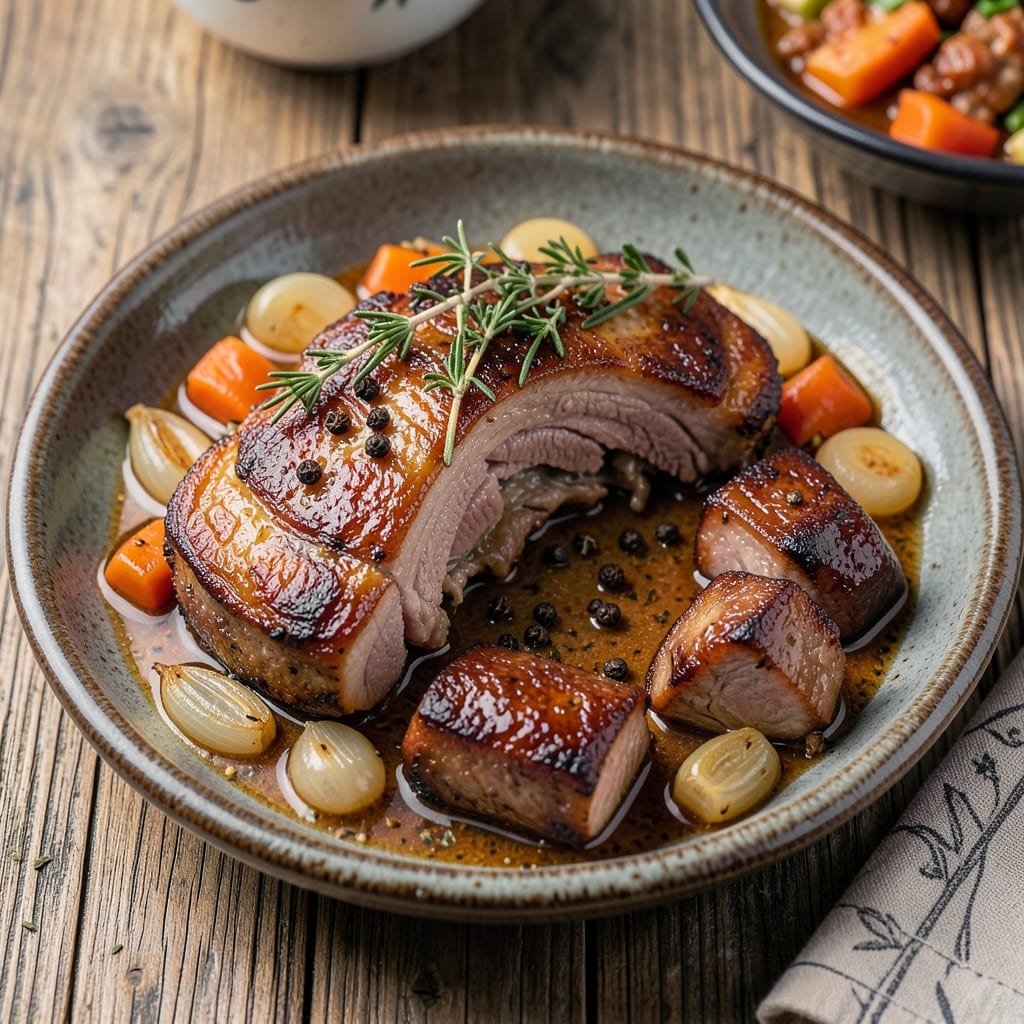
This head cheese recipe with pork hocks transforms humble ingredients into a collagen-rich gelatin masterpiece that tastes like old-world tradition. I first made it during a butcher's sale in Cincinnati, where pork hocks were practically given away—now I keep a batch in my fridge year-round. The secret lies in slow simmering pork bones and head to extract maximum gelatin, creating that signature wobble between firm and tender.
What sets this recipe apart is the balance of texture and flavor—rich, meaty, and subtly aromatic from slow-cooked pork and herbs. Unlike store-bought versions, this method preserves natural collagen for authentic body and depth. The process requires patience (8-10 hours of simmering), but the result is a head cheese so flavorful it disappears in minutes at gatherings.
By the time you slice into the chilled gelatin, you'll see why this dish has been a centerpiece for generations: glossy, golden edges with a melt-in-your-mouth interior. The pork hocks contribute both gelatin and deep savory notes, while aromatics like bay leaves and thyme infuse subtle complexity. Serve with crackers or crusty bread to soak up every last bit of that luxurious broth.
This isn't just a recipe—it's a time-honored technique that turns simple ingredients into something extraordinary. Perfect for holiday tables, potlucks, or when you want to impress with minimal effort. Let's get started on creating your own gelatin masterpiece that'll have everyone asking for seconds.
Ingredients for best head cheese recipe with pork hocks
Sixteen ingredients for a dish that feels like a hug from your great-grandmother's kitchen.
| Ingredient | Amount | Notes |
|---|---|---|
| Pork Hocks 🐖 | 4 whole | Fresh, uncooked for maximum gelatin |
| Pork Shoulder Bone-In 🍖 | 2 lb | Cut into 2-inch chunks for even cooking |
| Pork Head (optional) 🐷 | 1 whole | For extra collagen and rich flavor |
| Onion 🧅 | 1 whole | Yellow or red, roughly chopped |
| Carrots 🥕 | 2 whole | Medium-sized, peeled and halved |
| Celery Stalks 🌿 | 3 whole | Fresh, cut into 2-inch pieces |
| Garlic Cloves 🧄 | 6 cloves | Smashed for intense flavor infusion |
| Fresh Thyme Sprigs 🌿 | 4 whole | Stems intact for easy removal |
| Bay Leaves 🍃 | 2 whole | Dried, standard supermarket quality |
| Black Peppercorns 🌶️ | 1 tbsp | Crushed, not ground |
| Salt 🧂 | 1 ½ tsp | Kosher or sea salt, not iodized |
| Apple Cider Vinegar 🍎 | 2 tbsp | For brightening flavors during simmer |
| Cold Water 💧 | 10 cups | Enough to cover all ingredients |
| All-Purpose Flour 🌾 | ½ cup | For thickening the final mixture |
| Heavy Cream 🥛 | 1 cup | Full-fat for optimal texture |
Pork hocks are the star here—look for them at specialty butchers or the meat counter. They should be fresh, not frozen, and ideally from a local source if possible. Costco's bulk pork hocks are a great budget option, but if you can find them at a butcher shop, ask for the ones with the most meat still attached. The pork shoulder adds depth, so don't skip it if you can find bone-in cuts—Trader Joe's often has these at reasonable prices. For the head, if you're squeamish, the shoulder alone will still give you that signature gelatin texture, just with slightly less richness. The aromatics (onion, carrots, celery) are classic for a reason—they build flavor without overpowering the pork.
No pork head? Extra pork shoulder or even chicken feet (yes, really) can add more collagen. Short on thyme? Double the bay leaves and add a sprig of rosemary for a different but equally delicious profile. The vinegar might seem odd, but it's essential—substitute lemon juice at half the amount if you're out. For the flour, all-purpose works fine, but if you're feeling fancy, a mix of half all-purpose and half cake flour gives a smoother texture. The cream is non-negotiable for that luxurious mouthfeel, but if you're avoiding dairy, full-fat coconut milk works in a pinch (though the texture will be slightly different).
This isn't a dish you can rush—simmering for 8-10 hours is non-negotiable for that perfect gelatin set. Store the broth in the fridge for up to 5 days or freeze it in portions for 3 months. Once set, it keeps in the fridge for 1 week covered tightly. I always make a double batch—one for immediate serving and one to freeze for holidays. The leftovers reheat beautifully; just warm gently on the stove with a splash of water or broth. Slice it thin when cold for the best texture—room temperature makes it too soft. Serve with crusty bread or crackers to soak up every last bit of that rich, gelatinous goodness.
Why You'll Love This Recipe
- Simmer-and-Forget Magic: I swear by this recipe because it’s the kind of thing you can start in the morning and forget about until dinner. The pork hocks and shoulder bone-in break down into pure, velvety goodness with almost no effort—just a slow simmer, some chopped veggies, and time. Honestly, the hardest part is resisting the urge to peek.
- Rich, Deep Umami Bomb: That first bite? It’s like a hug for your taste buds. The pork head (if you use it) and hocks infuse the broth with a savory depth that’s hard to beat, while the onions and carrots add just enough sweetness to balance it. It’s the kind of flavor that makes you want to eat it straight from the pot—no shame here.
- Leftovers That Feel Like a Treat: This recipe actually improves the next day. The flavors meld even more, and the texture gets even better—creamy but still satisfying. I make a big batch on Sunday, and by Wednesday, I’m still sneaking bites. (Yes, even when my kids are around.)
- Budget-Friendly Crowd-Pleaser: Pork hocks and shoulders are some of the most affordable cuts, and they stretch into a massive portion. Feed a family of four for under $20, or double it for a potluck where everyone asks for seconds. Between us, it’s my go-to for game days, family dinners, or whenever I need to impress without breaking the bank.
Step-by-step instructions for crafting collagen-rich head cheese
This method transforms humble pork parts into a luxurious, gelatinous masterpiece—rich, tender, and packed with collagen.
Prepare and Simmer the Pork Base
In a large stockpot, combine the 4 whole pork hocks, 2 lb pork shoulder bone-in chunks, and 1 whole pork head (if using). Add the 1 whole onion, 2 whole carrots, 3 whole celery stalks, 6 cloves smashed garlic, 4 whole fresh thyme sprigs, 2 whole bay leaves, 1 tbsp crushed black peppercorns, and 1.5 tsp salt. Pour in 10 cups cold water and bring to a rolling boil over high heat.
Once boiling vigorously, reduce heat to medium-low and skim off any foam that rises to the surface. This ensures a clear, golden broth. Add 2 tbsp apple cider vinegar to brighten the flavors. Let the mixture simmer uncovered for 6-8 hours, maintaining a gentle bubble. You'll know it's ready when the meat falls off the bones and the broth has reduced significantly, yielding a thick, gelatinous consistency.
Strain and Clarify the Broth
Carefully strain the simmered mixture through a fine-mesh sieve or cheesecloth-lined colander, pressing gently to extract every bit of collagen-rich liquid. Discard the solids. Return the strained broth to the stockpot and skim off any remaining fat that rises to the top, leaving you with a clear, amber-colored liquid.
This step is crucial for achieving that silky, velvety texture head cheese is known for. If the broth isn't thick enough yet, return it to low heat and simmer uncovered for an additional 30-45 minutes, stirring occasionally, until it reaches a gel-like consistency when chilled. The goal is a thick, spoonable liquid that will set beautifully in the mold.
Thicken and Season the Mixture
In a separate bowl, whisk together the 0.5 cup all-purpose flour and 1 cup heavy cream until smooth. Slowly pour this mixture into the strained broth while whisking constantly to prevent lumps from forming. Return the pot to medium heat and cook, stirring gently, until the mixture thickens to a pudding-like consistency—about 10-15 minutes. This should coat the back of a spoon and leave a slight sheen on the surface.
Taste and adjust seasoning with additional salt or pepper if needed. The mixture should be rich, savory, and slightly tangy from the vinegar. Remove from heat and let it cool to room temperature, stirring occasionally to prevent a skin from forming.
Mold and Chill for Perfect Texture
Pour the cooled mixture into a greased loaf pan or head cheese mold, smoothing the top with a spatula. Cover with plastic wrap and refrigerate for at least 8 hours, preferably overnight. This long chilling time allows the collagen to fully set, creating that signature firm yet tender texture.
When ready to serve, unmold the head cheese and slice it into thick, gelatinous portions. The result should be a luxurious, melt-in-your-mouth masterpiece with a delicate balance of savory, umami-rich flavors. Serve it with crusty bread or crackers for a truly satisfying experience.
Pro Tips For Making Best Head Cheese Recipe With Pork Hocks
- BLANCH PORK HOCKS FIRST: Skip the raw shock to your pot—parboil the hocks for 15 minutes before adding everything else. This softens the connective tissue and keeps your broth from turning cloudy later. (Yes, it’s an extra step, but your head cheese will be tender, not chewy.)
- USE WHOLE ONIONS, PEELS AND ALL: Tossing in whole onions (peels included) adds depth without extra work. They’ll caramelize slowly, infusing the broth with sweetness—no chopping, no mess, just flavor. I learned this the hard way when I peeled them first and missed out on that rich base.
- DON’T SKIP THE SKIMMING: Fat rises fast in this dish. Skim it off every 30 minutes during the long simmer—especially after the first hour. Too much fat makes the head cheese greasy, and nobody wants that. (Your future self will thank you.)
- STRAIN TWICE FOR SILKY TEXTURE: First strain through a fine-mesh sieve, then through cheesecloth for a velvety result. The extra effort removes every last bit of grit, giving you that restaurant-quality smoothness. I was skeptical until I tried it—now it’s non-negotiable.
Wine and beer pairings for these flavors
Rich Red Wine Pairings
Head cheese's deep, savory richness pairs beautifully with bold reds that stand up to its collagen-heavy texture. I always reach for a Cabernet Sauvignon from Napa Valley—its dark fruit notes and firm tannins complement the pork's umami perfectly. Look for one with 14-15% alcohol like Caymus Vineyards or Opus One to balance the dish's richness without overpowering it. 🍷
Malbec for Bold Contrast
Argentinian Malbec offers a fantastic alternative with its juicy blackberry and plum flavors that cut through the gelatin's density. A Torrontés Malbec from Mendoza region (like Catena Zapata) brings bright acidity that refreshes your palate between bites. The wine's velvety texture mirrors head cheese's luxurious mouthfeel beautifully.
Craft Beer Complements
For beer lovers, a sour brown ale with 2-3% ABV creates magical contrast. I love Allagash Barrel-Aged Brown—its caramel malt sweetness and subtle funk enhance the pork's savory depth. The beer's slight tartness also brightens the dish's richness. For a lighter option, try a Belgian dubbel like Westmalle Dubbel with its malty sweetness and spiced notes.
White Wine Unexpected
Don't overlook white wine options! A dry Riesling from Germany (like Dr. Loosen Blue Slate) surprises with its crisp acidity and mineral notes that cleanse your palate between rich bites. The wine's slight sweetness also enhances the head cheese's savory profile. For a local Pacific Northwest option, try a Pinot Gris from Oregon's Willamette Valley.
Serving Temperature Tips
Serve red wines slightly below room temperature (60-62°F) to preserve their aromatics and prevent overpowering the head cheese's delicate flavors. For beer, chill to 45-48°F—cold enough to crisp but warm enough to taste nuanced malt profiles. I always pour my wine 15 minutes before serving to let it breathe and develop its full character alongside the dish.
Nutrition facts
Frequently asked questions
Why do pork hocks make the best head cheese?
Pork hocks are collagen powerhouses—they contain natural gelatin that creates that signature wobble texture. The slow simmer breaks down connective tissue into rich, flavorful collagen that thickens beautifully when chilled. Plus, the marrow and meat add deep umami flavor that store-bought versions can't match!
Can I substitute pork hocks with other bones?
Yes! For extra collagen, use chicken feet (traditional in some cultures) or pork knuckles. Avoid lean cuts like ribs—they lack gelatin. If using chicken, add 1 extra hour of simmering time. For beef, use shank bones but reduce simmer time to 5-6 hours to prevent toughness.
How do I know when the broth is ready?
The broth is perfect when it's thick enough to coat the back of a spoon and has a gelatinous consistency when chilled. You'll also see the meat falling off bones easily. For testing, place a spoonful in the fridge for 10 minutes—if it jiggles like jelly, it's ready! The color should be deep amber, not cloudy.
What's the best way to store leftover head cheese?
Wrap tightly in plastic wrap and refrigerate for up to 1 week. For longer storage, freeze in portions for 3 months. Thaw overnight in the fridge—never microwave directly as it can make the texture rubbery. To reheat, warm gently on the stove with a splash of water or broth until just melted.
Can I make this vegetarian?
Traditional head cheese requires animal gelatin, but you can create a vegan version using agar-agar powder (1 tbsp per cup of liquid) or carrageenan. For flavor, use a rich vegetable stock with mushrooms, soy sauce, and miso paste. The texture won't be identical, but it'll have that wobbly quality!