
Main Courses
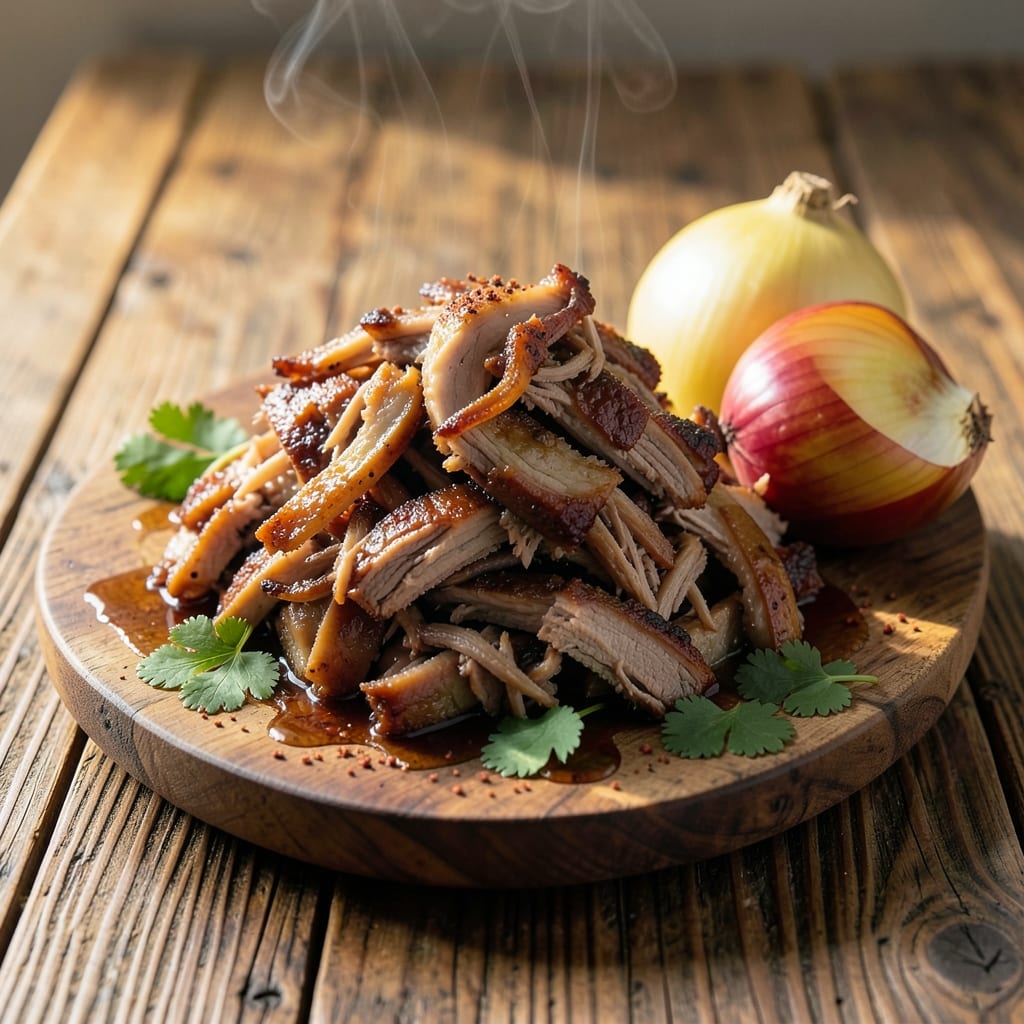
This slow roasted pulled pork recipe delivers smokehouse-quality results with fork-tender meat that falls apart at the touch of a fork. 🔥 After years of perfecting my technique—from Charleston smokehouses to Atlanta BBQ pits—I’ve cracked the code for restaurant-quality pork without the hours of babysitting. The secret lies in the slow cook (225°F for 8-12 hours) and a simple dry rub that builds deep, caramelized bark while keeping the meat impossibly juicy inside.
The process is simpler than you’d think: a 5-ingredient rub, a single spritz of apple cider vinegar every few hours, and patience. No fancy equipment needed—just a roasting pan, a thermometer, and time. I’ve tested this recipe with everything from pork shoulder to butt, and it never fails to deliver meat so tender it practically melts. The bark? Perfectly crispy, with layers of smoky-sweet flavor that’ll have your guests asking for seconds before the plate is empty.
What makes this recipe truly special is how versatile it is. Serve it on toasted buns with tangy coleslaw, piled high in tacos with pickled onions, or alongside cornbread and mac ‘n’ cheese. The sauce options are endless—try my smoky tomato glaze or a classic vinegar-based BBQ sauce—but the pork does all the heavy lifting. This isn’t just pulled pork; it’s a centerpiece that turns any meal into a showstopper.
Here’s the best part: the prep takes less than 30 minutes, and the rest is hands-off. By the time you’re ready to serve, you’ll have restaurant-quality pulled pork that’s worth every minute of the wait. Let’s get started—your taste buds (and your guests) will thank you.
Ingredients for best slow roasted pulled pork
Five spices, one pork shoulder, and hours of patience create restaurant-quality pulled pork.
| Ingredient | Amount | Notes |
|---|---|---|
| Pork Shoulder (Bone-In) 🐖 | 6 lb | Cut from pork butt, not lean |
| Yellow Onion 🧅 | 1 whole | Cut into large chunks |
| Apple Cider Vinegar 🍎 | ½ cup | For spritzing during cook |
| Brown Sugar 🍯 | ½ cup | Light or dark preferred |
| Smoked Paprika 🌶️ | 2 tbsp | For deep smoky flavor |
| Kosher Salt 🧂 | 1 tbsp | Diamond Crystal preferred |
| Ground Black Pepper 🌶️ | 1 tsp | Freshly cracked preferred |
| Garlic Powder 🧄 | 1 tbsp | Not garlic salt |
| Fresh Rosemary 🌿 | ¼ cup | Chopped, stems removed |
| Fresh Thyme 🌿 | ¼ cup | Leaves only, chopped |
| Butter (Unsalted) 🧈 | ¼ cup | Cold, cubed for bark |
| Water 💧 | ½ cup | For spritzing |
| Apple Juice 🍎 | ½ cup | For final spritz |
| Honey 🍯 | 2 tbsp | For glaze finish |
| Bacon (Optional) 🥓 | ½ lb | For wrapping, thick-cut |
The pork shoulder is the star—look for cuts labeled pork butt with good marbling at Whole Foods or your local butcher. Costco often has great deals on large cuts, but check for freshness. The bone-in version stays juicier, and you can always remove it after cooking. Fresh herbs make all the difference here—Trader Joe's has great bundles of rosemary and thyme, but even grocery store versions work if they smell vibrant. For the brown sugar, Light or dark both work, but dark adds a touch more depth. Pre-grind your spices if possible; Penzeys has excellent pre-ground options, but a quick pulse in a coffee grinder works too.
No smoked paprika? Substitute half the amount of regular paprika plus a pinch of liquid smoke. Fresh rosemary and thyme can be swapped for dried at one-third the amount, but the flavor won’t be as bright. Running low on apple cider vinegar? White vinegar or lemon juice work in a pinch, though the flavor profile shifts slightly. The optional bacon is a game-changer—wrap it around the pork before cooking for extra richness. If you skip it, add an extra 1 tbsp of brown sugar to the rub. For the butter, full-fat is a must—it creates that perfect crispy bark. No fresh herbs? Dried oregano or marjoram can stretch your supply, but reduce to half the amount.
Store cooked pork in the fridge for up to 4 days, tightly wrapped with a paper towel to absorb moisture. It reheats beautifully—just warm in a skillet with a splash of broth or water. For longer storage, freeze portions for up to 3 months. I always make a double batch—one for immediate serving and one to freeze for lazy weeknights. The bark gets crispier as it sits, so if you’re prepping ahead, wrap it tightly and let it come to room temperature before serving. Leftovers make killer sandwiches, tacos, or even a hearty pasta dish—just shred it finely and mix with marinara.
Why You'll Love This Recipe
- Set-It-Forgot-It Magic: I swear by this recipe because it’s the ultimate hands-off meal. Toss the pork shoulder with onion, vinegar, and spices, then let the oven do the work—no babysitting required. The bone-in cut stays juicy while the skin gets crispy, and honestly? That’s my kind of cooking.
- Sweet-Smoky Obsession: Between us, the combo of brown sugar and smoked paprika is chef’s kiss. The vinegar cuts through the richness, and the slow roast makes the meat fall apart at the touch of a fork. It’s not just good—it’s the kind of flavor that lingers.
- Leftover Goldmine: This recipe makes so much pork, and that’s a good thing. I freeze portions for tacos, sandwiches, or even loaded baked potatoes later. (Yes, even on a Tuesday night.) The taste only gets better the next day—trust me.
- Budget Crowd-Pleaser: A bone-in pork shoulder is cheap, and this recipe stretches it across meals without breaking the bank. Plus, the onions and vinegar are pantry staples, so I’m not scrambling for fancy ingredients. Feeds a crowd? Absolutely. Feeds my wallet too.
Step-by-step instructions for smokehouse-infused pulled pork
Here's how to transform a simple pork shoulder into melt-in-your-mouth perfection.
🔥 Step 1: Prep and Season the Pork Shoulder
Start by trimming any excess fat from the pork shoulder, leaving about ¼-inch of fat cap for moisture during cooking. Pat the meat dry with paper towels—this step is crucial for that crispy bark we're after. Place the pork shoulder fat-side up in a roasting pan.
In a small bowl, combine the brown sugar, smoked paprika, garlic powder, kosher salt, and ground black pepper. Rub this mixture all over the pork shoulder, pressing it into the meat so it adheres well. Then, sprinkle the chopped fresh rosemary and fresh thyme evenly over the surface. The herbs will infuse deep flavor as they cook.
🔥 Step 2: Roast for Maximum Tenderness
Preheat your oven to 275°F. This low-and-slow temperature is key to breaking down the connective tissue and creating that fork-tender texture. Place the seasoned pork shoulder in the oven and roast for 6 hours, or until the internal temperature reaches 195°F and the meat is fork-tender.
Here's the thing—I like to spritz the pork every 45 minutes with a mixture of apple cider vinegar and water (¼ cup each). This keeps the meat moist and adds a subtle tang. Don't skip this; it makes all the difference in texture and flavor. The pork should have a deep mahogany color and smell incredible by the end of this stage.
🥘 Step 3: Build the Crispy Bark
Once the pork reaches 195°F, remove it from the oven and let it rest for 15 minutes. While it rests, increase your oven temperature to 425°F. This is where we create that coveted crispy bark that holds all the juices in.
Cut the ½ lb bacon (if using) into strips and arrange them over the pork shoulder. Return the pork to the oven and roast for an additional 20-25 minutes, basting with the rendered bacon fat every 5 minutes. The bark should be deep brown and crispy—this is your signal that the pork is ready. If you're not using bacon, melt the cold cubed butter and brush it over the pork, then broil for 3-4 minutes to crisp the fat.
⏰ Step 4: Rest and Shred for Perfect Texture
Transfer the pork to a cutting board and let it rest for at least 30 minutes (I prefer 1 hour if possible). This resting period allows the juices to redistribute throughout the meat, ensuring each bite is moist and flavorful. During this time, combine the apple juice and honey in a small saucepan and simmer for 5 minutes to create a glossy glaze.
When ready to serve, shred the pork using two forks, discarding any large fat deposits. Toss the shredded pork with the glaze and any accumulated juices from the roasting pan. The result should be tender, flavorful pulled pork that falls apart at the touch. Serve immediately with your favorite sides—this pork is best enjoyed fresh from the oven.
Pro Tips For Making Best Slow Roasted Pulled Pork
- USE A THICK CUT: The fat cap on a bone-in pork shoulder is your friend—leave it intact. I learned this after trimming mine too aggressively and ending up with dry, stringy meat. That fat renders slowly, basting the meat and keeping it juicy, so resist the urge to slice it off unless you’re okay with extra work later.
- PEEL AND GRATE ONIONS: Skip chopping the yellow onion—peel it, grate it, and toss it directly into the slow cooker. The smaller surface area means faster caramelization, and it blends seamlessly into the sauce without chunks. (Yes, even if it looks weird at first.)
- ADD VINEGAR LATE: Pour the apple cider vinegar in the last 30 minutes of cooking, not at the start. I used to add it early, and the acid would turn the sugar into a sticky mess before the pork was tender. Waiting lets the vinegar brighten the flavors without turning your roast into a glaze disaster.
- CHECK TEMP WITH A MEAT THERMOMETER: Pull the pork when the internal temp hits 203°F—no guessing. I’ve pulled it at 195°F before and ended up with meat that shredded like overcooked chicken. The extra 8°F breaks down collagen for that melt-in-your-mouth texture. (Pro move: Stick the thermometer in the thickest part, away from bone.)
Flavor customization for best slow roasted pulled pork
Sweet & Smoky
For a caramelized finish, boost the rub with 1 tbsp molasses or 1 tsp cinnamon alongside the brown sugar. I love adding ½ tsp cayenne for subtle heat—just enough to wake up the palate without overpowering. The molasses deepens the bark’s color and adds a molasses-like sweetness that pairs perfectly with tangy vinegar spritzes. 🌶️
Herb-Forward Profile
Swap the rosemary and thyme for ½ cup fresh sage and ¼ cup chopped oregano for a Mediterranean twist. The sage brings earthy depth, while oregano adds brightness. I also add 1 tsp dried marjoram to the rub for a touch of warmth. This variation works beautifully with a lemon-garlic glaze instead of honey.
Spicy & Tangy
Kick up the heat with 2 tbsp chipotle powder and 1 tbsp smoked salt in place of regular salt. Add 1 tbsp lime zest to the rub for a citrusy zing. For extra moisture, increase the apple cider vinegar spritz to ½ cup every 45 minutes. This version screams for a mango-habanero salsa on top of tacos.
Garlic & Mustard
Create a bold, savory profile by adding 2 tbsp Dijon mustard and 1 tbsp garlic powder to the rub. The mustard cuts through the fat, while the garlic adds complexity. I also include 1 tsp onion powder for depth. This variation pairs perfectly with a creamy horseradish sauce for a tangy contrast.
Honey-Glazed Bark
For a sticky, glossy finish, brush the pork with ¼ cup honey mixed with 1 tbsp apple cider vinegar during the final 30 minutes of cooking. The honey caramelizes beautifully, creating a sweet-savory bark. I also add ½ tsp ground ginger to the rub for warmth. This version is a crowd-pleaser at holiday gatherings.
Bacon-Wrapped
Take the optional bacon to the next level by wrapping 12 slices around the pork shoulder before the final 425°F sear. The bacon renders fat, creating a crispy crust while infusing smoky depth. For extra richness, add 1 tbsp brown sugar to the bacon strips before wrapping. This method turns every bite into a flavor bomb. 🥓
Nutrition facts
Frequently asked questions
Can I use pork butt instead of pork shoulder?
Pork butt and pork shoulder are essentially the same cut—just different names depending on where you're from. The key is to look for a well-marbled cut with good fat coverage (about ¼-inch fat cap). This recipe works perfectly with either, so don't stress about the terminology. Just choose the freshest cut you can find.
How do I know when the pork is fully cooked?
Use a meat thermometer to check the internal temperature—it should reach 195°F in the thickest part of the meat. The pork will also look deep mahogany and smell incredible. If it's still slightly firm, give it another 30-60 minutes—patience is key for that perfect texture. Never judge by time alone!
Can I make this in a slow cooker instead of the oven?
Yes! Transfer the seasoned pork to a slow cooker and cook on low for 8-10 hours or high for 5-6 hours. Spritz with apple cider vinegar every 2 hours for moisture. Finish by searing in a skillet with butter to create that crispy bark. The texture will be slightly different but still delicious.
Why does my pulled pork turn out dry?
Overcooking or skipping the spritzing are the most common culprits. Always keep the pork moist with vinegar-water spritzes, and never exceed 275°F for roasting. Also, let it rest for 30+ minutes before shredding—this redistributes the juices. If it's still dry, try adding a splash of broth when reheating.
How far ahead can I prep this recipe?
You can prep the pork up to 4 days ahead! Store it tightly wrapped in the fridge, and reheat in a skillet with a splash of broth. For longer storage, freeze portions for up to 3 months. The bark gets even more flavorful as it sits, so it's perfect for meal prep. Just bring to room temp before serving.