
Main Courses
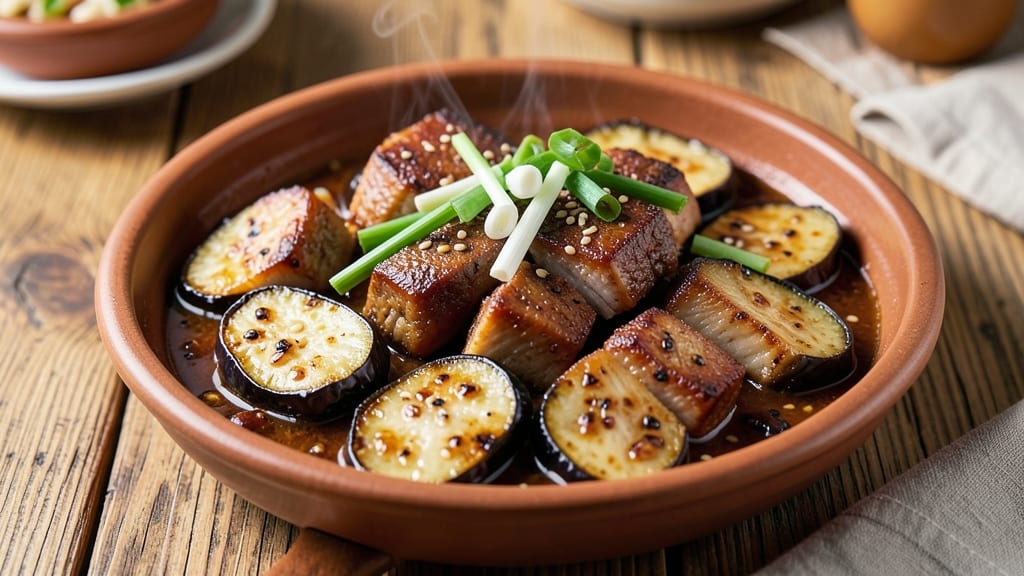
This adobong talong with pork brings the bold, smoky flavors of Filipino comfort food to your kitchen table.
Growing up in small-town Georgia, I first tasted this dish at a local Filipino restaurant—where the perfect balance of tangy soy, sweet vinegar, and caramelized pork bites transformed simple eggplant into something extraordinary.
The dish marries tender pork with eggplant that soaks up the rich, umami-packed sauce, creating a meal that feels both hearty and refined.
The secret lies in the slow braising process, where garlic, soy sauce, and vinegar meld together over low heat, developing deep, complex flavors. I’ve adapted this recipe to work with imperial measurements and simple techniques, so you can achieve restaurant-quality results at home without specialized equipment.
The pork stays juicy while the eggplant absorbs the sauce, becoming tender yet holding its shape—just like my mentor taught me in Charleston.
What makes this dish special is its versatility. Serve it over steamed rice to soak up every last drop of that smoky, slightly sweet sauce, or pair it with crusty bread for a more rustic touch.
The recipe also allows for variations—adding a splash of coconut milk for creaminess or a touch of tamarind for extra tang—so you can tailor it to your taste. This is the kind of meal that brings people together, whether it’s a weeknight dinner or a celebration.
Ready in about 45 minutes, this recipe delivers a foolproof method for achieving that perfect balance of textures and flavors. The pork bites stay tender, the eggplant absorbs the sauce just right, and the aroma alone will have everyone gathering around the table.
Let’s get started—your taste buds will thank you.
Ingredients for adobong talong with pork
Pantry staples, a few specialty finds, and this humble eggplant become something extraordinary.
| Ingredient | Amount | Notes |
|---|---|---|
| Pork Shoulder 🥩 | 1 ½ lb | Cut into 1-inch cubes |
| Eggplant 🍆 | 2 medium | Japanese or Asian variety preferred |
| Garlic Cloves 🧄 | 8 cloves | Minced for sauce |
| Soy Sauce 🍶 | ½ cup | Dark soy preferred |
| Cane Vinegar 🍶 | ¼ cup | White or apple cider vinegar |
| Brown Sugar 🍚 | ¼ cup | Packed firmly |
| Olive Oil 🫒 | 2 tbsp | For searing pork |
| Bay Leaves 🌿 | 2 whole | Dried, for braising |
| Ground Black Pepper 🌶️ | 1 tsp | Freshly ground |
| Salt 🧂 | 1 ½ tsp | Kosher or sea salt |
| Green Onions 🧅 | 3 whole | Sliced for garnish |
| Long-Grain White Rice 🍚 | 2 cups | Uncooked, for serving |
The pork shoulder is the star here—look for well-marbled cuts at the butcher counter or the meat department. Costco or Whole Foods often have great pre-cut options, but if you're buying a whole shoulder, ask for it to be cut into 1-inch cubes for you. For eggplant, Asian or Japanese varieties (like the long, slender ones) absorb sauce better, but regular eggplant works too. The garlic? Freshly minced makes all the difference—those pre-minced jars in the store lack punch. And grab dark soy sauce if you can find it; it adds that signature smoky depth.
No dark soy sauce? Regular soy sauce plus a dash of molasses gets you close. Running short on vinegar? Lemon juice works in a pinch, though it'll be slightly less tangy. The brown sugar can be swapped for white sugar or coconut sugar, but brown gives that caramelized richness. Fresh bay leaves are ideal, but dried work fine too—just double the amount. For the eggplant, salting and draining (10 minutes in salt, then patting dry) removes bitterness. Don't skip this step—trust me on it. And if you're feeling fancy, toast the garlic in the olive oil for the first 30 seconds to deepen the flavor.
This sauce gets better the next day—make extra if you can. Store leftovers in the fridge for 4-5 days or freeze for 3 months. The pork and eggplant reheat beautifully, though the eggplant might get softer. For best texture, reheat gently in the sauce over low heat. The rice? Cook it in advance and keep it warm—jasmine rice pairs perfectly with the smoky flavors. Garnish with those green onions right before serving, or they'll wilt in the heat.
Why You'll Love This Recipe
- One-Pan Magic: I swear by this—just brown the pork, toss in sliced eggplant, and let the garlic-soy-vinegar sauce do the work. No chopping boards left in a mess, no extra pots to wash.
- Umami Bomb: That pork shoulder gets fall-apart tender while the eggplant soaks up the tangy-savory sauce. Honestly, the first bite where the vinegar cuts through the richness? Pure satisfaction.
- Leftover Hero: Between us, this tastes better the next day. The flavors meld into something deeper, and reheating it with a splash of water keeps it juicy—perfect for quick lunches or packed meals.
- Budget Powerhouse: Pork shoulder stretches across meals, and eggplant’s cheap but feels fancy. A few cloves of garlic and a splash of vinegar turn basic ingredients into a dish that makes you look like you slaved over it. (Spoiler: You didn’t.)
Step-by-step instructions for adobong talong with pork
Here's how to create this rich, smoky Filipino classic with tender pork and velvety eggplant.
Sear the Pork Shoulder for Deep Flavor
Heat 2 tablespoons olive oil in a large Dutch oven or heavy pot over medium-high heat. Add the 1.5 lb pork shoulder cut into 1-inch cubes, working in batches if needed to avoid crowding. Let the pork sear undisturbed for 3-4 minutes per side until deep golden brown and crispy in spots. This step builds incredible flavor through the Maillard reaction—don't rush it.
Once all pork is browned, transfer it to a plate and set aside. You'll notice the pork releases some fat and juices—this is perfect as it will form the base of your sauce. If your pot has excess fat, you can drain all but 1 tablespoon for the next step. The remaining fat will help build flavor as you develop the sauce.
Prepare the Eggplant and Build the Sauce Base
Cut the 2 medium eggplant into 1-inch chunks (no need to peel). In the same pot, add the eggplant and cook over medium heat for 5-6 minutes, stirring occasionally, until the eggplant begins to soften slightly and develop a few golden spots. You want to start breaking down the eggplant's texture without fully cooking it—this will happen later in the braising process.
Add the 8 cloves minced garlic cloves, 2 whole bay leaves, 1.5 teaspoons salt, and 1 teaspoon ground black pepper to the pot. Stir everything together for 1 minute until fragrant. The garlic should sizzle slightly and release its aroma—this is when the flavors really start to meld. Be careful not to let the garlic burn, as it can quickly turn bitter.
Combine the Braising Ingredients
Pour in the 0.5 cup soy sauce and 0.25 cup cane vinegar, scraping up any browned bits from the bottom of the pot with a wooden spoon. These bits are packed with flavor—don't miss them! Add the 0.25 cup packed brown sugar and stir until everything is well combined. The mixture should look glossy and slightly thickened from the caramelization that's starting to happen.
Return the seared pork to the pot and bring everything to a gentle simmer over medium-low heat. You're looking for small bubbles around the edges, not a rolling boil. Cover the pot and let it cook for 45-50 minutes, stirring occasionally. This slow braising allows the pork to become tender and the eggplant to absorb all those delicious flavors. The sauce should thicken and coat the back of a spoon by the end.
Finish and Serve with Rice
After the initial braising time, uncover the pot and increase the heat to medium. Let the sauce reduce for another 10-15 minutes, stirring occasionally, until it reaches your desired consistency. You want it thick enough to coat the back of a spoon but still spoonable. If it's too thick, add 1-2 tablespoons water to loosen it.
Taste and adjust the seasoning if needed—you might want to add a bit more soy sauce for saltiness or a touch of vinegar for tang. Once satisfied, remove the 2 whole bay leaves and discard them. Garnish with the 3 whole green onions sliced into 1-inch pieces and serve immediately over 2 cups cooked long-grain white rice. The rice should be fluffy and slightly warm to complement the rich, smoky adobo.
Pro Tips For Making Adobong Talong With Pork
- Sear the Pork First: Before simmering, hit that pork shoulder with a hot pan—no oil needed. The crust locks in flavor and keeps it from turning mushy later, especially when the vinegar kicks in. I used to skip this, and the meat always tasted bland no matter how much soy sauce I added.
- Char the Eggplant: Toss eggplant chunks in oil and sear them over medium-high heat until blackened in spots. That char adds depth the vinegar can’t replicate on its own. Yes, it looks messy, but scrape those bits into the sauce—they’re packed with flavor.
- Simmer Low and Slow: After the initial vinegar splash, drop the heat to a bare simmer. Rushing it makes the pork tough and the sauce thin. Give it 45 minutes minimum—your patience will pay off with tender meat and a rich, glossy sauce.
- Balance the Vinegar: Start with half the vinegar called for, taste, then add more. Too much upfront makes the dish harsh; too little later means you’re stuck with flat flavor. A splash of soy sauce at the end helps round it out—trust me, it’s worth it.
Make-ahead tips for this adobong talong with pork
Prep Ahead for Flavor
Marinate the pork in soy sauce and vinegar overnight for maximum tenderness and flavor infusion. I use a ziplock bag with ¼ cup soy sauce, 2 tbsp vinegar, and 1 tbsp brown sugar—shake it up and refrigerate.
The pork absorbs these flavors deeply, resulting in juicier bites. This step takes 5 minutes of prep time but saves you from last-minute stress. 💫
Eggplant Prep Shortcut
Salt and drain the eggplant up to 2 days ahead to remove bitterness. Cut into chunks, sprinkle with 1.5 tsp salt, and let sit in a colander for 10 minutes. Pat dry thoroughly before storing in an airtight container.
This step prevents a watery sauce later—trust me, it makes a difference. I often do this the night before while I'm prepping other dinner components.
Sauce Development
Make the sauce base 1 day ahead and store it in the fridge. Combine ½ cup soy sauce, ¼ cup vinegar, ¼ cup brown sugar, and 2 minced garlic cloves in a saucepan.
Simmer for 10 minutes until slightly thickened, then cool completely. The flavors meld beautifully overnight, giving you a head start. Reheat gently before adding the pork and eggplant on cook day. 🔥
Rice Prep Strategy
Cook the rice 2 days ahead and store it in an airtight container. I like to keep it at room temperature for 1 day before reheating—this helps it stay fluffy. When ready to serve, reheat the rice in a steamer basket over simmering water for 5 minutes.
The reheated rice pairs perfectly with the smoky adobo sauce, making assembly a breeze on busy nights.
Freezer-Friendly Pork
Freeze the seared pork cubes in a single layer on a tray for 1 hour, then transfer to a freezer bag for up to 3 months. When ready to cook, thaw overnight in the fridge.
This method preserves texture perfectly, and you can add the frozen pork directly to the pot—just increase braising time by 15-20 minutes. I use this trick when I'm prepping multiple meals for the week. ❄️
Complete Meal Assembly
On cook day, simply reheat the sauce, add the prepped pork and eggplant, and braise for 30 minutes (instead of the full 45-50 minutes). The sauce will thicken beautifully, and the eggplant will absorb all the flavors without overcooking.
This approach cuts active cooking time to just 15 minutes—perfect for weeknights. Serve with the pre-cooked rice for a stress-free family meal. 💡
Nutrition facts
Frequently asked questions
Can I use regular eggplant instead of Asian varieties?
Yes, but with one important adjustment! Regular eggplant has more moisture, so you'll need to salt and drain it for 10 minutes before cooking to prevent a watery sauce. Asian varieties absorb flavor better naturally, but the dish will still be delicious. Just be ready to simmer slightly longer to thicken the sauce if needed.
What's the best cut of pork for this recipe?
Pork shoulder is ideal because it stays tender during braising and develops rich flavor. For a quicker option, use pork tenderloin cut into 1-inch cubes—it cooks faster but may dry out if overbraised. Avoid lean cuts like pork loin, as they can become tough. If you're short on time, pork chops work too, but reduce cooking time to 20-25 minutes.
How do I adjust the sweetness or tanginess?
For more sweetness, add 1-2 tablespoons extra brown sugar at the end of cooking. For extra tang, stir in 1-2 teaspoons more vinegar or a splash of lemon juice. Taste as you go—Filipino adobo balances sweet, sour, and salty, so adjust gradually. Pro tip: A pinch of white pepper adds depth without overpowering.
Can I make this dish in a slow cooker?
Sear the pork first, then transfer everything to the slow cooker. Cook on low for 6-7 hours or high for 3-4 hours, stirring occasionally. The slow cooker keeps the pork incredibly tender. Just reduce the sauce at the end on the stovetop to thicken it properly. The texture will be slightly different but just as flavorful!
Why did my eggplant turn mushy?
This usually happens from overcooking or not salting/draining the eggplant first. For best results, salt and drain for 10 minutes before cooking, and simmer gently—not boil. The eggplant should be tender but still hold its shape. If it's too soft, try reducing the cooking time by 5-10 minutes next time. Asian varieties hold up better than regular eggplant.