
Main Courses
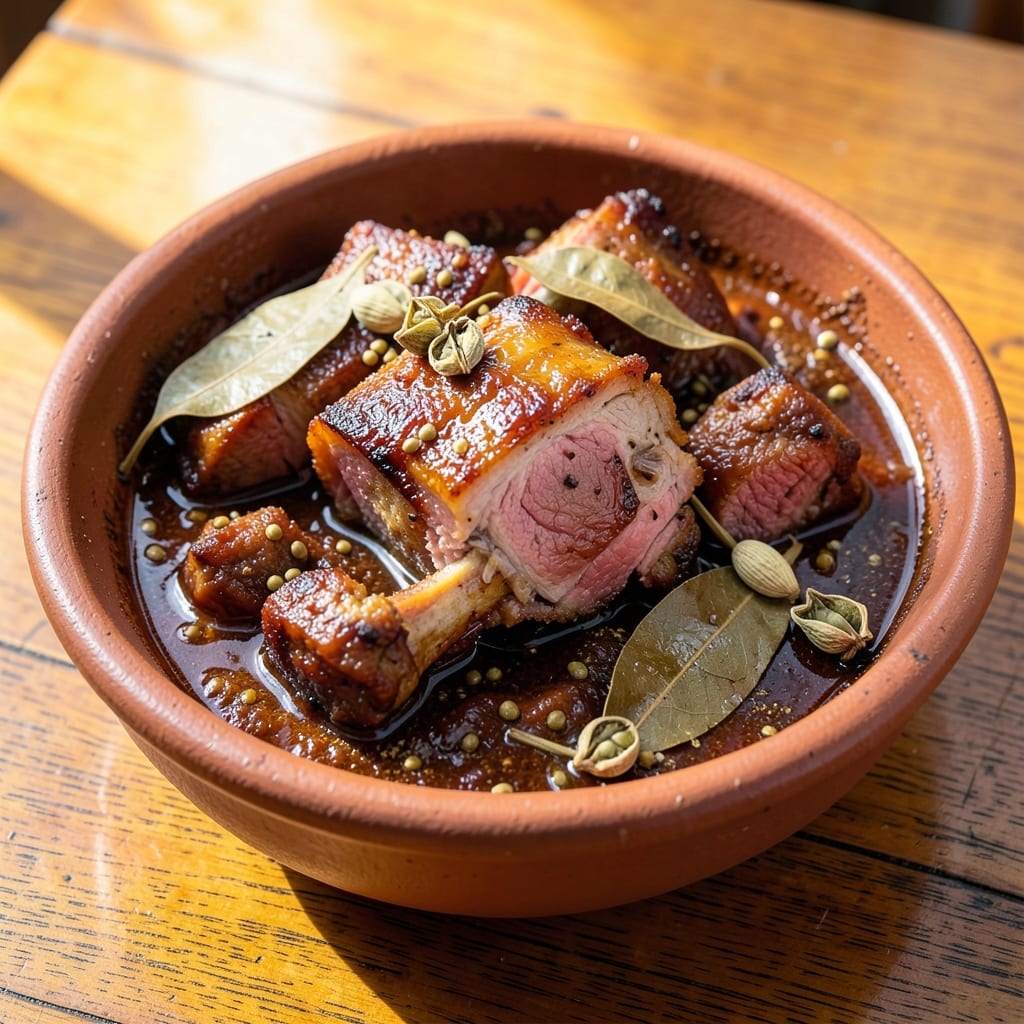
This Bengali pork recipe brings the rich, aromatic flavors of West Bengal to your kitchen with a five-spice marinade and tangy tamarind braise. The secret lies in slow-cooking tender pork shoulder until it practically falls apart, infused with mustard seeds, cumin, and a touch of kokum for that signature Bengali tang. I first tasted this dish at a family gathering in Kolkata, where it was served with steamed rice and crispy papads—now I recreate it at home with the same care. The magic happens in the marinade, where whole spices like bay leaves and cardamom meld into a fragrant paste that transforms simple pork into something deeply flavorful. Braising for hours develops a rich, caramelized sauce that clings to every bite, balancing sweet, spicy, and tangy notes perfectly. This dish is hearty enough for a family dinner but elegant enough for guests, especially when paired with fluffy basmati rice. What makes this recipe special is the harmony of textures—tender, shredded pork that soaks up the aromatic sauce, contrasted by the slight crunch of toasted mustard seeds. The tamarind adds a bright acidity that cuts through the richness, creating a dish that's both comforting and complex. It's the kind of meal that reminds you why home cooking is worth the effort. Perfect for special occasions or when you're craving bold flavors, this recipe delivers restaurant-quality results with minimal fuss. Let's get started on creating a taste of Bengal in your own kitchen.
Ingredients for bengali pork
Simple ingredients, bold flavors—this Bengali pork transforms humble cuts into restaurant-quality comfort.
| Ingredient | Amount | Notes |
|---|---|---|
| Pork Shoulder 🥩 | 3 lb | Bone-in for flavor, cut into chunks |
| Mustard Seeds 🌶️ | 1 tbsp | Yellow or brown, toasted first |
| Bay Leaves 🌿 | 2 whole | Fresh preferred, remove before serving |
| Green Cardamom Pods 🌿 | 6 whole | Lightly crushed, not powdered |
| Cumin Seeds 🌶️ | 1 tbsp | Toasted for deeper aroma |
| Ground Cumin 🌶️ | 1 tsp | If using powdered instead |
| Ground Coriander 🌿 | 1 tsp | Freshly ground preferred |
| Turmeric Powder 🧂 | ½ tsp | Vibrant yellow color |
| Red Chili Powder 🌶️ | 1 tsp | Adjust for heat preference |
| Tamarind Paste 🍋 | 2 tbsp | Unsweetened, or substitute lime juice |
| Kokum Dried Fruit 🍇 | 4 pieces | Soaked in warm water, strained |
| Coconut Milk 🥥 | 1 can | Full-fat, 13.5 oz can |
| Onion 🧅 | 1 whole | Medium, finely chopped |
| Garlic Cloves 🧄 | 6 cloves | Peeled, minced finely |
| Ginger 🌿 | 1 inch | Fresh, grated or finely chopped |
| Tomato Puree 🍅 | ½ cup | No sugar added preferred |
| Salt 🧂 | 1 ½ tsp | Adjust to taste |
| Black Pepper 🌶️ | ½ tsp | Freshly cracked preferred |
| Vegetable Oil 🫒 | 2 tbsp | For toasting spices |
The pork shoulder is the star—bone-in for extra flavor, but bone-out works too if you're short on time. Look for well-marbled cuts at Whole Foods or your local butcher; the fat renders down beautifully during braising. Mustard seeds and cardamom are non-negotiable—Penzeys Spices carries the best quality, but the bulk bins at Indian markets are usually cheaper. If you can't find kokum, amchur (dry mango powder) works in a pinch—just use half the amount since it's more potent. The tamarind paste should be thick and sticky; if it's watery, strain it first.
No tamarind paste? Lime juice or pomegranate molasses adds tang, though kokum's unique flavor is hard to replicate. Running out of coconut milk? Heavy cream or Greek yogurt adds richness, but you'll lose that authentic Bengali depth. For the spices, toast them whole in oil first—this releases their essential oils and makes the whole dish sing. The tomato puree can be homemade (just blend canned tomatoes) or store-bought, but skip anything with added salt. If you're feeling ambitious, make a double batch—the leftovers reheat beautifully for lunches.
This dish tastes even better the next day as the flavors meld. Store in an airtight container in the fridge for 4-5 days, or freeze portions for up to 3 months. I always make extra because it's perfect for meal prep—just reheat with a splash of water. For serving, steamed basmati rice is traditional, but crusty naan or roti works too. The sauce thickens as it cools, so add a little water when reheating if needed. Trust me, the effort is worth it for that first bite of tender, spice-infused pork.
Why You'll Love This Recipe
- Spice in Minutes: I swear by this—toss the pork shoulder with whole spices (bay leaves, cardamom, cumin) and a pinch of mustard seeds, then let the oven do the work. No chopping, no fuss, just hands-off magic.
- Flavor Bomb: That first bite? The mustard seeds pop like tiny firecrackers, then the pork melts with smoky cumin and earthy cardamom. It’s the kind of taste that lingers like a good memory.
- Lunchbox Hero: Between us, this is my secret for packed lunches. The pork stays tender for days, and I just reheat slices with steamed rice—zero last-minute stress. My kids even ask for it.
- Budget Stretch: Pork shoulder is cheap, and this recipe turns it into something special. A single cut feeds four, and leftovers reheat like a dream. Honestly, it’s my go-to for stretching groceries without sacrificing flavor.
Step-by-step instructions for Bengali pork recipe: five-spice braised with tamarind tang
Let's create this aromatic, tangy pork dish that balances spice and sweetness perfectly.
Prepare the Pork and Toast the Whole Spices
Cut the 3 lb pork shoulder into 2-inch chunks, leaving some bone-in pieces for extra flavor. Pat them dry with paper towels—this helps the spices stick and creates better browning later. In a heavy pot, heat 2 tbsp vegetable oil over medium-high heat until shimmering.
Add the pork in a single layer and sear for 4-5 minutes until golden brown on all sides. Don't crowd the pot or the meat will steam instead of brown. Remove the pork and set aside. In the same pot, reduce heat to medium and add 1 tbsp mustard seeds and 1 tbsp cumin seeds. Toast for 30 seconds until they pop and release their aroma—this deepens the flavor profile of the dish.
Build the Spice Base and Add Aromatics
Add 2 whole bay leaves, 6 lightly crushed green cardamom pods, 1 tsp ground cumin, 1 tsp ground coriander, 0.5 tsp turmeric powder, and 1 tsp red chili powder to the pot. Stir for 1 minute until fragrant—you should smell warm, earthy spices with a hint of heat. Add the 1 whole finely chopped onion and cook for 5 minutes until soft and golden.
Stir in 6 minced garlic cloves and 1 inch finely chopped ginger, cooking for 1 minute until fragrant. The ginger should become translucent and the garlic should turn golden—this ensures their flavors meld perfectly with the spices. Add 0.5 cup tomato puree and cook for 3 minutes until slightly thickened.
Simmer the Pork in the Spiced Sauce
Return the pork to the pot. Pour in 2 tbsp tamarind paste mixed with ½ cup warm water (to dissolve) and 1 can coconut milk. Stir well to combine, then add 1.5 tsp salt and 0.5 tsp black pepper. Bring to a gentle simmer over medium-low heat, then reduce to a bare simmer—you should see just tiny bubbles at the edges.
Cover and cook for 1 hour 15 minutes, stirring occasionally, until the pork is tender and the sauce has thickened. The pork should be fork-tender with no resistance, and the sauce should coat the back of a spoon. If the sauce reduces too much, add ¼ cup water to maintain moisture.
Finish with Kokum and Adjust Seasoning
Soak the 4 pieces kokum dried fruit in ½ cup warm water for 10 minutes, then strain and add the strained liquid (and any softened fruit pieces) to the pot. Simmer uncovered for 10 minutes to let the tangy kokum flavor infuse the dish. Taste and adjust seasoning—you might need a pinch more salt or chili powder to balance the flavors.
Serve Warm with Steamed Rice
Remove the 2 whole bay leaves and 6 green cardamom pods before serving. The dish should have a rich, spiced sauce with a bright tang from the tamarind and kokum. Serve immediately with steamed basmati rice to soak up the flavorful sauce. Each bite should deliver tender pork with layers of aromatic spices and a refreshing tang.
Pro Tips For Making Bengali Pork
- CRACK THE SPICE PODS: Whole cardamom and cumin seeds need a good whack with a rolling pin or heavy pan lid before toasting—don’t just toss them in raw. I learned this the hard way when my curry tasted bland; those seeds hide their flavor until you break them open.
- SALT THE PORK TWICE: Season the pork shoulder before browning with 1 teaspoon salt per pound, then add another ½ teaspoon per pound after the initial sear. The first layer helps tenderize, the second locks in flavor during the long cook—skip either, and you’re missing depth.
- LOW AND SLOW AFTER SEARING: Once the pork hits 160°F, drop the heat to 275°F and cover tightly with foil. I used to rush this, but the real magic happens when it cooks gently for 3+ hours—any hotter, and you’ll dry it out before it’s tender.
- TOAST SPICES IN OIL FIRST: Heat 2 tablespoons oil in a heavy pan until shimmering, then add mustard seeds, cumin, and bay leaves. Let them sizzle for 30 seconds until fragrant—this builds the flavor base. My lazy shortcut of adding them raw? Noticeably weaker dish every time.
Serving suggestions for bengali pork
Steamed Basmati Rice
This dish is incomplete without steamed basmati rice—its long grains hold up perfectly to the rich, spiced sauce. I use 1 cup basmati rice per 2 servings of pork, rinsed thoroughly to remove excess starch. Cook in a 1:1.5 rice-to-water ratio with a pinch of salt and a bay leaf for subtle aroma. The rice should be fluffy and separate, not mushy. 💛
Crispy Papads
For that satisfying crunch, serve with store-bought or homemade papads—I love the MTR brand from Indian markets. Heat them in a dry skillet for 30 seconds per side until crispy. Their slight spiciness and texture contrast beautifully with the tender pork. Store extra papads in an airtight container for up to 2 weeks—they crisp up again when reheated.
Cucumber Raita
A cooling cucumber raita balances the dish’s richness. Blend 1 cup Greek yogurt with ½ cup grated cucumber, 1 tsp roasted cumin powder, ½ tsp salt, and 1 tbsp chopped mint. Chill for 30 minutes before serving. The yogurt’s creaminess and cucumber’s freshness cut through the spice. For extra tang, add 1 tsp tamarind paste to the mix. ✨
Pickled Onions
Quick-pickle ½ red onion in ¼ cup vinegar, 1 tsp sugar, and ½ tsp salt for 30 minutes. The sharp, tangy crunch adds brightness to each bite. I often make a big batch and store it in the fridge for up to 2 weeks—it’s perfect for topping curries, sandwiches, or even tacos. The acidity in the onions mirrors the dish’s tamarind tang.
Garnish Like a Pro
Before serving, garnish with fresh cilantro, thinly sliced green onions, and a drizzle of toasted mustard oil (heat 1 tbsp mustard oil until it smokes, then cool). The cilantro adds freshness, while the mustard oil deepens the dish’s aromatic profile. For a pop of color, add pomegranate seeds—their sweet-tart contrast elevates the dish. 🌿
Beverage Pairings
Cool down with mango lassi—blend 1 cup yogurt, ½ cup mango pulp, ½ cup milk, and 1 tsp cardamom powder. The creamy sweetness complements the pork’s spice. For something stronger, try Bengali tea (black tea with milk, sugar, and a pinch of saffron). Avoid heavy wines—opt for dry Riesling or sparkling lemonade instead. 🍹
Nutrition facts
Frequently asked questions
Can I substitute chicken or beef for the pork in this recipe?
While pork is traditional, you can adapt this recipe for chicken or beef! For chicken, use 3 lb boneless thighs and reduce cooking time to 45 minutes after simmering. For beef, opt for 3 lb chuck roast and increase cooking time to 2 hours. The marinade and spices work beautifully with either protein, though pork's natural fat content makes it ideal for this braising method.
What makes this recipe authentically Bengali?
The key elements are the mustard oil (toasted and drizzled at the end), kokum for tang, and the five-spice blend of cardamom, cumin, coriander, and bay leaf. The tamarind adds that signature West Bengal acidity, while slow-braising creates the rich, caramelized sauce. Even the serving style—with steamed rice and crispy papads—follows Bengali tradition.
Can I make this dish in a slow cooker?
Sear the pork as directed, then transfer everything to a 6-quart slow cooker. Add all ingredients except kokum, and cook on low for 6-7 hours or high for 3-4 hours. Stir in kokum during the last 30 minutes of cooking. The slow cooker method actually enhances the tenderness and flavor development. Just add ¼ cup water if the sauce gets too thick.
How do I adjust the spice level for sensitive eaters?
Start by reducing the red chili powder to ½ tsp (or omit entirely). For extra heat control, remove the whole green cardamom pods and bay leaves before serving—they contain mild heat. Add a pinch of sugar or honey to balance any remaining spiciness. The tamarind and kokum provide natural tang without heat. Always taste as you go!
What's the best way to reheat leftovers?
Place leftovers in a pot with 2 tbsp water and warm over medium-low heat for 5-7 minutes, stirring occasionally. Avoid microwaving—it can make the sauce watery. For extra richness, add 1 tbsp coconut milk while reheating. Store in an airtight container for 4-5 days or freeze for 3 months. The flavors actually improve overnight!