
Main Courses
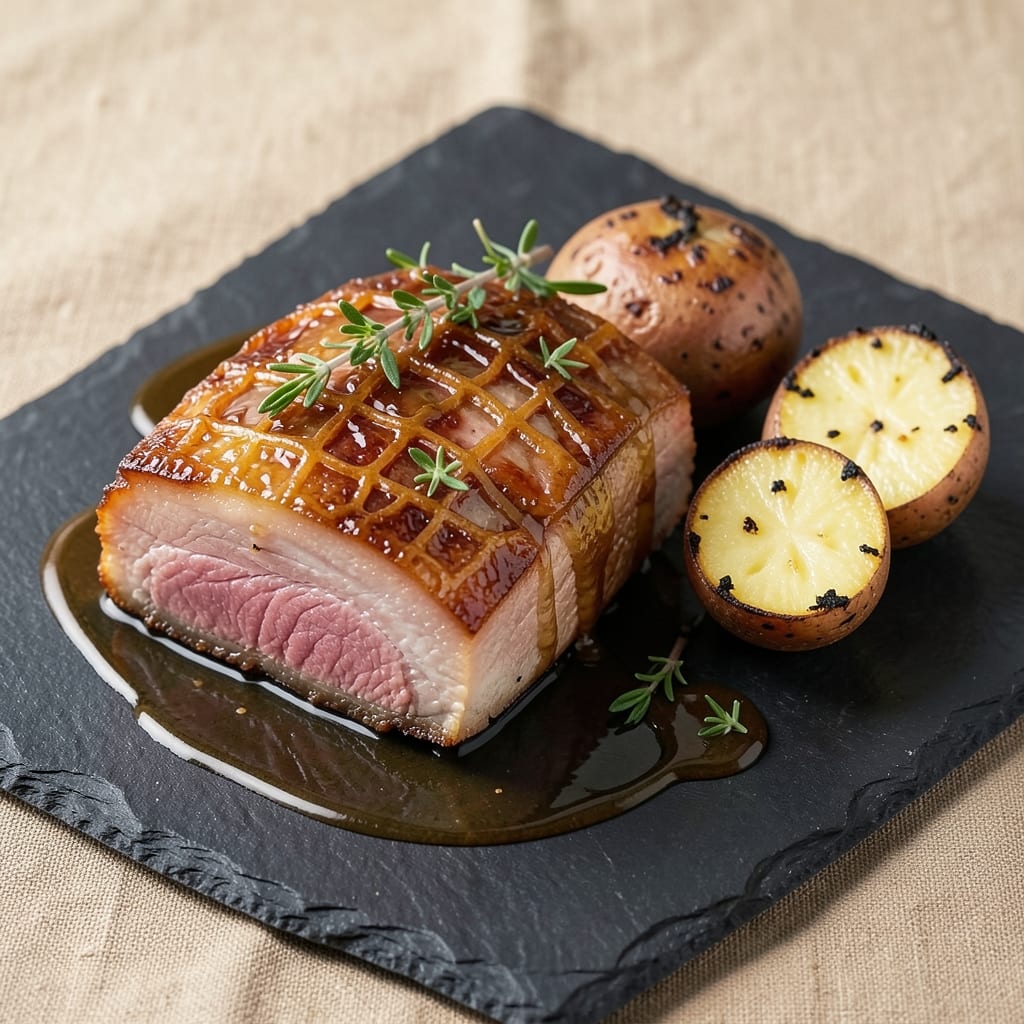
This Berkshire pork belly recipe delivers the ultimate combination of crispy bark and melting fat that transforms a simple roast into a showstopper. After years of perfecting the technique, I’ve cracked the code for achieving that coveted contrast—golden, shatteringly crisp edges and tender, buttery meat that practically dissolves in your mouth. The secret lies in a precise balance of salt, time, and temperature, ensuring every bite is a revelation.
What sets this recipe apart is the slow-roasting method, which renders the fat gradually while developing deep, savory flavors without overcooking. You’ll start with a simple seasoning of salt and pepper, then let the pork belly roast at a low temperature until the internal temperature reaches 195°F—where the magic happens. The result? A dish that’s rich, juicy, and impossible to resist, with a crispy skin that adds texture to every bite.
The beauty of this recipe is its versatility—serve it as a centerpiece for a holiday feast, slice it thin for tacos, or even cube it for fried rice. The fat alone makes it worth the effort, but the crispy bark elevates it to restaurant-quality perfection. Whether you're cooking for a crowd or treating yourself to a special meal, this Berkshire pork belly will impress every time.
Pair it with roasted root vegetables, a simple arugula salad, or even steamed jasmine rice to soak up every last bit of that luscious fat. The key is patience—let the pork belly rest after roasting, and the flavors will deepen even more. Trust me, once you try this, you’ll never settle for anything less.
Ingredients for berkshire pork belly
Berkshire pork belly transforms into crispy magic with just these 12 ingredients and slow patience.
| Ingredient | Amount | Notes |
|---|---|---|
| Berkshire Pork Belly 🥓 | 3 lb | Skin-on, cut into 1-inch thick slices |
| Kosher Salt 🧂 | 2 tbsp | Diamond Crystal preferred, coarse grain |
| Freshly Ground Black Pepper 🌶️ | 1 tsp | Cracked peppercorns for texture |
| Cornstarch 🌾 | ½ cup | For crispy bark coating |
| Russet Potatoes 🥔 | 4 medium | For roasting companion (optional) |
| Fresh Thyme Leaves 🌿 | ¼ cup | Or 1 tbsp dried thyme |
| Garlic Cloves 🧄 | 6 whole | Smashed for infusion |
| Extra-Virgin Olive Oil 🫒 | ¼ cup | For basting and drizzling |
| Brown Sugar 🍯 | 1 tbsp | Enhances caramelization |
| Apple Cider Vinegar 🍎 | 1 tbsp | Balances richness |
| Fresh Rosemary 🌿 | ⅛ cup | Chopped sprigs for aroma |
| Unsalted Butter 🧈 | 2 tbsp | Cold, for finishing |
The Berkshire pork belly is non-negotiable here—its marbling is what delivers that melt-in-your-mouth fat. Look for thick-cut pieces (1-inch minimum) at specialty butchers like D'Artagnan or your local Whole Foods meat counter. If you can't find Berkshire, heritage pork belly works too, but avoid leaner cuts. The skin should be thick and unbroken—this is your crispy canvas. Fresh thyme and rosemary? Grab them from the farmers market if possible—they've got more punch than grocery store bundles. For the cornstarch, Bob's Red Mill is my go-to brand—it's fine enough to create that perfect crackling crust.
No cornstarch? Potato starch or even arrowroot powder works in a pinch, though texture might be slightly different. Short on thyme? Dried oregano at half the amount gives a similar earthy note, but fresh is ideal. The apple cider vinegar can be swapped for white wine vinegar, but it won't have the same depth. For the potatoes (if using), Yukon Golds make a great companion—roast them alongside for a complete meal. The garlic? Roast it whole with the pork for extra flavor infusion. And that brown sugar? Don't skip it—it's what helps create that caramelized bark that everyone raves about.
Pork belly keeps 3-4 days in the fridge if uncooked, wrapped tightly in parchment. Once roasted, the crispy skin stays perfect for 2 days if stored in an airtight container—just reheat in a 350°F oven for 10 minutes. For leftovers, slice thinly and freeze between parchment layers for up to 3 months. Pro tip: Rest the pork for 30 minutes after roasting—this lets the fat redistribute, making every bite juicier. The crispy bark? Best eaten fresh, but if you must reheat, broil for 2-3 minutes to restore the crunch.
Why You'll Love This Recipe
- One-Pan Magic: I swear by this recipe because it’s all on one tray—no chopping boards, no messy sauces, just crispy pork belly and golden potatoes sharing space. The cornstarch coating turns the pork into shatteringly crisp edges while the potatoes caramelize like they’ve been roasting for hours. Honestly, the cleanup is almost as good as the meal.
- Crispy-Creamy Obsession: That first bite? Chef’s kiss. The pork belly gets this addictive crunch from the cornstarch, but inside, it’s melt-in-your-mouth tender—like biting into a perfectly rendered pork butt. Pair it with the fluffy, salty potatoes, and you’ve got a flavor combo that’ll have everyone reaching for seconds.
- Weeknight or Weekend Star: Between us, this is my go-to for lazy Sundays and busy weeknights. The pork belly feeds a crowd, but the portions are generous enough that leftovers (which, let’s be real, will happen) taste just as good reheated. Plus, it’s fancy enough for guests but simple enough to make when you’re in sweatpants.
- Budget-Friendly Luxury: Here’s what sold me—pork belly feels like a splurge, but the way this recipe uses every bit (even the crispy bits!) makes it feel like a steal. The potatoes stretch it further, and the kosher salt and pepper? You already have them. It’s indulgent without breaking the bank, and that’s my kind of cooking.
Step-by-step instructions for slow-roasted Berkshire pork belly
Here's how to transform that luxurious Berkshire pork belly into irresistible crispy bark with melt-in-your-mouth fat.
Prepare the Pork Belly for Maximum Crisp
Start by patting the 3 lb Berkshire Pork Belly completely dry with paper towels—this is non-negotiable for crispy bark. I like to work in sections, pressing firmly to remove all moisture from the skin. Next, make a dry brine by rubbing the belly evenly with 2 tbsp Kosher Salt and 1 tsp Freshly Ground Black Pepper, pressing the seasoning into the meat so it adheres well.
Place the seasoned pork belly on a wire rack set over a baking sheet (this allows air circulation for even cooking) and refrigerate uncovered for 24 hours. This long dry-brine time ensures the salt penetrates deeply and the skin becomes properly dehydrated—key for that perfect crackling crust. After brining, remove from the fridge and let it sit at room temperature for 1 hour before roasting.
Create the Cornstarch Crust for Extra Crisp
In a small bowl, mix 0.5 cup Cornstarch with 1 tbsp Brown Sugar and 1 tbsp Apple Cider Vinegar until completely combined. This mixture is your secret weapon for creating that signature crispy bark. Gently brush the pork belly with 0.25 cup Extra-Virgin Olive Oil, then pat the cornstarch mixture all over the skin-side, pressing lightly to help it adhere.
Here's the thing—don't skip the pressing. I use my fingers to work the cornstarch into the skin's crevices, which helps create those beautiful crackling layers. Let the pork belly rest at room temperature for another 30 minutes while you preheat your oven to 325°F. The cornstarch needs time to fully absorb into the skin for maximum crispiness.
Slow-Roast to Perfect Doneness
Place the prepared pork belly fat-side up on a rimmed baking sheet (no rack needed now) and roast in the preheated oven for 3 hours. This low-and-slow approach allows the collagen to break down completely, transforming the connective tissue into rich, gelatinous fat that practically melts in your mouth.
After 3 hours, increase the oven temperature to 425°F and continue roasting for another 30 minutes. This final high-heat phase is what creates that coveted crispy bark. You'll know it's ready when the skin is deep golden brown and the internal temperature reaches 195-200°F when measured in the thickest part of the meat (use a meat thermometer for accuracy).
Finish with Rosemary and Butter
While the pork belly is still hot, remove it from the oven and let it rest for 10 minutes. Then, in a small saucepan, gently warm 2 tbsp Unsalted Butter over low heat until melted. Stir in 0.125 cup Fresh Rosemary and 0.25 cup Fresh Thyme Leaves, letting the herbs infuse the butter for 1 minute. Pour this fragrant butter mixture over the pork belly, basting it generously on all sides.
The butter will immediately start to crisp up, creating an even more complex flavor profile. For the ultimate presentation, transfer the pork belly to a cutting board and let it rest for another 15 minutes before slicing. The fat should be so tender it practically oozes out between the slices, while the skin remains gloriously crispy—this is what makes Berkshire pork belly worth the effort.
Optional Step: Roast the Potatoes
While the pork belly rests, you can prepare the 4 medium Russet Potatoes by tossing them with 0.25 cup Extra-Virgin Olive Oil, 1 tbsp Brown Sugar, and 6 smashed Garlic Cloves. Roast them at 400°F for 45-50 minutes until golden and tender. These make a perfect companion to your showstopping pork belly.
Pro Tips For Making Berkshire Pork Belly
- CRACK THE BELLY FIRST: I learned this the hard way—skipping the score-and-sear step means the belly won’t render its fat properly. Use a sharp knife to cut shallow crosshatch lines (about 1/4-inch deep), then sear skin-side down in a screaming-hot pan for 8-10 minutes before roasting. The fat won’t pool like it should if you don’t.
- SALT LIKE IT’S 1985: Berkshire pork belly is leaner than commercial cuts, so don’t hold back on the kosher salt. Generously coat the meat before scoring and again after searing—about 1.5 teaspoons per pound. My grandmother swore by this, and she was right: the salt penetrates deeper when applied early, and the crust locks it in.
- POTATOES NEED A HEAD START: Toss your russet potatoes in cornstarch before roasting, but don’t crowd the pan. Spread them in a single layer and roast at 425°F (220°C) for 20 minutes before adding the belly. This gets them crispy on the outside while keeping them fluffy inside—trust me, your future self will thank you when they don’t turn to mush under the pork’s fat.
- REST IT OR REGRET IT: The belly will keep cooking as it rests, so give it a solid 15-20 minutes under foil before slicing. I used to cut into it too soon, and the slices would fall apart like sad lasagna. Let the juices redistribute, and the meat will hold together like it’s supposed to—no sad, greasy puddle on your plate.
Creative variations of this berkshire pork belly
Asian-Inspired Glaze
Transform your Berkshire pork belly into a fusion masterpiece with a honey-soy glaze. Brush the belly with 3 tbsp soy sauce, 2 tbsp honey, and 1 tbsp grated fresh ginger before the final 30 minutes of roasting. The glaze caramelizes beautifully, creating a sticky, umami-rich crust that pairs perfectly with the crispy bark. I love adding 1 tsp sesame oil to the glaze for extra depth—just toss it in right before brushing. 🌶️
Smoky BBQ Twist
For a Southern-inspired variation, swap the cornstarch crust for a smoked paprika dry rub—mix 2 tbsp smoked paprika, 1 tbsp brown sugar, and 1 tsp cayenne pepper. Apply it after the dry brine and before the cornstarch step. During the final 30 minutes at 425°F, baste the pork belly with ½ cup BBQ sauce (I recommend Sweet Baby Ray's) for a sweet, tangy finish. Serve with pickled onions for a full BBQ experience. 🔥
Herb-Crusted French Style
Elevate your pork belly with a French-inspired herb crust. After the dry brine, mix ¼ cup chopped fresh parsley, 2 tbsp chopped fresh chives, and 1 tbsp Dijon mustard with 2 tbsp melted butter. Spread this mixture over the skin before roasting. The herbs add a bright, aromatic contrast to the rich pork, while the mustard helps create a glossy, golden crust. Finish with a sprinkle of flaky sea salt right before serving. ✨
Spicy Korean Kimchi
Add a Korean-inspired kick by stuffing the pork belly with 1 cup chopped kimchi and 2 tbsp gochujang (Korean chili paste) before roasting. The fermented flavors infuse the meat during the slow cook, creating a tangy, spicy depth. For extra richness, brush the belly with 1 tbsp sesame oil during the final 15 minutes of roasting. Serve with steamed rice and quick-pickled cucumbers to balance the heat. 💛
Sweet & Sticky Maple-Bourbon
For a North American sweet-and-sour twist, mix ¼ cup pure maple syrup, 2 tbsp bourbon (or apple cider for a non-alcoholic version), and 1 tbsp Dijon mustard. Brush this glaze over the pork belly during the last 45 minutes of roasting. The bourbon adds a warm, caramelized depth, while the maple syrup creates a sticky, glossy finish. Garnish with toasted pecans for crunch and serve with apple slices for a complete meal. 🍁
Nutrition facts
Frequently asked questions
Why does Berkshire pork belly need a 24-hour dry brine?
The 24-hour dry brine is essential for two reasons: it deeply seasons the meat and dehydrates the skin just enough to create that perfect crispy bark. The salt breaks down proteins on the surface, helping the cornstarch adhere better. Without this step, you'll end up with soggy skin instead of the shatteringly crisp texture you want.
Can I use regular pork belly instead of Berkshire?
You can, but the results won't be the same. Berkshire pork has more marbling and a richer flavor due to its heritage breeding. For a budget-friendly version, look for "heritage pork belly" at specialty butchers—it's the next best thing. Regular pork belly will still work, but expect less fat and a slightly different texture.
How do I fix soggy skin after roasting?
If your skin turns out soggy, it's likely because the pork wasn't dry enough or the oven wasn't hot enough during the final crisping phase. Next time, pat the skin extra dry before seasoning and increase the final temperature to 450°F for the last 15 minutes. For already-cooked pork, broil it for 2-3 minutes to restore some crispiness.
What's the best way to store leftovers?
Store cooked pork belly in an airtight container in the fridge for up to 4 days. For longer storage, slice thinly and freeze between parchment layers for 3 months. To reheat, warm slices in a 350°F oven for 10 minutes—this helps restore some of the crispy texture.
Can I make this pork belly in a slow cooker?
Not recommended! Slow cookers can't achieve the high heat needed for crispy skin. For tender pork belly, try a 300°F oven for 4-5 hours before finishing with the high-heat crisping step. The texture won't be identical, but you'll still get delicious, tender meat with some crispiness.